
Resources
Explore our blogs for insightful articles on concrete grinding, polishing, and renovation tips. Our resources offer valuable insights into the latest trends, techniques, and best practices in the industry. Whether you're a seasoned professional or embarking on your first project, our blogs provide practical advice and inspiration to help you achieve stunning results.
Articles
Latest articles
By Category
|
46results
What to Ask Before You Hire a Concrete Polishing Company in Auckland
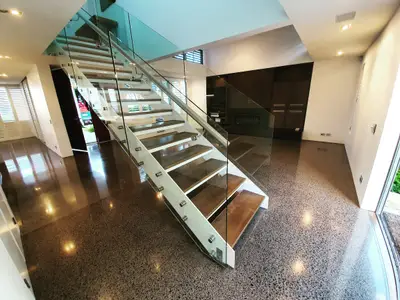
The single most useful question is whether they will do a sample grind on your actual slab before quoting a finish. Concrete is not a manufactured product, and nobody can tell you how your floor will look from a photo. Everything else on this list matters, but that one separates companies who will manage your expectations from companies who will manage your disappointment.
How to Clean Polished Concrete Floors (and What Ruins Them)
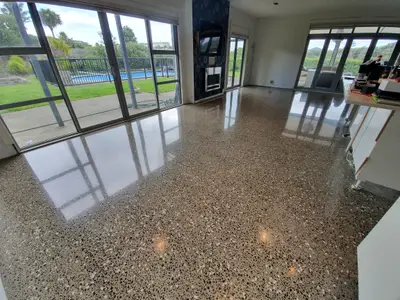
Warm water and a pH-neutral cleaner with a microfibre mop is all a mechanically polished concrete floor needs. Sweep or vacuum the grit first, because grit is what scratches. Avoid anything acidic, anything with bleach, and abrasive pads. Done properly this takes about the same effort as cleaning tiles, and less than timber.
When a Concrete Floor Sealer Fails: Signs, Causes and Fixes
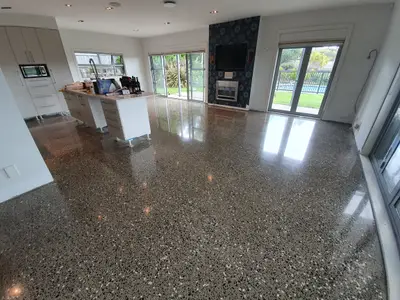
If your concrete floor is peeling, flaking or lifting in sheets, the sealer on it was a topical coating and it has lost its bond with the slab. Coatings cannot be patched successfully. The fix is to grind the failed coating off completely and mechanically polish the concrete underneath, which leaves nothing on the surface to fail again.
Can You Change the Finish on a Polished Concrete Floor You Already Have?
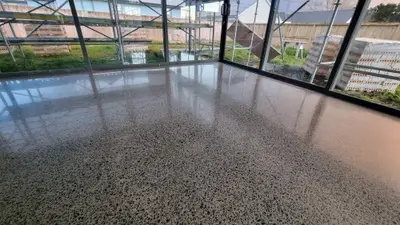
Yes. The sheen on a mechanically polished concrete floor can be changed, because sheen is created by how far the polishing grits are taken rather than by anything applied on top. Making a floor duller or glossier means reworking the surface mechanically across the whole floor. It is not a coating, and it is not a small job.
Concrete Floor Repair in Auckland: What It Costs and What Is Possible
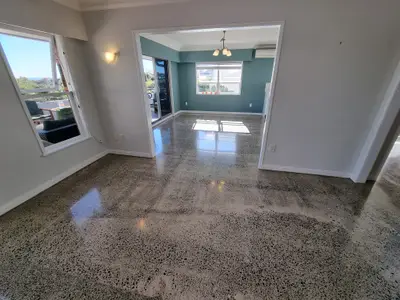
Most damaged concrete floors in Auckland can be repaired, and the repair is usually done as part of grinding and polishing the floor rather than as a separate patch job. For a typical residential floor, expect around $100 per m2 + GST for the full repair, grind, and polish, with cracks and joints filled as part of that scope.
Can Polishing Transform an Old or Damaged Concrete Floor?
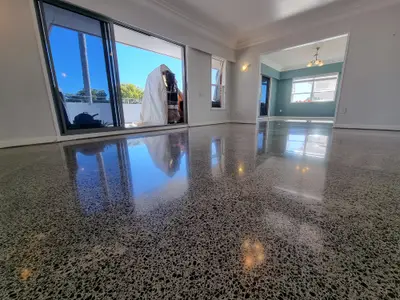
Yes. In most cases an old, stained or tired concrete slab can be transformed into a polished floor by mechanically grinding and polishing it. Grinding cuts back the worn surface, exposes fresh stone underneath and blends years of wear into a consistent finish. For severely uneven or badly damaged slabs, a concrete topping is laid first, then ground and polished once cured.
How To Repair Concrete Cracks Before Polishing
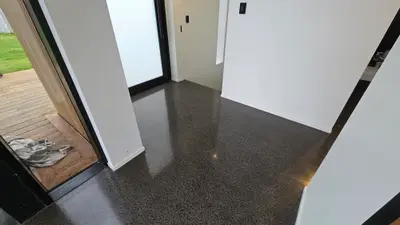
Cracks in a concrete floor are filled and blended as part of standard floor prep, before any polishing begins. We assess the slab, clean out every crack and control joint, fill them with a hard-setting repair resin, then grind. Grinding blends the filled cracks into the surrounding aggregate, though faint lines can remain. That is a slab characteristic, not a fault in the finish.
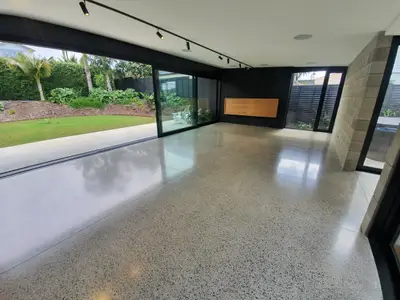
Can You Remove Scratches From Polished Concrete?
Yes, most scratches on polished concrete can be removed or made far less visible. Light surface marks buff out during a rebuff. Deeper scratches that reach the aggregate need a regrind and repolish. Very deep gouges can be blended and minimised, but not always erased completely. The right fix depends on how deep the scratch goes.
Can You Regrind and Repolish a 10-Year-Old Floor?
Yes. A 10-year-old mechanically polished concrete floor can almost always be reground and repolished back to a fresh finish. Because the polish runs deep into the slab rather than sitting on top as a coating, our machines cut back through the worn surface, re-expose clean stone and cement, then repolish to your chosen sheen. In Auckland this restoration work runs $60-$100 per m2 + GST.
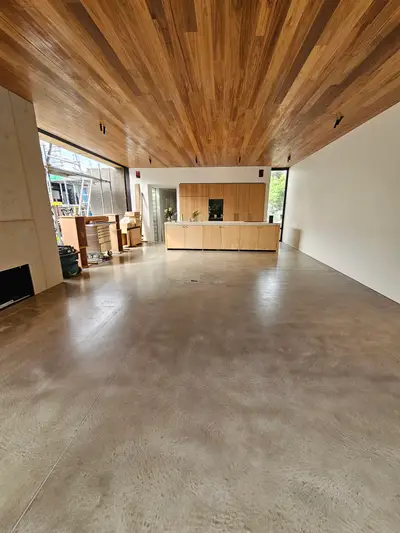
Why Is Polished Concrete More Expensive Than Carpet or Tiles?
Polished concrete usually costs more than carpet and sits in a similar range to mid-range tiles upfront, at around $100 per m2 + GST. The reason it looks pricier is that you are paying for the finished floor and the surface in one go. It also lasts 20+ years with good maintenance, so the whole-of-life cost often works out lower than carpet or tiles you replace every decade.
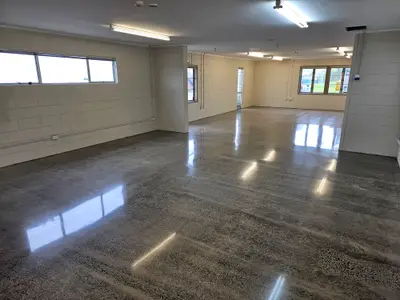
What To Do If Your Concrete Floor Looks Patchy
If your polished concrete floor looks patchy, the honest first step is a sample grind. Most patchiness comes from the slab itself, not the polishing. A deeper, heavier grind blends and reduces uneven areas, but some slab characteristics are permanent. Patching almost always makes things more noticeable, so avoid it.
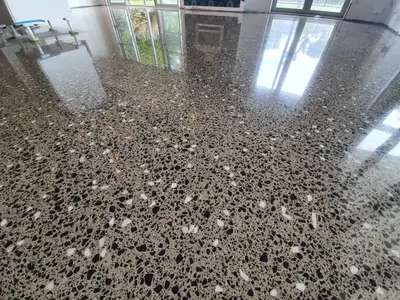
Heavy Aggregate vs Salt & Pepper: A Visual Comparison
The difference is how much stone you see. Salt and pepper is a light grind that exposes only the very tops of the stones, so the cement stays the background and you get a fine, even speckle. Heavy aggregate is a full-exposure grind that removes more material to reveal the larger stones, giving a bold, terrazzo-like look.
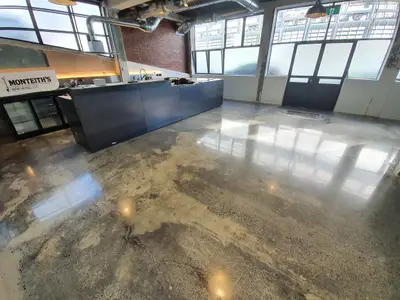
How Much Does It Cost to Restore an Old Polished Floor?
Restoring an existing polished floor - grinding and polishing it back to a fresh finish - typically costs between **$60 and $100 per m2 + GST** in Auckland. For most homes, that puts a full living area restoration somewhere between $4,000 and $7,000 + GST.
How to Restore a Tired 12-Year-Old Concrete Floor
A polished concrete floor that looks dull, worn, or cloudy after 10-12 years is not a write-off. In most cases it can be restored through a staged process: assess and sample grind, regrind and polish through the grits, re-densify, and reseal.
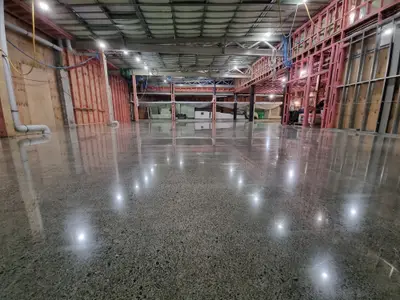
Polished Concrete for Warehouses: Pros, Cons and Costs
Polished concrete is the most practical floor surface for most Auckland warehouses. The grinding and polishing process hardens the slab at a molecular level - no coating to peel, no dust, and a floor that lasts 20+ years with good maintenance. For most warehouses, the answer is yes.
What Causes Polished Concrete to Go Cloudy?
Polished concrete goes cloudy for a handful of known reasons: cleaning product residue, wrong cleaning chemicals, moisture and efflorescence pushing through the slab, or normal wear on the surface itself.
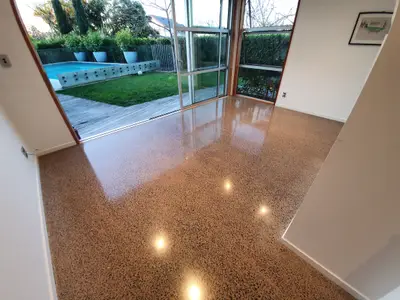
Can You Colour Polished Concrete? Auckland Options
Yes - polished concrete can be coloured. The most common options Auckland homeowners choose are charcoal, near-black, warm grey, and golden-brown tones. Colour is achievable on both new builds and existing slabs, though the way you get there is different depending on your situation.
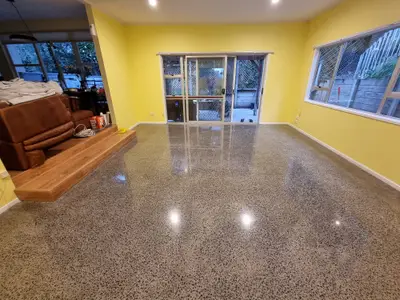
Fixing Carpet Tack Strip Damage in Concrete
Carpet tack strips leave a ring of small nail holes 3-4mm deep running around the perimeter of every room. A medium-to-heavy grinding and polishing process blends these into the exposed aggregate rather than erasing them - filled holes become part of the floor's natural character rather than obvious marks.

Can You Polish a Slab That Wasn't Poured for Polishing?
Yes - most existing concrete slabs can be ground and polished to a great finish, even if polishing was never part of the original plan. The slab doesn't need to be purpose-poured for grinding and polishing. What matters is its current condition: age, flatness, surface contamination, and how it responds to a test grind.
Common Mistakes Builders Make With Concrete Floors
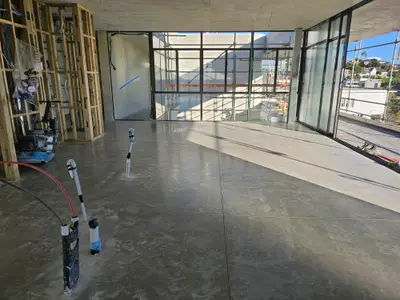
The most common builder mistakes with polished concrete floors are wrong build-sequence timing, poor slab finishing, and installing skirtings before the floor is ground and polished. Every one is avoidable if the builder knows from day one the floor will be polished.

Uneven Concrete Slabs in Auckland - Can Concrete Grinding Fix It?
Grinding can flatten mild to moderately uneven concrete slabs - it's one of the things polishing was designed to do. We routinely grind 3-5mm off the high points to level a slab and blend the result into a clean polished finish. Where grinding can't help is **severe slope across the slab** (more than 10-15mm dip across a room) or where the slab is structurally compromised. In those cases the options are a concrete topping before polishing, or levelling the slab and laying an alternative floor (t

Slip Ratings and Polished Concrete Explained
Polished concrete meets NZ commercial slip resistance requirements when specified and finished correctly. Every finish we deliver, right up to high-gloss, passes the slip standards used in commercial buildings - the same specifications we've met on malls, Pak'nSave, Countdown, BP, and many other strict-compliance projects over the years. The levers that shift the rating are finish level (matte through to high-gloss) and grind depth, which exposes more aggregate and changes the surface profile. W
Satin vs Semi-Gloss vs High-Gloss - Choosing the Right Polished Concrete Sheen
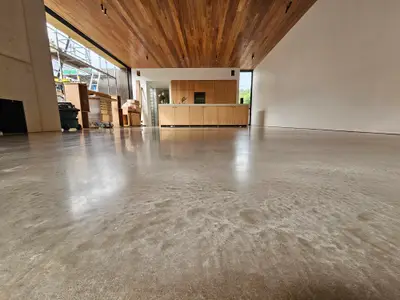
Polished concrete sheen runs across five levels, from matte up to high-gloss, set by how far we take the final polishing grits. For most NZ homes we polish, the **satin to semi-gloss** range is the right choice. It reflects enough light to make the home feel bright, hides scratches and wear better than high-gloss, offers good slip resistance, and ages gracefully. High-gloss is the "wow" finish for showrooms and feature spaces but shows scratches and wears more obviously. Matte (the lowest sheen)
Why Some Polished Concrete Floors Look Dull After 5 Years
Polished concrete dulls over time. It's not a fault and it's not unique to your floor - every polished surface dulls eventually, just like timber loses its sheen and tiles need regrouting. The most common reasons are everyday foot traffic, dust acting as fine abrasive, the wrong cleaning products, and natural wear of the polish itself. The fix depends on how dull it's gone: a rebuff brings most floors back, a heavier restoration regrind handles the worse cases. Here's what's actually happening a
Polished Concrete Floors With Underfloor Heating
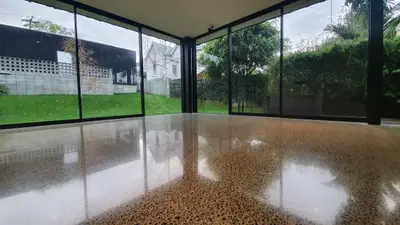
Polished concrete and underfloor heating are an excellent match. Concrete is one of the best thermal conductors in residential flooring - it picks up heat from underfloor systems quickly and holds it for hours after the system cycles off. NZ homeowners with both report warmer-feeling homes, lower running costs than ducted heating, and the lifestyle benefit of no cold spots underfoot. Here's how the two systems work together, what to spec during a build, and what to expect for your project.
Polished Concrete in Modern Kitchens
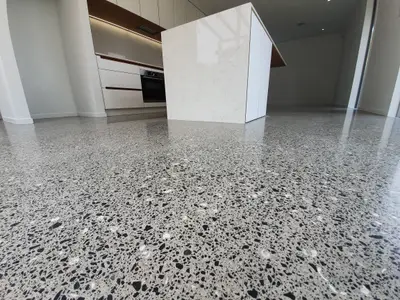
Polished concrete is one of the best flooring choices for a modern NZ kitchen. It's durable enough to handle daily cooking life, easy to clean, runs uninterrupted from the kitchen into open-plan living, and the look complements almost any cabinetry style. The honest trade-offs: it can stain from acidic spills (lemon, wine, tomato) if not cleaned quickly, it's harder underfoot than timber, and the finish dulls over years and needs the occasional rebuff. For most modern kitchens we've polished acr
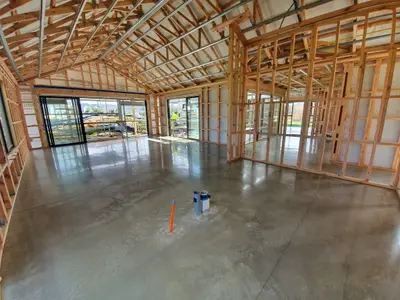
Should You Polish Concrete Before or After Gib Stopping?
The short answer: **grind and polish the floor after the house is weathertight and gib lined, but before paint.** Polished concrete is a grinding and polishing process, not just a final buff, so it kicks up dust and needs room to work. Getting in before gib stopping is even better when your build sequence allows it, because there's no risk of grinding dust or splash-back hitting fresh plaster. Either way, the grind and polish must happen before skirtings, paint, and cabinetry. Get this sequence
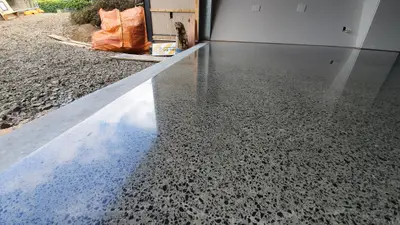
Concrete Garage Floors - What Auckland Homeowners Should Know
A mechanically polished concrete garage floor handles oil, tyres, dropped tools, and water far better than a raw slab, and it looks far better than a DIY coating. For most Auckland garages, polishing the existing slab is the best long-term value: a hard-wearing finish that lasts 20+ years with light maintenance, costs around $100-$140 per m2 + GST, and ties the garage in with the rest of the home. Here's what to consider before you commit.
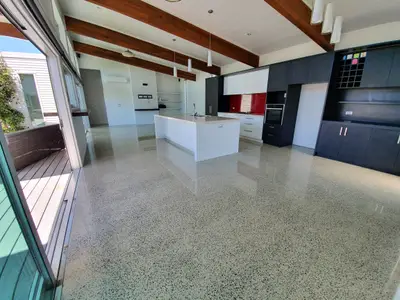
Is Polished Concrete Too Hard for Families?
Yes, polished concrete is a hard surface - there is no getting around that. But thousands of New Zealand families live on it every day and would not go back. The reason is simple: what you give up in cushion underfoot, you gain in easy cleaning, better air quality for kids with allergies, and a floor that lasts 20+ years with good maintenance. It is a trade-off, and for most families, the trade-off works.
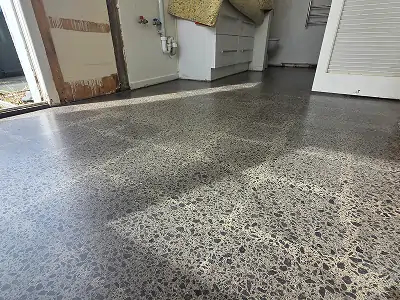
Tile Ghosting: Why It Happens and What to Expect
Tile ghosting is when faint grid lines from old tiles show through a polished concrete floor. It happens because tile adhesive and grout change the concrete's density and porosity over time. The honest truth - tile ghosting does not fully go away, even with heavy grinding. But with the right approach, we reduce it significantly and guide you through what to expect before any work starts.

Polished Concrete in Retail Fitouts
Polished concrete is one of the most practical flooring choices for retail spaces. It handles heavy foot traffic without cracking or peeling, costs less to maintain than tiles or vinyl, and gives stores a clean, modern look that works across almost every retail category. Auckland retailers from boutique shops to large format stores are choosing it for good reason.
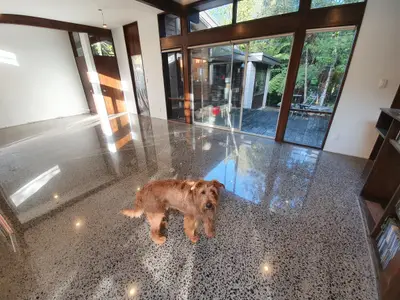
Can You Have Pets on Polished Concrete?
Polished concrete is one of the most pet-friendly flooring options available. It does not absorb odours like carpet, has no grout lines to trap pet hair, and is significantly more scratch-resistant than timber or vinyl. Most Auckland homeowners with dogs and cats find polished concrete easier to maintain than any other hard flooring option.
How Polished Concrete Reduces Maintenance Costs in Commercial Spaces
Mechanically polished concrete is one of the lowest-maintenance commercial flooring options available. Daily upkeep is a dust mop and a damp mop with neutral pH cleaner - no waxing, no grout scrubbing, no section replacements. Over a 10-year period, the maintenance savings alone can offset the entire installation cost compared to alternatives like vinyl or ceramic tiles.
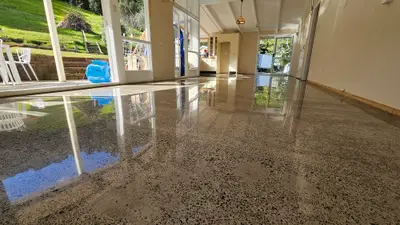
Can You Polish an Existing 10+ Year Old Floor?
Yes, most existing concrete floors over 10 years old can be polished. The slab does not need to be new or specially prepared - it just needs to be structurally sound. We have polished concrete floors across Auckland that were poured in the 1970s, 1980s, and 1990s, and the results are often better than homeowners expect.
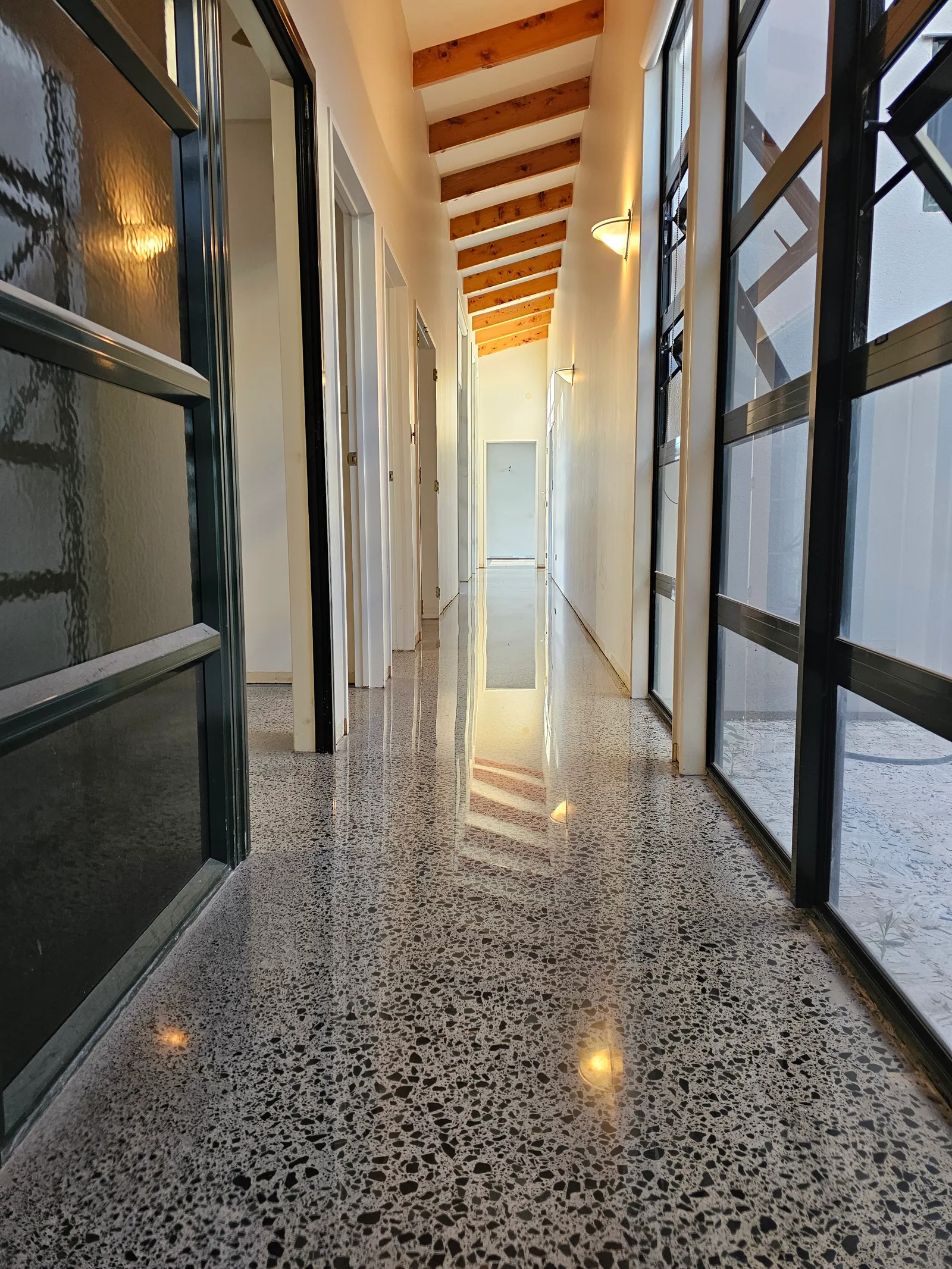
Is Polished Concrete Worth the Money?
For most Auckland homeowners, yes. Mechanically polished concrete costs more upfront than carpet or vinyl but lasts 20+ years with minimal maintenance. Over a 15-20 year period, it is typically the cheapest flooring option per year of use. The question is whether the upfront investment fits your situation and whether the look suits your home.
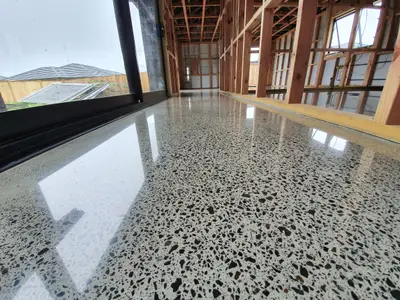
What Builders Should Know Before Pouring a Slab for Polishing
If you are building a new home with polished concrete floors, the slab pour is where everything starts. Getting the concrete mix, slab flatness, curing method, and control joint placement right at this stage makes the difference between a floor that polishes beautifully and one that causes problems later. Most of these decisions are easy to get right - as long as your builder knows a polished finish is the plan before the truck arrives.
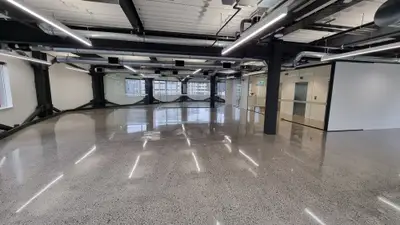
Why Supermarkets Choose Mechanically Polished Concrete
Supermarkets choose mechanically polished concrete because it handles trolley traffic, forklift loads, and constant foot traffic without cracking, peeling, or needing replacement. A mechanically polished floor in a commercial space can last 20+ years with good maintenance - no recoating, no downtime for resurfacing, and no sections roped off while a new floor cures. That is why New Zealand's largest retail operators have moved to polished concrete.
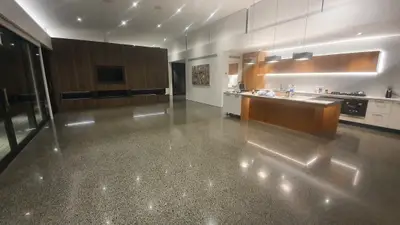
How Much Does Polished Concrete Cost in Auckland? (2026 Pricing Guide)
Polished concrete in Auckland costs around $100 per m2 + GST for a typical residential floor. Most jobs land between $80 and $130 per m2 + GST depending on floor size, slab condition, and finish, and pricing is much the same across NZ. Below is the full breakdown from the grinding and polishing work we do across Auckland - real numbers, not vague ranges.
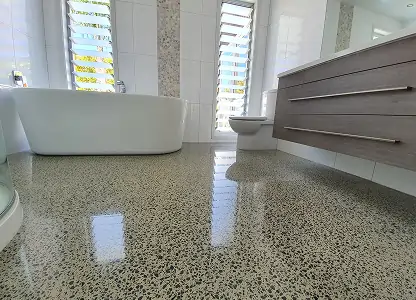
Does Polished Concrete Feel Cold in Winter? Thermal Comfort Explained for Auckland Homes
Polished concrete does feel cool underfoot in winter - but "cold" depends entirely on your home's insulation and heating setup. With underfloor heating, polished concrete becomes one of the warmest flooring options available. Concrete has high thermal mass, meaning it absorbs heat slowly and releases it slowly. Once warm, a polished concrete floor stays warm for hours after the heating switches off. That is an advantage no timber, carpet, or vinyl floor can match.
How Long Does Polished Concrete Actually Last?
A mechanically polished concrete floor can last 20 years or more with good maintenance. A grind and seal floor typically lasts 5 to 10 years before needing a reseal, depending on foot traffic. The difference comes down to how each system works: one hardens the concrete itself, while the other relies on a topical coating that wears over time. Both are durable - but their longevity profiles and maintenance needs are very different.
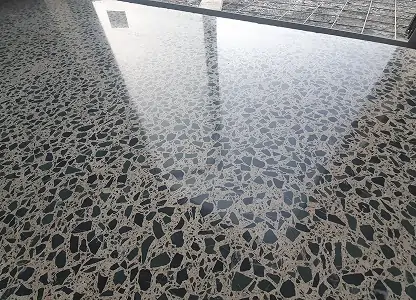
Grind and Seal vs Hiperfloor: Which System Is Better?
Grind and seal is a topical coating applied to ground concrete. Mechanical polishing (sometimes called Hiperfloor, which is a brand name for this process) hardens the concrete itself - no coating to peel or wear off. For long-term value in a home, mechanical polishing is the better system. But grind and seal has its place too, and the right choice depends on your budget, the space, and how long you want the floor to last.
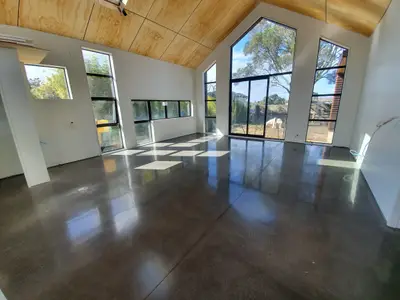
When Is the Best Time During a Build to Polish the Floor?
The best time to polish your concrete floor is before paint, and ideally before plaster goes in. Polishing the slab while the building is weathertight but still raw inside gives the polishing team a clear, open shell to work on - no painted walls to protect, no finished surfaces to mask off, and no risk of damaging fresh plaster. Getting the timing right is one of the simplest ways to reduce cost and get a better result from your polished concrete floor.
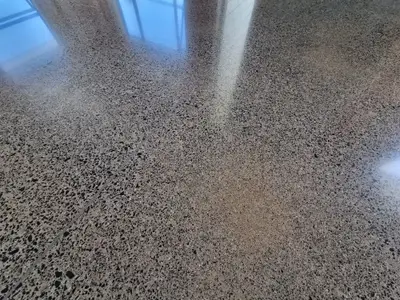
What Is Salt and Pepper Finish? A Visual Guide
Salt and pepper is a light grind where only the very tops of the stones are exposed within the concrete. It creates a fine speckled appearance, with a mix of small aggregate and exposed stone tips sitting within the cement matrix - the cement itself remains the background. It is the finish most people picture when they think of polished concrete, though in practice many floors end up with more stone exposure than a true salt and pepper because the slab demands a deeper grind.
Can You Polish Concrete After Carpet Has Been Removed?
Yes, you can polish concrete after removing carpet - and it is one of our most common jobs in Auckland. Most homes built on concrete slabs have a perfectly good floor hiding under that old carpet. With the right preparation and grinding process, that rough slab can become a beautiful, low-maintenance polished concrete floor.
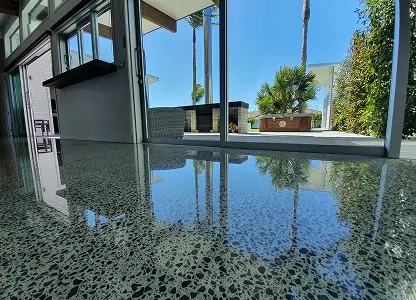
Is Polished Concrete Slippery? Safety, Slip Ratings and What Auckland Homeowners Need to Know
No, polished concrete is not inherently slippery. In dry conditions, a polished concrete floor provides traction comparable to ceramic tiles or sealed timber. The concern usually comes from the way high-gloss finishes look - they appear slick, but the surface texture still provides grip. With the right finish and maintenance, polished concrete meets New Zealand building standards for slip resistance in both residential and commercial settings.