(mirrors what is published in Webflow)
# Understanding the Different Levels and Depths of Grinds in Polished Concrete Floors
Polished concrete floors are an increasingly popular choice for both residential and commercial spaces because of their durability, easy maintenance, and clean modern look. One of the most important decisions for the final appearance of a polished concrete floor is the level and depth of grind applied. The grind level dictates how much (if any) of the stone aggregate inside the slab is exposed, which changes the look completely. This guide explains each grind level in plain language using the terminology we actually use on site at Diamond Shine Concrete.
Cream / Architectural Polish (No Grind)
Description: A cream polish - also called an architectural polish or plain polish - is the lightest finish of all. It is not a grind. The slab is polished as it was poured, with no aggregate exposure at all. The cement cream (the smooth top layer of the slab) is preserved and refined through fine polishing stages. This finish only works on a well-finished, flat, power-floated slab where the surface is in good condition.
Best for: New builds where the slab has been poured to a high standard specifically for polishing. Minimalist interiors. Spaces where the homeowner wants a smooth, uniform grey surface with no stone showing through.
Light Grind - Salt and Pepper
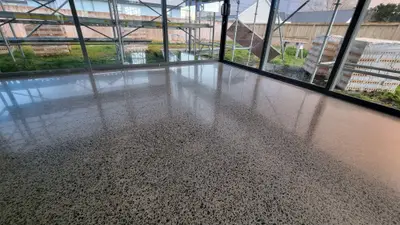
Description: A light grind is what we call salt and pepper. Only the very tops of the stones in the slab are exposed, creating a fine speckled appearance. The cement itself remains the background, with small aggregate and exposed stone tips sitting within the cement matrix. This is the lightest possible grind and produces a subtle, speckled look that most people picture when they think of "polished concrete."
Best for: Homes where the owner wants a subtle stone fleck without bold aggregate. Works best on flat, consistent slabs in good condition. True salt and pepper is harder to achieve on older slabs or slabs that need significant flattening.
Medium Grind - Standard Flattening
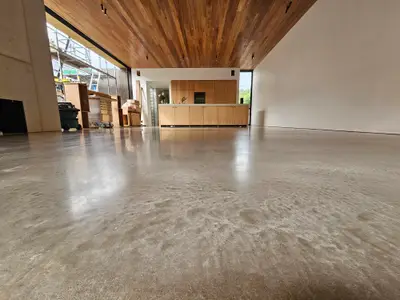
Description: A medium grind is the standard flattening process. It cuts deeper than a light grind but does not chase consistent large aggregate exposure. The result is a natural finish - what we call "what it is, it is" - that takes the slab to a clean, level surface and lets the character of the concrete come through. The aggregate that does show is whatever the slab gives you, rather than a uniform stone pattern.
Best for: Renovation jobs, carpet removal jobs, and most residential homes. This is the most practical level for older slabs or slabs that need flattening. It also blends imperfections well and produces a hard-wearing, character-rich surface.
Heavy Grind - Full Exposure
Description: A heavy grind removes significantly more material to fully expose the larger aggregate stones across the surface. This is also called a full exposure finish. At this depth, the stones become the dominant visual feature and the cement fills the gaps between them.
Best for: Feature floors, large open commercial spaces, and residential floors where the owner wants bold stone character. For a side-by-side look at how this compares with a light grind, see our heavy aggregate vs salt and pepper comparison. Works well in larger areas where the pattern has room to breathe.
Benefits of Polished Concrete (All Grind Levels)
Durability: Polished concrete is hard-wearing and resistant to chips, stains, and abrasion. It handles everyday foot traffic, furniture, and family life without showing wear.
Low maintenance: Regular sweeping and occasional damp mopping is all that is needed. There is no coating to peel, chip, or replace.
Reflectivity: The polished surface bounces light around the room, brightening interiors and reducing the need for artificial lighting.
Eco-friendly: Polishing uses the existing concrete slab. There are no new materials added, no coatings to replace over time, and the floor can last for decades.
Cost-effective over time: The upfront cost is comparable to mid-range tiles, but with much lower lifetime maintenance and no replacement cost. Our polished concrete cost guide for Auckland breaks down current pricing per m2.
Choosing the Right Grind Level
The right level depends on three things:
- What your slab can deliver. Older or uneven slabs usually need a medium grind to produce a clean result. New, flat, power-floated slabs can take any level - including a cream polish with no grind at all.
- The look you want. If you want a smooth grey surface with no stone, go cream. If you want a subtle speckle, go light (salt and pepper). If you want a natural, character-keeping floor, go medium. If you want bold aggregate, go heavy.
- The room and use. Salt and pepper and cream finishes suit minimalist interiors and bedrooms. Medium and heavy grinds handle high-traffic areas, kitchens, and commercial spaces well.
At Diamond Shine Concrete, we walk every job and assess the slab before recommending a grind level. A test patch is often the best way to see what your floor will actually look like before committing. Read more about our concrete grinding and polishing service.
Which Grind Level Will Your Slab Actually Take?
This is where the theory meets your actual floor, and the two do not always agree.
The grind level you end up with is not purely a choice. It is a negotiation with the slab. Older concrete, uneven floors, and anywhere tiles or carpet glue have been removed usually need a medium to heavy grind whether or not that was the plan, because a light grind cannot level the surface or lift adhesive cleanly. True salt and pepper needs a flat slab in good condition, and on a renovation floor it is often simply not available.
That is not bad news. Heavier exposure hides a slab's history far better than a light grind does, and most people prefer the result once they see it in person.
If your floor is already polished and the exposure looks uneven or blotchy across the room, that is a different problem, and our guide to what to do if your concrete floor looks patchy covers what can be done about it.
Send us a photo of your floor and we will tell you which grind levels are realistically on the table for your slab, before anyone comes out. Get a free quote.