
Concrete Polishing and Grinding Auckland
Auckland's specialist concrete polishing and grinding team - residential and commercial. Owner-operated, Auckland-wide, with a 10% price beat guarantee on every job.

Concrete Floor Grinding and Polishing in Auckland
Concrete grinding and polishing is a single on-site process: we grind your slab back with progressively finer diamond tooling, then mechanically polish it to the sheen you choose. It is not a coating or a topical buff. Diamond Shine Concrete grinds and polishes residential and light-commercial floors across Auckland, turning a plain or tired slab into a durable, low-maintenance surface that lasts 20+ years with good maintenance.
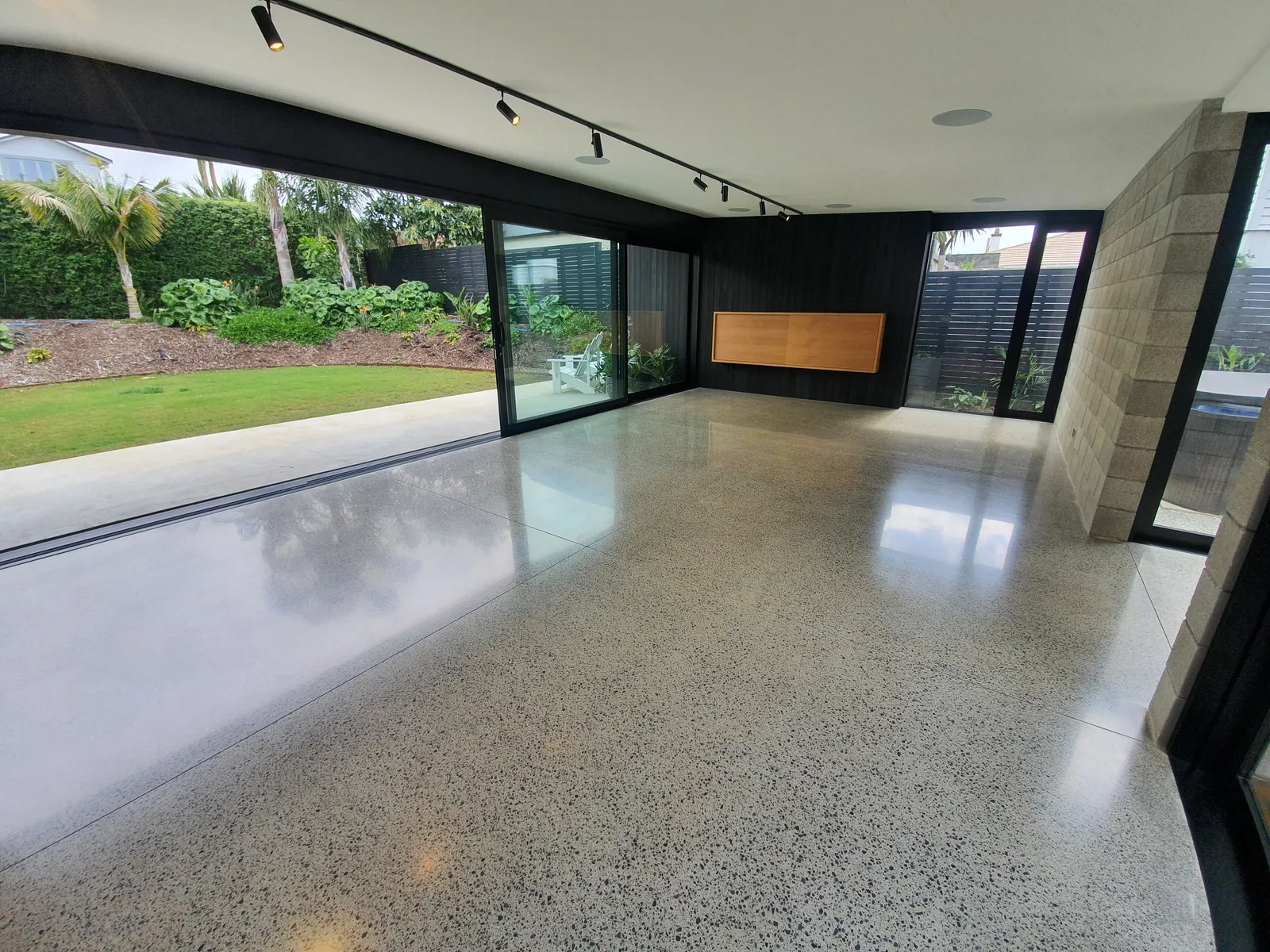
The finished floor is the concrete itself, refined. There is nothing laid on top to peel, yellow, or delaminate. Two choices shape the look: how deep we grind (how much stone, or aggregate, is exposed) and how far we take the final polish (the sheen). Both are decided on your slab, with a sample grind, before we commit.
Get a quote: Contact us or call Bowie on 021 414 082.
For commercial work - retail, warehouse, hospitality, and industrial floors - see our dedicated commercial concrete polishing page. For driveways, patios, paths, and pool surrounds, see outdoor concrete.
Concrete Grinding vs Polishing: What Is the Difference?
People search for "concrete grinding" and "concrete polishing" as if they are two services. They are two stages of the same job, and you almost always need both.
Grinding is the coarse work. Diamond tooling cuts into the surface of the slab to flatten it and expose the amount of stone you want. This is where the character of the floor is decided, and it is also where slab problems get dealt with: high spots, adhesive, tack-strip damage, old coatings.
Polishing is the fine work that follows. Progressively finer diamond grits refine that ground surface up through the sheen levels until the floor reaches the finish you chose.
When someone says "polished concrete", they mean the whole grinding-and-polishing sequence, not a final buff. And when someone asks for "concrete grinding" on its own, what they usually want is either a floor prepared for another covering, or this full process. If you only need the slab flattened and prepared rather than finished, that is concrete prep.
The practical consequence: a quote for "grinding" and a quote for "polishing" should not be compared as if they are alternatives. Ask what grind depth is included and what sheen the floor is being taken to.
What Concrete Grinding and Polishing Involves
Grinding and polishing is a mechanical process, not a chemical or applied one. We run a series of diamond-tooled passes over the floor, starting coarse to grind and level, then stepping through finer and finer grits to polish. A chemical densifier hardens the surface partway through so the concrete takes a higher shine and resists wear.

Here is the sequence we follow on every floor:
1. Site assessment and sample grind. We inspect the slab, check its condition and flatness, and grind a small test patch so you can see how your concrete actually responds before you commit to a grind level and sheen. 2. Preparation. We remove any existing coverings, adhesive, or coatings, then fill cracks and joints. 3. Grinding. Progressively finer diamond passes to reach the agreed aggregate exposure and flatten the surface. 4. Densifying. A chemical densifier soaks in and hardens the concrete. This is what lets the floor take a higher polish and resist wear, and it is the step that separates a mechanically polished floor from a slab that has simply been ground flat. 5. Polishing. The final grit passes bring the floor up to the sheen you have chosen. 6. Sealing. We finish with a penetrating sealer that soaks into the concrete rather than sitting on top as a film.
We use the same process across the entire floor for a consistent result. We do not treat edges, entrances, or transitions differently.
Choosing Your Grind Depth and Sheen
Two independent choices shape the finished floor, and the sections below on this page set out the options in full.
Grind depth controls how much aggregate is exposed, from a cream finish with no stone showing through to full exposure with the larger stones on display. Most new-build slabs in good condition can go anywhere on that scale. Most renovation and carpet-removal floors end up at a medium to heavy grind because that is what the slab demands. For the detail, read our guide to the levels and depths of grinds, or our visual guide to what a salt-and-pepper finish looks like.
Sheen is set by how far we take the final polishing grits, and it is independent of grind depth. For most homes we recommend satin to semi-gloss. It gives a clean, contemporary sheen that shows off the floor without the maintenance sensitivity of the flatter end or the very high shine.

A matte finish is technically less slippery, but it is more susceptible to staining and wear, so it is a trade-off rather than a free win. At the other end, a high-gloss floor is striking but shows footprints and marks more readily. Sheen is also subjective: what one person calls semi-gloss, another finds too glossy. That is exactly why we do a sample grind on site - grit numbers are a guide, and the sample is the reliable way to confirm the look you want.

What Concrete Grinding Costs in Auckland
Pricing depends mainly on floor area and slab condition. Larger, simpler floors cost less per square metre because setup and mobilisation are spread across more area. All prices are + GST.
| Job type | Price per m2 (+ GST) |
|---|---|
| Average residential (50-70m2) | ~$100 |
| Larger residential (70-200m2) | $80-$100 |
| Large open-plan (200m2+) | ~$60 |
| Finished homes (detailed work in an occupied house) | $120-$130 |
| Carpet removal / renovation | $90-$120 |
For jobs under 20m2 a minimum charge of $2,250 + GST applies. Down the track, a residential floor only needs a periodic rebuff to restore the sheen, at $30-$50 per m2 + GST every 3-5 years. Regrinding an older polished floor back to a fresh finish (restoration) runs $60-$100 per m2 + GST.
These rates cover grinding and polishing as one job, because that is how the work is actually done. There is no separate "grinding only" rate for a floor that is being polished, since the grinding passes are the first half of the same process.
For the full picture, including what drives a quote up or down, read our polished concrete cost guide. Commercial pricing is set out on the commercial concrete polishing page.
Renovation and Carpet-Removal Floors
Polishing an existing slab after carpet or tiles come up is one of our most common jobs, and it needs a realistic conversation up front. Older slabs are rarely dead flat, and carpet adhesive smears and burns under a light cut, so most renovation floors need a medium to heavy grind depending on what we find. A heavier grind also blends carpet tack-strip damage (which runs 3-4mm deep) into the stone exposure, making it far less visible.

Because of this, a true salt-and-pepper (light grind) finish is often not achievable on renovation floors. That is not a downgrade: a medium-to-heavy grind on an old slab produces a rich, characterful floor. The sample grind on arrival shows you exactly how your slab will come up. A homeowner prep tip: you can pull up the tack strips yourself along with the carpet. The holes get filled during polishing either way, and it saves us time on site.
If your slab has never been polished and you are wondering whether it is worth it at all, read can polishing transform an old or damaged concrete floor.
Floors We Cannot Polish (and What We Do Instead)
Grinding handles mild-to-moderate unevenness comfortably, routinely 3-5mm off the high points and up to around 8mm. Beyond that, or where a slab is genuinely poor, there are honest limits worth knowing before you plan a polished floor:
- We do not polish over self-levelling compound. Our grinders are heavy (even the lightest is around 500kg), and running that weight over a few millimetres of weaker self-leveller leads to cracking, delamination, and failure over time. For severe unevenness where you still want a polished finish, the option is a structural concrete topping or overlay (25-50mm), which we grind and polish once it has cured.
- Where a slab truly needs self-levelling compound, the realistic path is to prepare it, apply the self-leveller, and install an alternative floor (tile, timber, vinyl, or carpet) on top - not polish over it.
- Tile ghosting is a slab characteristic, not a polishing fault. Grinding reduces and blends the shadow left by old tiles, but it does not fully remove it. We manage expectations with a sample grind first.
We are straight with you: if you want a perfectly uniform floor with zero variation over a problem slab, polished concrete may not be the right choice, and we will tell you.
Why Choose Diamond Shine Concrete
- Grinding and polishing is all we do. Not a sideline to a general building business. Bowie has 14 years of hands-on experience reading how different slabs respond.
- Sample grind before you commit. You see how your actual concrete comes up before any decisions are locked in. No surprises.
- Honest advice. If your slab has limits, we tell you up front rather than overselling a finish it cannot deliver.
- Penetrating sealers, no gimmicks. We seal with penetrating sealers that soak into the concrete. We never rely on topical coatings or anti-slip additives; grip comes from the finish level and grind depth.
- A floor that lasts. A mechanically polished floor lasts 20+ years with good maintenance, needing only a periodic rebuff to bring the sheen back.

Types of Grind
- Full aggregate exposure, where the concrete is ground down to reveal the aggregate within the mix, creating a textured, terrazzo-like finish.
- Partial aggregate exposure, where the grinding reveals some of the aggregate, providing a balanced look between the concrete and the exposed aggregate.
- Salt and pepper finish, where only a minimal amount of grinding is done to remove surface blemishes, resulting in a subtle, lightly polished appearance.
Cream or natural polish in concrete polishing refers to a smooth, slightly glossy finish achieved by refining the surface with fine grit diamond abrasives. No grinding is done in this process


Two popular named finishes
Grind and Seal - The slab is ground to the desired level and then sealed with a penetrating or topical sealer. A fast, cost-effective option well suited to garages, workshops, commercial floors, and outdoor covered areas.
Mechanically Polished Concrete - The highest grade of polished concrete. Ground through multiple diamond tooling stages and hardened with a concrete densifier. A hard, reflective surface that will not peel or flake - because there is no coating. The standard for commercial floors and high-end residential.
Types of Polish
A polished concrete floor can exhibit a range of sheen levels, from matte to high gloss, depending on the desired aesthetic and functional requirements. A matte finish provides a subtle, understated look that is smooth to the touch and has a low level of light reflectivity. In contrast, a high-gloss finish offers a reflective, mirror-like surface that enhances the brightness of the space and creates a more luxurious appearance. Between these extremes, various levels of sheen can be achieved, allowing for a customized finish that suits the specific design goals of the project.


Residential and Commercial Concrete Polishing Auckland
From family homes to large-scale commercial fit-outs, we polish concrete floors across Auckland for every type of project.

Residential Concrete Polishing
We work with homeowners at every stage of the floor journey - new builds, carpet and tile removals, garage transformations, and restoration of existing polished floors. If you are removing carpet and wondering whether the slab underneath is worth polishing, the answer is usually yes. Most residential slabs can be polished to a high standard, even with tack strip damage or old adhesive.
- New build slab polishing (coordinate with your builder)
- Polish after carpet or tile removal
- Garage floor transformation
- Restoration of dull or patchy floors
Commercial Concrete Polishing
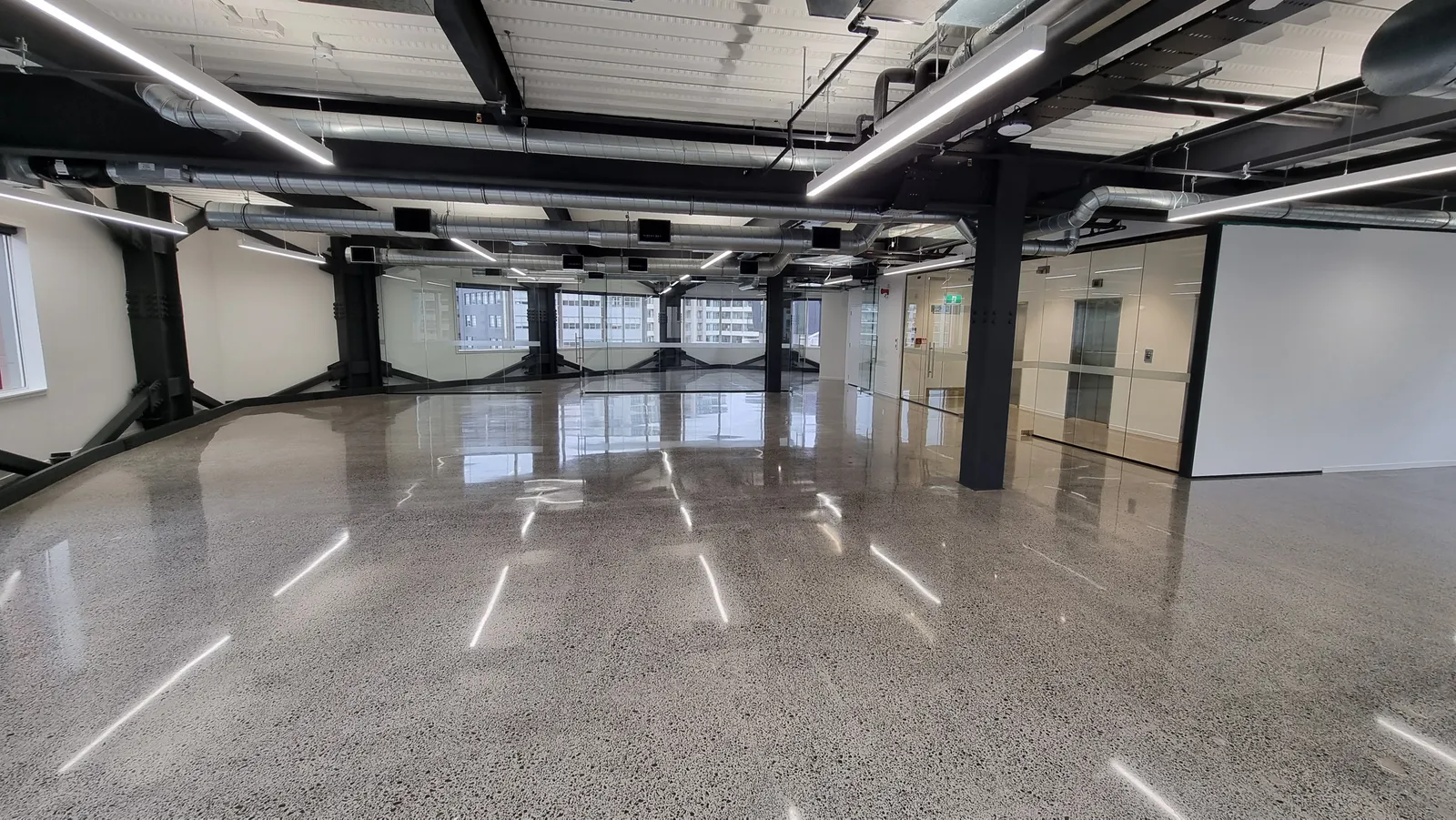
Commercial concrete floors handle heavy foot traffic, trolleys, forklifts, and daily cleaning chemicals. Mechanically polished concrete handles all of it - without a coating that can chip, peel, or need replacing. We work with retail fit-out consultants, facilities managers, warehouse operators, and hospitality venues across Auckland.
- Retail stores and supermarkets
- Warehouses and industrial facilities
- Hospitality venues and restaurants
- Office floors and fit-outs
Our commercial finishes can be tailored to your slip resistance requirements. Ask about options when you get your quote.
Take a look at our recent projects
Here customers can view some of our recent projects by visiting our website's gallery or portfolio section. Here, you can browse through images showcasing the quality and variety of work we've completed, gaining inspiration and insight into the possibilities for your own projects.

The Strand, Waiheke

Wharf Road Wellsford

Beachlands Architectural Renovation
How Concrete Polishing Works
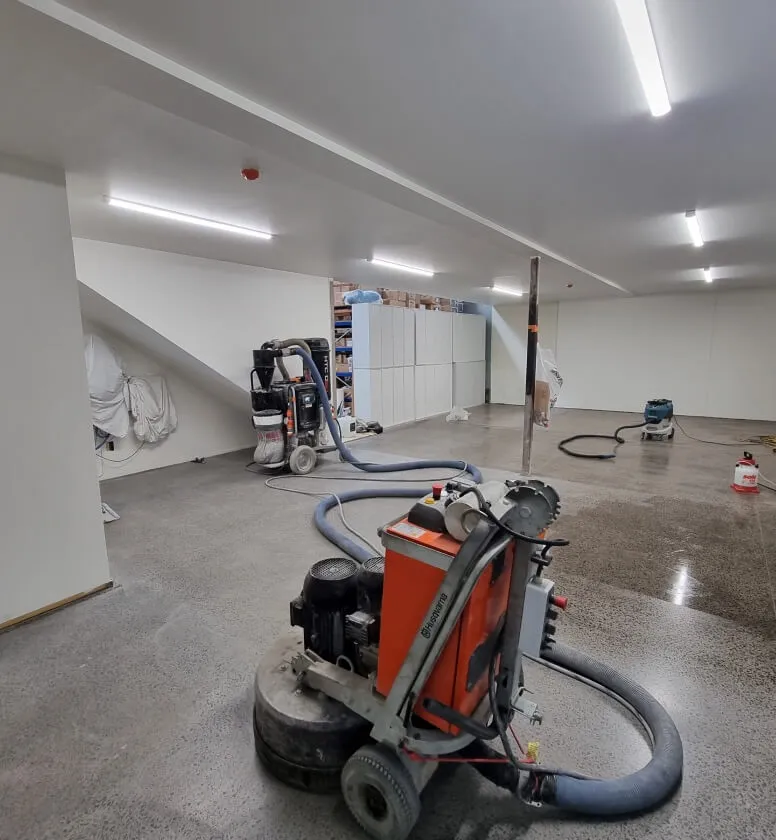
Every concrete polishing job - residential or commercial - follows the same sequence. Here is a condensed version. Full detail is on our Process page.
Frequently asked questions
Still got questions? Find quick answers to common questions about our polished concrete services.
Maintaining polished concrete is relatively easy. Regular cleaning with a neutral pH cleaner and occasional resealing can help keep the surface looking its best.
- None (Cream Finish): A cream finish may be more susceptible to wear and staining, as the surface is smoother and less textured. It may require more frequent maintenance to keep it looking its best.
- Partial Exposure: Partial exposure provides a good balance between aesthetics and durability. The exposed aggregate adds texture to the surface, which can help hide wear and tear over time.
- Full Exposure: Full exposure can enhance the durability of the floor, as the exposed aggregate acts as a wear surface. It can withstand heavy traffic and is less likely to show scratches or wear patterns.
Polished concrete undergoes a grinding and polishing process that regular concrete does not. This process enhances the appearance, durability, and stain resistance of the concrete surface.
The time it takes to polish concrete can vary depending on the size and complexity of the area, the level of polishing desired, and the condition of the concrete. In general, the process can take anywhere from a few days to a week or more.
Mechanically polished concrete can last 20+ years with good maintenance. Because there is no coating to peel or replace, it outlasts most alternatives. It will dull over time with regular use - similar to timber or tiles - but a periodic rebuff restores the finish.
Comparatively, some other flooring options have different lifespans:
- Carpet: Typically lasts 5-15 years, depending on quality and maintenance.
- Vinyl: Can last 10-20 years, but may need replacing sooner in high-traffic areas.
- Hardwood: With proper care, hardwood floors can last 25 years or more.
- Tile: Durable and can last 20 years or more, but may require regrouting or repairs over time.
- Laminate: Generally lasts 10-20 years, depending on quality and wear.
The cost of polished concrete in Auckland depends on floor size, slab condition, and finish type. Most jobs fall between $60 and $130 per m2 + GST. Larger open areas (200m2+) can come in around $60 per m2, while detailed work in finished homes can reach $120-$130 per m2. We have a minimum charge of $2,250 + GST for small areas under 20m2. For a full breakdown by floor size and finish type, see our polished concrete pricing guide. Contact us for a free site assessment and accurate quote.
Cracks:
Small cracks can be filled with a specially formulated color-matched patch filler to create a seamless surface.
For larger cracks, a more extensive repair may be needed, such as cutting out the damaged section and patching it with new concrete.
Damage:
Surface damage, such as chips or scratches, can be repaired using patching compounds or fillers designed for concrete.
Deeper damage may require more extensive repairs, such as grinding down the surface to remove the damaged area and then patching it with new concrete.
Joints:
Control joints, which are intentional cuts in the concrete to control cracking, will be filled with a specially formulated color-matched patch filler to prevent the edges chipping while grinding. These can be later recut at the discretion or left in depending on the movement of the concrete.
Expansion joints, which allow for the natural movement of the concrete, can also be filled with a flexible material to maintain a smooth surface.
It's important to address cracks, damage, and joints before polishing to ensure a uniform and high-quality finish. Your polishing professional can assess the condition of your concrete floor and recommend the best approach for repairing and preparing it for polishing.
The best time to polish is before paint, and ideally before plaster (gib stopping). Once the house is weathertight and gib lined, the polishing team has a clean, open shell to work on - no painted walls to protect, no fresh stopping to damage, and no fixed surfaces to mask off.
The slab should cure for at least 28 days before grinding begins. Skirtings, kitchen, bathroom and joinery should always go in AFTER polishing - this is especially important for heavier grinds, where removing several millimetres off the slab means skirtings installed beforehand can end up looking like they are floating above the floor. Once polishing is complete, the floor needs to be properly protected during the remaining build stages.
Ready to transform your floor? Get a no-obligation quote from Auckland's concrete polishing specialists.
We beat any written quote from a licensed Auckland concrete polisher by 10%. Residential and commercial jobs. Free site assessments across all of Auckland.
