
Mangere Central Barber Shop
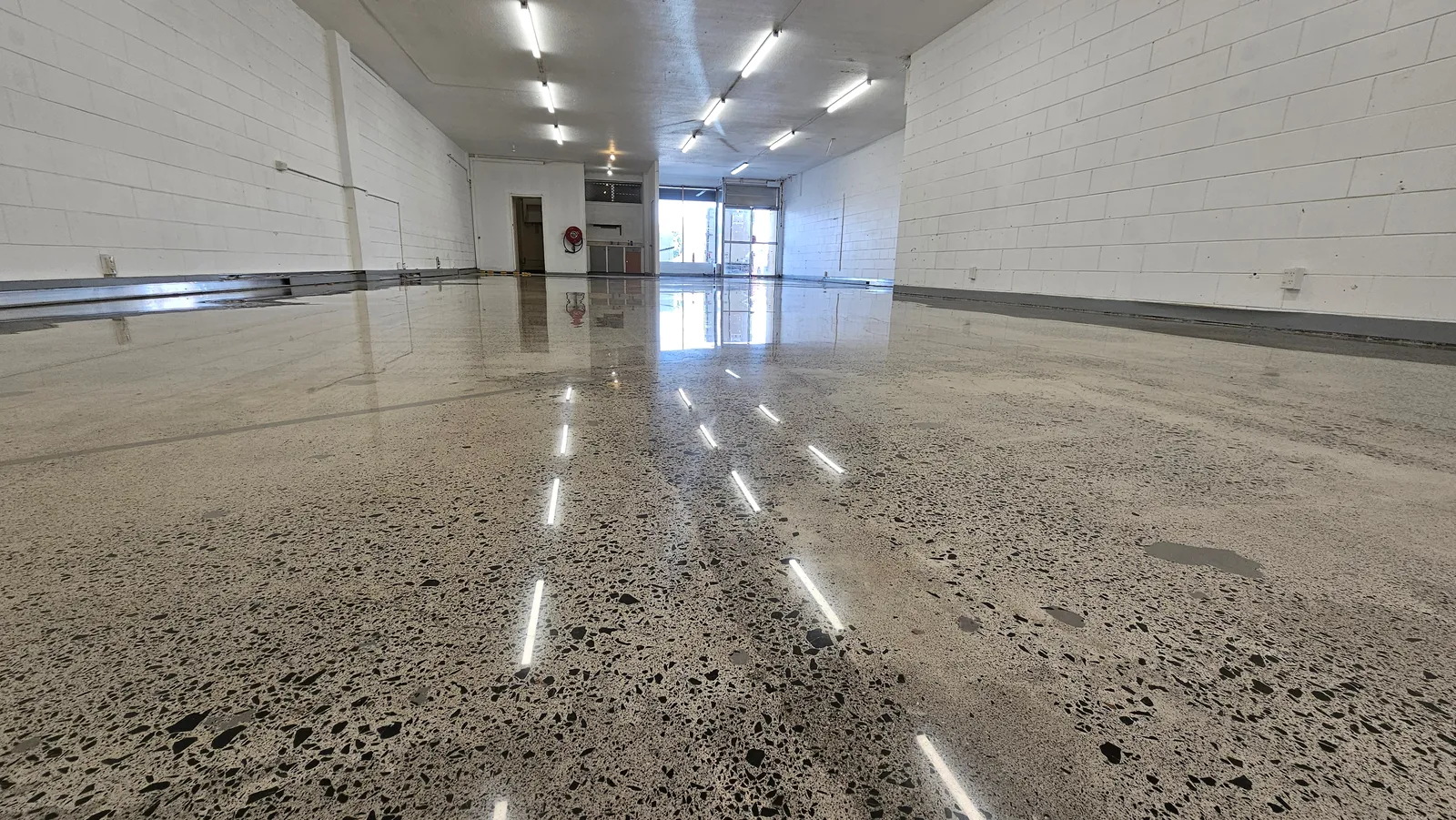
This 1960s concrete slab was polished to a high-gloss finish inside a South Auckland barber shop and clothing store. The original concrete character became a key feature of the interior fitout.


The Challenge
Working within an active shopping centre required careful coordination with surrounding tenants. Noise, dust, and access all had to be managed around the centre's trading hours.




What we did
We ground the old 1960s slab using the 1500-grit Hiperfloor system, exposing the aged aggregate and polishing to a high-gloss finish. The old concrete's natural character - marks, colour variation, and patina - became a design feature rather than a flaw. All concrete polishing was completed around shopping centre hours.

Old Concrete

Heavy Grind

High Gloss Polish
Frequently asked questions
Still got questions? Find quick answers to common questions about our polished concrete services.
For the best result, clear all furniture and belongings from the rooms being polished. If you are removing carpet yourself, you can also pull up the tack strips - this saves time on site. We handle all dust extraction and floor protection, but removing breakables and covering nearby surfaces helps keep things running smoothly. For new builds, polishing should happen after gib and plaster but before skirtings and cabinetry are installed.
Every concrete slab is unique. The final look depends on factors like the age of the slab, the aggregate mix used when it was poured, and the condition of the surface. Older slabs often reveal beautiful stone once ground back, while newer slabs tend to have a more uniform appearance. We assess your specific slab during a free site visit and can show you examples of similar floors we have completed. This gives you a realistic idea of what your floor will look like before any work begins.
Polished concrete is ground and refined to a high sheen using progressively finer diamond tooling, resulting in a glossy, reflective surface. Honed concrete follows the same grinding process but stops at a lower grit level, leaving a smooth, matte finish with little to no reflectivity. Honed is popular for residential interiors and bathrooms where a warmer, less industrial look is preferred. Both are durable and low-maintenance.
Yes. We offer free site visits and quotes across Auckland. We prefer to see the floor in person before quoting - this lets us assess the concrete condition, recommend the right finish, and give you an accurate price with no surprises. Get in touch to book yours.
Mechanically polished concrete can last 20+ years with good maintenance. Because there is no coating to peel or replace, it outlasts most alternatives. It will dull over time with regular use - similar to timber or tiles - but a periodic rebuff restores the finish.
Comparatively, some other flooring options have different lifespans:
- Carpet: Typically lasts 5-15 years, depending on quality and maintenance.
- Vinyl: Can last 10-20 years, but may need replacing sooner in high-traffic areas.
- Hardwood: With proper care, hardwood floors can last 25 years or more.
- Tile: Durable and can last 20 years or more, but may require regrouting or repairs over time.
- Laminate: Generally lasts 10-20 years, depending on quality and wear.
The cost of polished concrete in Auckland depends on floor size, slab condition, and finish type. Most jobs fall between $60 and $130 per m2 + GST. Larger open areas (200m2+) can come in around $60 per m2, while detailed work in finished homes can reach $120-$130 per m2. We have a minimum charge of $2,250 + GST for small areas under 20m2. For a full breakdown by floor size and finish type, see our polished concrete pricing guide. Contact us for a free site assessment and accurate quote.
The time it takes to polish concrete can vary depending on the size and complexity of the area, the level of polishing desired, and the condition of the concrete. In general, the process can take anywhere from a few days to a week or more.
In general, most concrete can be polished. However, the quality of the final result can depend on factors such as the quality of the concrete mix, the level of aggregate exposure desired, and the condition of the existing concrete surface.
Some benefits of polished concrete include its durability, low maintenance requirements, and aesthetic appeal. It is also environmentally friendly and can help improve indoor air quality.
Related Projects

Auckland Museum Cafe Floor

PwC Tower CBD Floor Restoration
