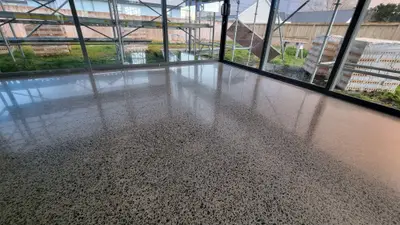
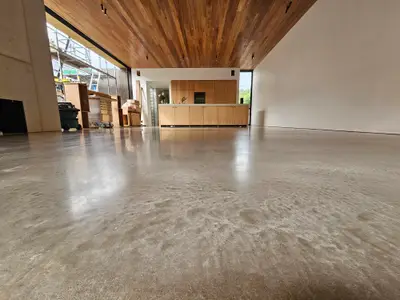
A mechanically polished concrete floor can last 20 years or more with good maintenance. A grind and seal floor typically lasts 5 to 10 years before needing a reseal, depending on foot traffic. The difference comes down to how each system works: one hardens the concrete itself, while the other relies on a topical coating that wears over time. Both are durable - but their longevity profiles and maintenance needs are very different.

Two Systems, Two Lifespans
The biggest factor in how long your polished concrete floor lasts is which polishing system was used. These are not interchangeable terms - they are fundamentally different processes with different longevity profiles.
Mechanically Polished Concrete
Mechanical polishing is a system where the concrete itself is ground, densified, and polished to a shine. There is no coating on top. The shine comes from the concrete surface being refined through progressively finer diamond grits until it reflects light naturally.
Because there is no coating to wear off, a mechanically polished finish does not degrade the way coated floors do. The concrete is chemically hardened with a lithium densifier during the process, making the surface harder and more resistant to wear than untreated concrete.
That said, the floor will dull over time with normal use - similar to how timber or tiles gradually show wear. This is cosmetic rather than structural. A periodic rebuff (a light maintenance polish) restores the shine. We have seen mechanically polished installations that are 10 to 15 years old and still look fantastic after a rebuff. The floor does not peel, flake, or cloud over because there is nothing on top of it to fail.
Grind and Seal
Grind and seal is a process where the concrete is ground to a desired level of aggregate exposure, then sealed with a topical coating - typically a polyurethane or acrylic sealer. The coating provides the shine and protection.
This coating wears over time, especially in high-traffic areas. Residential grind and seal floors typically need resealing every 5 to 10 years. Commercial floors with heavy foot traffic may need resealing every 3 to 5 years.
Grind and seal is not a bad system. It costs less upfront and works well for many applications. But it is a renewable finish rather than a long-term one. For a full comparison of the two systems, read our guide on grind and seal vs mechanically polished concrete.
How Polished Concrete Compares to Other Flooring
When people ask how long polished concrete lasts, they are usually comparing it against other flooring options. Here is an honest comparison based on what we see in Auckland homes and commercial spaces.
Flooring Lifespan Comparison
The standout here is mechanically polished concrete. You pay once for the installation and the floor lasts decades with minimal upkeep. The only ongoing cost is a periodic rebuff - a light maintenance polish that refreshes the surface shine without reapplying any coating. Like any floor, it will show some wear over time, but a rebuff brings it right back.
For a detailed breakdown of installation costs, read our polished concrete pricing guide.
What Affects Longevity
Even a mechanically polished floor needs some care. Here is what determines whether your polished concrete floor looks great at year 5 or year 25.
Traffic levels
A residential living room sees very different wear to a supermarket entrance. Higher traffic means the surface shine dulls faster, but with a mechanically polished floor this is cosmetic - the floor is not failing, it just needs a rebuff to restore the gloss.
Maintenance routine
The single biggest factor in keeping a polished concrete floor looking its best is regular cleaning. Dust and grit act like sandpaper underfoot, gradually dulling the surface over time. A simple routine of dust mopping or vacuuming a few times a week prevents this entirely.
For wet cleaning, use a pH-neutral cleaner and a microfibre mop. Avoid vinegar, bleach, or ammonia-based products - these can etch the surface over time.
Initial system choice
This is the decision that matters most. If you choose mechanical polishing, you are investing in a floor that should last decades without replacement. If you choose grind and seal, you are committing to periodic resealing as part of the floor's lifecycle. Neither is wrong - it depends on your budget and priorities.

Maintenance Schedule
Here is a practical maintenance timeline based on what we recommend to our Auckland clients.
Residential Mechanical Polish
- Daily/weekly: Dust mop or vacuum to remove grit
- Monthly: Wet mop with pH-neutral cleaner
- Every 3-5 years: Professional rebuff to restore surface shine
- Never: Full replacement or recoating
Commercial Mechanical Polish
- Daily: Dust mop or auto-scrubber
- Weekly: Wet clean with pH-neutral solution
- Every 1-2 years: Professional rebuff (high-traffic areas may need annual service)
- Never: Full replacement or recoating
Grind and Seal (Residential or Commercial)
- Daily/weekly: Dust mop or vacuum
- Monthly: Wet mop with recommended cleaner (check with your sealer manufacturer)
- Every 5-10 years (residential): Full reseal - old coating stripped, new coating applied
- Every 3-5 years (commercial): Full reseal
The rebuff process for a mechanically polished floor is quick and minimally disruptive. It involves running fine diamond pads across the surface to restore the polish - no chemicals, no coatings, no drying time. Most residential rebuffs are done in a single day.

Real-World Durability We Have Seen
We are not just quoting manufacturer claims. We have been polishing concrete across Auckland for years and have revisited floors we installed a decade ago.
Mechanically polished floors in residential homes that were done 10 to 15 years ago still look exceptional. The aggregate exposure has not changed, the surface has not clouded, and the floor has not required any recoating. A quick rebuff brings them right back to day-one shine.
Commercial floors in retail and hospitality see far more abuse - trolleys, foot traffic, spills, dropped equipment - and still hold up. The hardened surface resists scratching and staining far better than coated alternatives.
One of the most convincing examples is polished concrete in bars and restaurants. These are high-traffic, high-abuse environments where any flooring weakness shows quickly. The floors we have polished in hospitality venues still look fantastic years later.
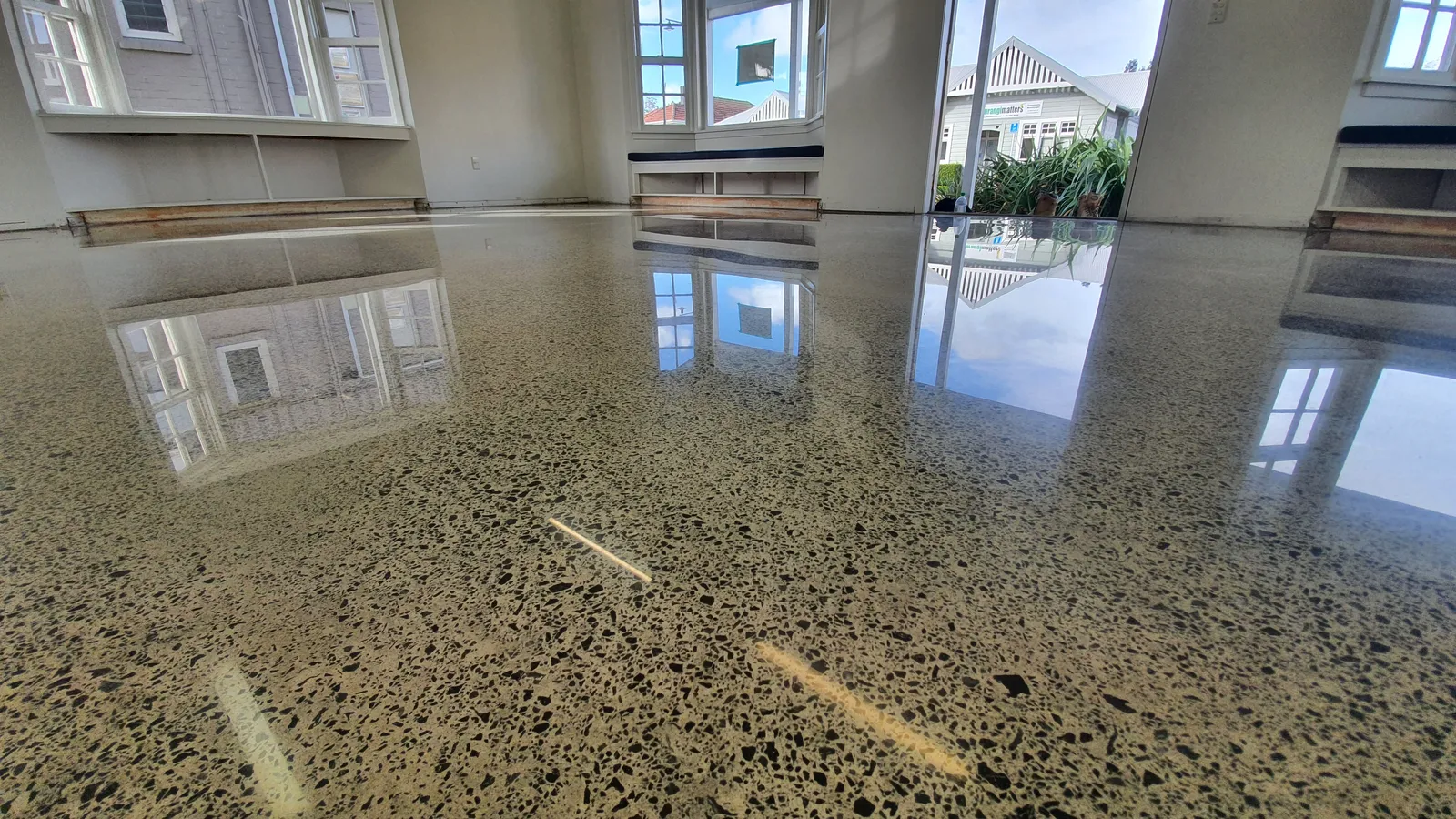
Does Polished Concrete Crack?
This is a common concern, so let us address it directly. Concrete can crack - it is a rigid material and all concrete structures develop some cracking over time due to shrinkage, settling, and movement.
However, these cracks are rarely a durability issue. Hairline cracks do not affect the structural integrity of the floor or the polished surface. If a crack does appear, it can be filled with a colour-matched resin and re-polished so it blends into the floor.
The polishing process itself does not cause cracking. If anything, the densifier applied during mechanical polishing strengthens the surface and reduces the likelihood of surface crazing.
Frequently Asked Questions
How much does polished concrete maintenance cost?
A professional rebuff for a residential mechanically polished floor costs roughly $30 to $50 per m2 + GST and is needed every 3 to 5 years. For a 60m2 living area, that is approximately $1,800 to $3,000 every few years. Grind and seal resealing is more expensive at $50 to $80 per m2 because the old coating must be stripped before reapplying. See our pricing guide for full cost breakdowns.
Does polished concrete crack?
Concrete can develop hairline cracks over time due to natural shrinkage and settling. This is normal for all concrete structures and does not affect the durability of the polished surface. Cracks can be filled with colour-matched resin and re-polished if they appear.
Can you restore a dull polished concrete floor?
Yes. If a mechanically polished floor has dulled from years of foot traffic, a professional rebuff restores the shine without recoating. The process involves running fine diamond pads across the surface, typically completed in a single day. For grind and seal floors that have worn through their coating, a full reseal is needed.
What happens if I do not maintain my polished concrete floor?
A mechanically polished floor that is never maintained will gradually lose its surface gloss but will not fail structurally. The concrete is hardened, so it will not peel, flake, or degrade - it will just look duller over time, similar to how timber or tiles show wear. A rebuff at any point restores the shine. A grind and seal floor that is not resealed will eventually wear through its coating, leaving the concrete unprotected and more susceptible to staining.
Is polished concrete more durable than tiles?
In most practical terms, yes. Polished concrete has no grout lines to crack or stain, no individual tiles to chip or come loose, and no subfloor adhesive to fail. A mechanically polished floor is a single continuous surface that gets harder with age. Tiles typically last 20 to 30 years before replacement is needed, while a well-maintained mechanically polished floor can easily outlast them.