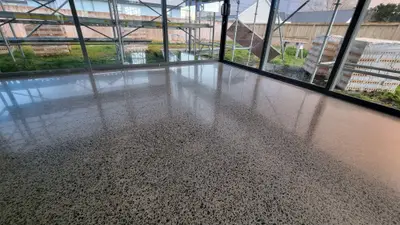
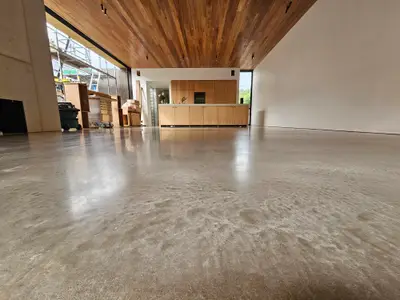
Salt and pepper is a light grind where only the very tops of the stones are exposed within the concrete. It creates a fine speckled appearance, with a mix of small aggregate and exposed stone tips sitting within the cement matrix - the cement itself remains the background. It is the finish most people picture when they think of polished concrete, though in practice many floors end up with more stone exposure than a true salt and pepper because the slab demands a deeper grind.
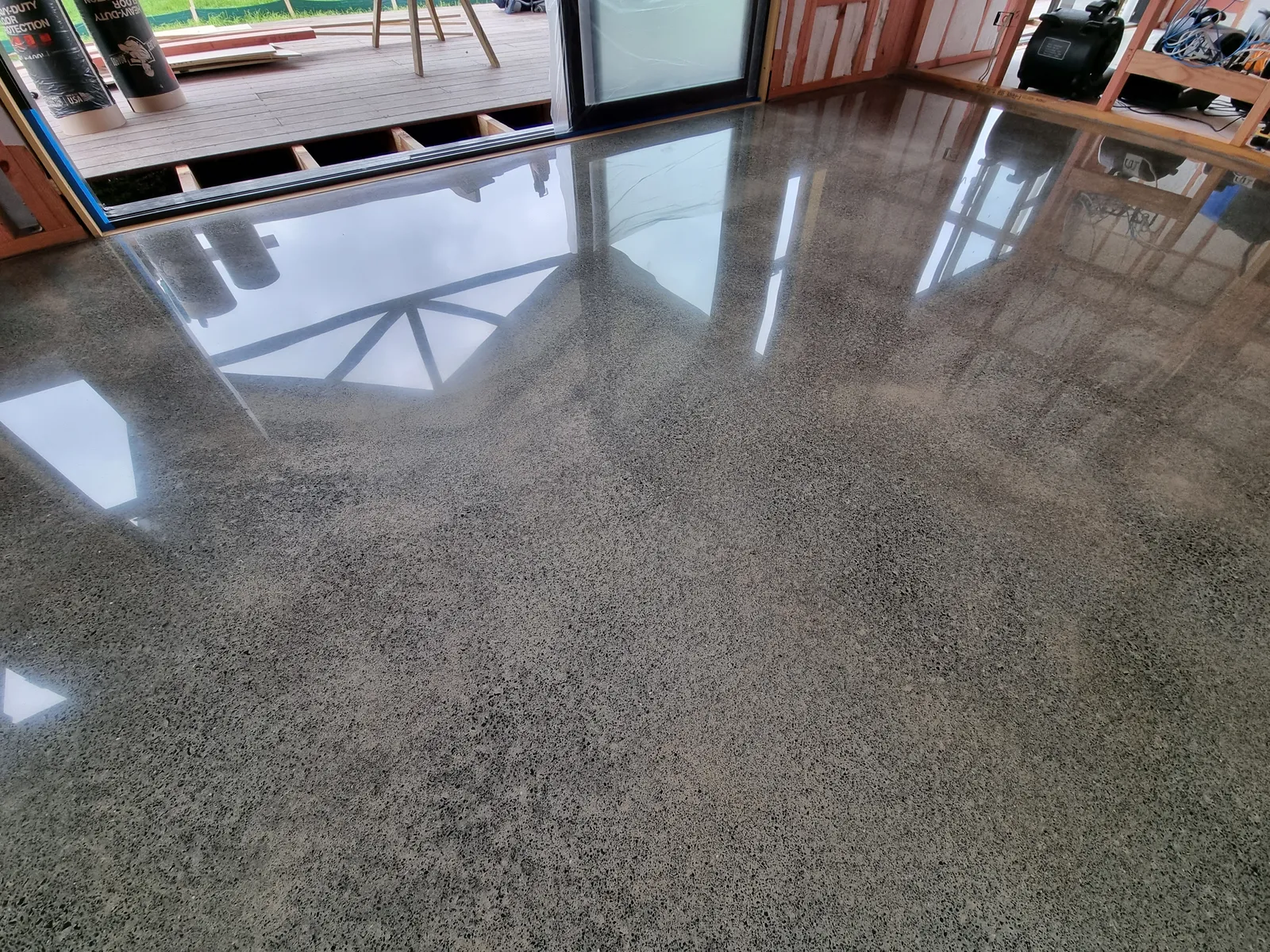
If you have been browsing polished concrete floors online, you have almost certainly seen salt and pepper without knowing the name. It is the look that most people picture when they think of polished concrete - subtle stone flecks through a smooth grey surface, with a soft natural pattern that changes slightly across the floor.
This guide breaks down what creates the salt and pepper effect, how different grind levels change the look, and what you need to know before choosing a finish for your home.
How the Salt and Pepper Effect Is Created
The look comes from how deep the grinding goes into the concrete slab. Every concrete slab is made up of two main components - cement paste (the grey binding material) and aggregate (the stones mixed into the concrete).
When a floor is ground, the diamond tooling removes the top layer of cement paste and starts exposing the aggregate beneath. How much aggregate shows through depends entirely on how deep the grind goes.
- The cement matrix is the grey background that the speckles sit within - this is the bulk of the surface on a light grind
- The "salt and pepper" is the fine speckle of small aggregate and exposed stone tips that appears as the grinder just kisses the very tops of the stones in the slab
The amount of speckle is controlled by the grinding depth. A light grind exposes only the very tops of the stones, creating a fine, even speckle against the cement background. A deeper grind cuts further into the stones and shifts the look toward visible aggregate. This is the single biggest decision you will make about how your floor looks.
Grind Levels Explained
There are three main grind levels, and each produces a distinctly different appearance. Here is what to expect from each.
Light Grind - Mostly Pepper
A light grind removes only the very top layer of the concrete surface. The result is mostly smooth grey cement paste with scattered fine aggregate specks - like ground pepper with a few grains of salt.

This is the most subtle option. The floor looks clean and uniform with just enough texture to give it natural character. Light grinds work well in minimalist interiors where you want a concrete look without heavy visual texture.
Medium Grind - Beyond Salt and Pepper
A medium grind goes deeper, exposing a balanced mix of cement paste and aggregate. This moves beyond true salt and pepper into more visible stone exposure - an even distribution of grey paste and stone flecks across the whole floor.
Medium grind is the most commonly requested finish for Auckland homes, and in practice it is what most floors end up with. It gives the floor enough personality to be interesting without being visually busy. The aggregate adds warmth and variation that plain grey concrete does not have. For renovation jobs - especially where old carpet, tiles, or adhesive have been removed - a medium grind is often the minimum depth needed to produce a clean, consistent result.
Heavy Grind - Full Aggregate Exposure
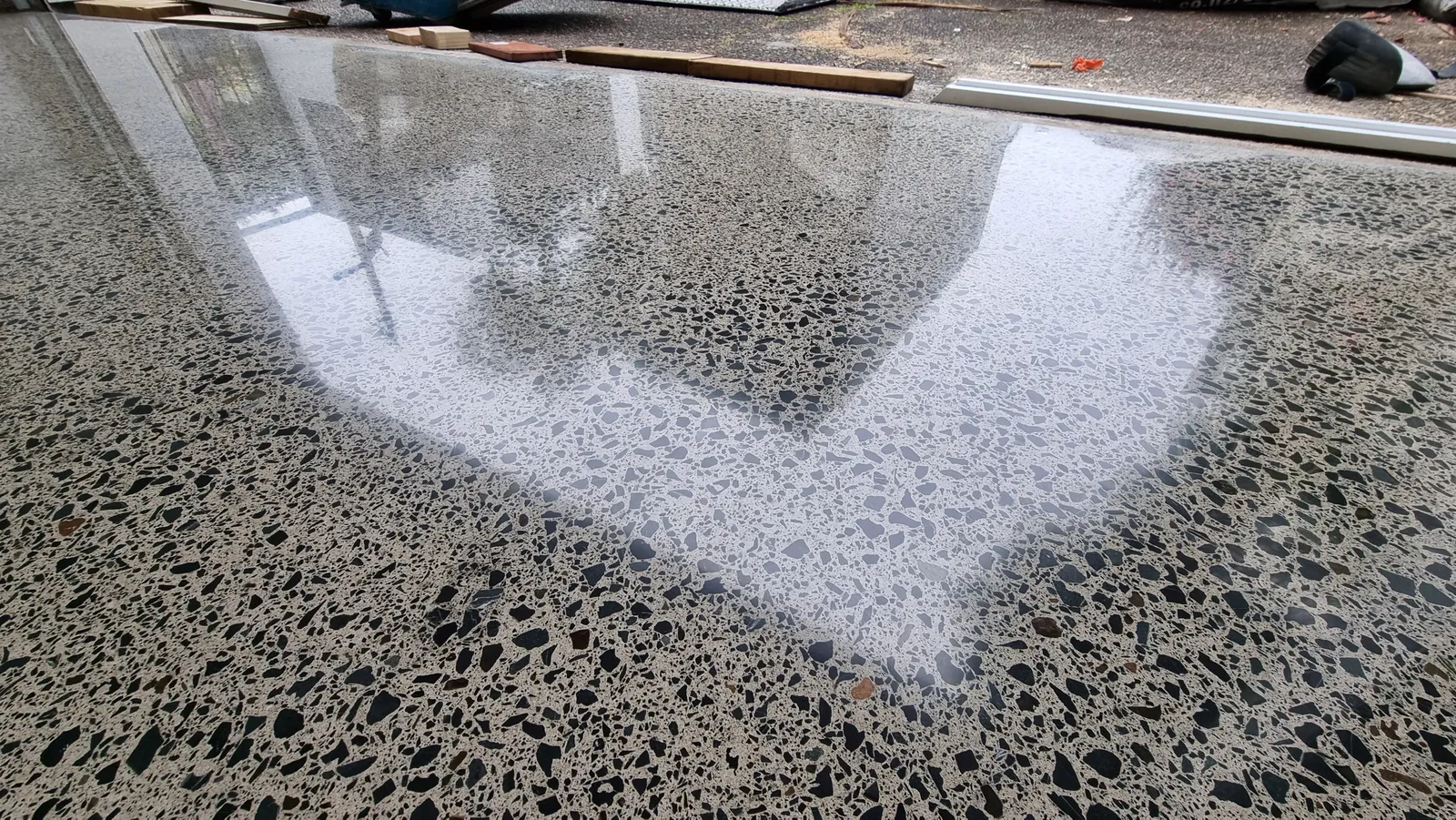
A heavy grind removes significantly more material, exposing large aggregate stones across the surface. At this depth, the look moves well beyond salt and pepper into what is called "full exposure" or "heavy aggregate."

This is a different aesthetic entirely. The stones become the dominant feature, and the cement paste fills the gaps between them. Full exposure floors have bold, natural stone character and work well in larger spaces where the pattern has room to breathe.
Heavy grind is a different aesthetic entirely from salt and pepper. If you are after the subtle speckled look, you want a light grind - though keep in mind that true salt and pepper is only achievable on flat, consistent slabs in good condition.
Grind Level Comparison
| Feature | Light Grind | Medium Grind | Heavy Grind |
|---|---|---|---|
| Aggregate visibility | Fine specks only | Balanced mix of paste and stone | Large stones dominate |
| Typical look | Smooth grey with subtle texture (true salt and pepper) | Balanced stone and paste | Bold natural stone |
| Best suited for | Minimalist interiors, bedrooms | Open-plan living, kitchens | Feature floors, large areas |
| Visual busyness | Low | Medium | High |
| Cost bracket | Standard | Standard to mid-range | Mid-range to higher |
| Grinding depth | 1-2mm | 2-3mm | 3mm+ |
What Affects the Final Appearance
Two identical homes with the same grind level can produce different-looking floors. That is because the salt and pepper effect depends heavily on what is in the concrete itself.
The Aggregate Mix
The stones mixed into the original concrete pour determine the colour, size, and distribution of the "salt" in your floor. Some slabs have fine river pebbles. Others have larger crushed stone. The aggregate varies by concrete supplier, region, and even batch.
This is why no two polished concrete floors look exactly the same - and why it is important to manage expectations. Your floor will be unique to your slab.
Slab Quality and Age
Newer slabs poured specifically for polishing tend to have more consistent aggregate distribution. Older slabs or slabs that were poured for a different purpose (such as under carpet or tiles) may have uneven aggregate, patches, or surface imperfections.
This is an important point - true salt and pepper (the lightest grind) is often not achievable on older or uneven slabs, or on slabs where adhesive, tiles, or levelling compound have been removed. These conditions typically require a deeper grind to produce a clean, consistent result. Most renovation jobs end up with a medium to heavy grind depending on what the slab demands.
DSC can advise on what to expect after inspecting your slab. For older slabs, a test patch is often the best way to see what the finished floor will look like before committing to a full grind.
The Concrete Pour Matters
If you are building a new home, talk to your builder about the concrete mix. The aggregate type, slump, and finishing technique all influence how the floor will look once polished. Getting this right at the pour stage gives you the best result later. For more on timing, read our guide on when to polish during a build.
Salt and Pepper in Different Rooms
Living Areas and Open-Plan Spaces
This is where salt and pepper floors shine. The natural variation in the finish adds warmth and visual interest to large, open rooms. Natural light plays across the surface differently throughout the day, which gives the floor a living quality that tiles and timber do not have.
Kitchens
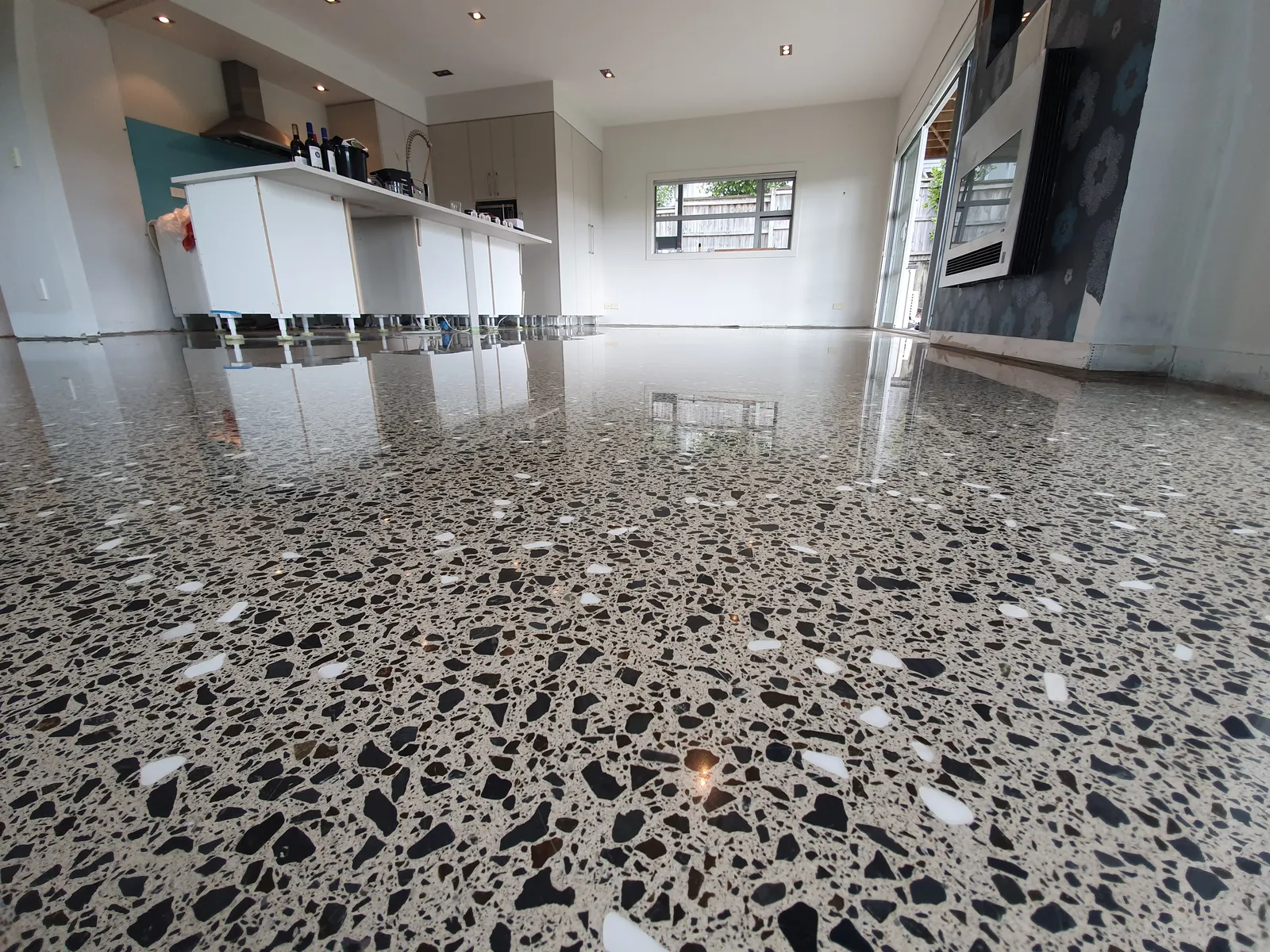
Polished concrete is extremely practical in kitchens. There are no grout lines to trap food, and spills wipe up easily. A medium grind finish is the most popular choice for kitchen floors because it hides minor marks and dust better than a plain grey surface.
Hallways and Entranceways
Salt and pepper works well in high-traffic zones. The aggregate pattern naturally disguises foot traffic marks, and mechanically polished concrete is extremely durable in these areas. For small hallways under 20m2, keep in mind that DSC has a minimum charge of $2,250 + GST.
Bathrooms
Light grind finishes work well in bathrooms, though slip resistance should be discussed. Higher gloss levels can be more slippery when wet, so a matte or satin finish is generally recommended for bathroom floors.
Why Polished Concrete With Aggregate Exposure Is NZ's Most Requested Finish
There are a few reasons this finish dominates in New Zealand.
First, it suits the way most Kiwis live. Open-plan living is standard in New Zealand homes, and a salt and pepper floor ties together a kitchen, dining, and living area without the visual break that tiles or mixed flooring creates.
Second, it works with almost any interior style. Whether your home is modern, industrial, mid-century, or coastal, the neutral grey-and-stone palette fits without competing with furniture or wall colours.
Third, it is low maintenance. A mechanically polished floor has no coating to peel or reapply. It just needs regular mopping. For more on the difference between coated and uncoated finishes, read our comparison of grind and seal vs mechanically polished concrete.
Diamond Shine Concrete handles the full concrete polishing and grinding process across Auckland, whether you are after a salt and pepper finish or a deeper grind.
Frequently Asked Questions
How much does a salt and pepper polished concrete floor cost?
The grind level itself has a modest impact on cost. Most residential salt and pepper jobs sit around $100 per m2 + GST for a standard open-plan area (50-70m2). Larger areas drop to $80-$100 per m2. Heavy grind or full exposure finishes can cost slightly more because they require removing more material and additional grinding stages. For a full pricing breakdown, see our Auckland pricing guide.
Can I choose how much aggregate shows?
Yes, within the limits of what your slab contains. The grinding depth controls how much aggregate is exposed, and DSC can adjust this to your preference. However, the exact look depends on the aggregate in your specific slab - if the concrete was poured with fine pebbles, you will not get large stones no matter how deep the grind goes. A test patch can show you exactly what your slab will look like at different grind depths.
Does salt and pepper work on old slabs?
True salt and pepper (the lightest grind) is difficult to achieve on most older slabs because they tend to be uneven, have adhesive residue, or require more material removal to produce a clean surface. However, older slabs can produce excellent polished floors at medium to heavy grind depths - and sometimes the character of aged aggregate creates a look that new concrete simply cannot replicate. DSC can assess your slab and advise on what grind depth is realistic.
Is there a cost difference between light grind and heavy grind?
There can be. A light grind requires less material removal and fewer grinding stages, so it is generally at the lower end of the price range. A heavy grind or full exposure finish takes longer and uses more diamond tooling, which can add to the cost. The difference is usually modest for residential jobs - the bigger price factors are floor size, slab condition, and whether the home is empty or finished.
What gloss level works best with salt and pepper?
Salt and pepper looks good at any gloss level. A matte finish gives a natural, understated look. Satin adds a soft sheen that highlights the aggregate. High gloss creates a reflective surface where the stone flecks really stand out. The choice comes down to personal preference and the style of your home.
FAQPage Schema
```json { "@context": "https://schema.org", "@type": "FAQPage", "mainEntity": [ { "@type": "Question", "name": "How much does a salt and pepper polished concrete floor cost?", "acceptedAnswer": { "@type": "Answer", "text": "Most residential salt and pepper jobs sit around $100 per m2 + GST for a standard open-plan area (50-70m2). Larger areas drop to $80-$100 per m2. Heavy grind or full exposure finishes can cost slightly more due to additional grinding stages." } }, { "@type": "Question", "name": "Can I choose how much aggregate shows?", "acceptedAnswer": { "@type": "Answer", "text": "Yes, within the limits of what your slab contains. The grinding depth controls how much aggregate is exposed, and Diamond Shine Concrete can adjust this to your preference. A test patch can show you exactly what your slab will look like at different grind depths." } }, { "@type": "Question", "name": "Does salt and pepper work on old slabs?", "acceptedAnswer": { "@type": "Answer", "text": "True salt and pepper (the lightest grind) is difficult to achieve on most older slabs because they tend to be uneven or have adhesive residue. However, older slabs produce excellent polished floors at medium to heavy grind depths. Diamond Shine Concrete can assess your slab and advise on what grind depth is realistic." } }, { "@type": "Question", "name": "Is there a cost difference between light grind and heavy grind?", "acceptedAnswer": { "@type": "Answer", "text": "There can be a modest difference. A light grind requires less material removal and fewer grinding stages. A heavy grind takes longer and uses more diamond tooling. The bigger price factors are floor size, slab condition, and whether the home is empty or finished." } }, { "@type": "Question", "name": "What gloss level works best with salt and pepper?", "acceptedAnswer": { "@type": "Answer", "text": "Salt and pepper looks good at any gloss level. Matte gives a natural look, satin adds a soft sheen, and high gloss creates a reflective surface where the stone flecks really stand out. The choice comes down to personal preference." } } ] } ```
Will Your Slab Actually Give You Salt and Pepper?
This is the honest catch with salt and pepper. It is the lightest grind, and it needs a flat slab in good condition to work. On older floors, uneven slabs, or anywhere tiles or carpet glue have been removed, it is often not achievable, and most renovation jobs end up medium to heavy.
The only reliable way to know what your floor will give you is a sample grind on your own slab, which we do on arrival before anything is committed.
If your floor is already polished and looking uneven or blotchy, our guide to what to do if your concrete floor looks patchy covers what can realistically be done about it. For what any of this costs, see the Auckland polished concrete cost guide.
Send us a photo of your floor and we will tell you what is realistic before anyone comes out. Get a free quote.
Internal Links Used
1. `/resources/polished-concrete-cost-auckland` (pricing guide) 2. `/resources/grind-and-seal-vs-hiperfloor` (grind and seal vs mechanically polished concrete comparison) 3. `/services/grinding-polishing` (service page - linked contextually via pricing references)Images Used
| Position | Catalog ID | Why selected |
|---|---|---|
| Hero / Featured / Thumbnail | light-grinds--20220630-144006 | Light grind salt and pepper floor (Bowie-confirmed canonical example) |
| Light grind section | light-grinds--20220222-125127 | Close-up showing fine aggregate detail typical of light grind |
| Medium grind section | medium-grind--20230720-162910 | Medium aggregate exposure with mirror-like reflection showing classic finish |
| Heavy grind section | heavy-grind-or-full-exposure--20210622-130637 | Full exposure close-up showing large aggregate for comparison |
| Kitchen section | heavy-grind-or-full-exposure--20191024-152645 | Kitchen application showing aggregate finish in practical context |