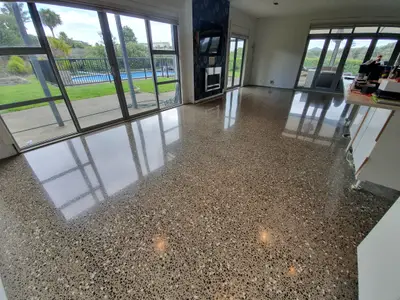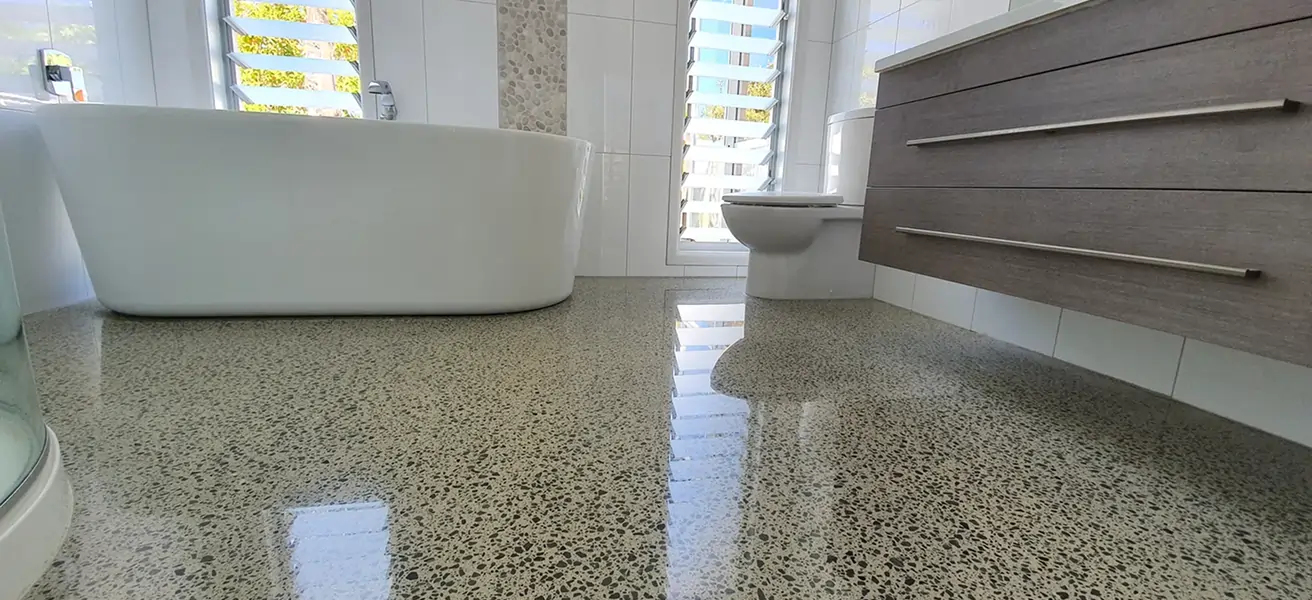

Polished concrete does feel cool underfoot in winter - but "cold" depends entirely on your home's insulation and heating setup. With underfloor heating, polished concrete becomes one of the warmest flooring options available. Concrete has high thermal mass, meaning it absorbs heat slowly and releases it slowly. Once warm, a polished concrete floor stays warm for hours after the heating switches off. That is an advantage no timber, carpet, or vinyl floor can match.

Why Concrete Feels Cool (and Why That Is Not the Full Story)
Concrete is a dense material with high thermal conductivity. When you step on it barefoot, it draws heat away from your feet faster than timber or carpet would. That is why it feels cool - your body is losing heat to the floor, and your brain registers that as "cold."
But this is only half the picture. That same thermal conductivity is exactly what makes concrete the ideal partner for underfloor heating. The properties that make it feel cool without heating are the same properties that make it radiate warmth so effectively with heating.
Think of it this way - concrete works like a battery for heat. It takes longer to charge up than carpet or timber, but once it is warm, it holds that energy and radiates it back into the room for hours. Turn the underfloor heating off at 10pm and the floor is still warm at 2am. Try that with carpet over a timber subfloor.
Thermal Mass - Your Biggest Advantage
Thermal mass is the ability of a material to absorb, store, and release heat. Concrete has very high thermal mass compared to other flooring materials. In practical terms, this means two things for Auckland homeowners.
In winter: A heated polished concrete slab absorbs warmth from your heating system throughout the day. Even after the heating cycles off, the slab continues releasing that stored heat into the room. This creates a steady, even temperature rather than the peaks and dips you get with forced air heating.
In summer: That same thermal mass works in reverse. The concrete absorbs excess heat during the day, keeping the room cooler. On hot Auckland afternoons, a polished concrete floor feels pleasantly cool underfoot - which is exactly what you want.
This is not a compromise. It is a feature. The same property that raises the "cold floor" concern is actually one of polished concrete's strongest selling points when paired with the right heating approach.
Underfloor Heating and Polished Concrete
Polished concrete is one of the best flooring surfaces for underfloor heating (UFH) systems. Both hydronic (water-based) and electric systems work well with concrete slabs.
Why concrete is ideal for UFH
- Even heat distribution - Concrete conducts and spreads heat evenly across the entire surface. No hot spots, no cold patches.
- Heat retention - The slab stores heat and releases it gradually, reducing energy consumption. Your system runs less often because the floor holds warmth between cycles.
- No air gap - Unlike timber or carpet, there is no insulating layer between the heating element and the room. Heat transfers directly from the pipe or cable through the concrete into the living space.
- Longevity - A polished concrete floor with embedded UFH has no moving parts and no material to degrade. The system and the floor can last 20+ years with good maintenance.
Hydronic vs electric
| System type | How it works | Best for | Typical cost (installed) | Running cost |
|---|---|---|---|---|
| Hydronic (water) | Hot water circulates through pipes embedded in the slab | New builds, whole-house heating | $100-$180 per m2 | Lower - uses heat pump or gas boiler |
| Electric (cable/mat) | Electric cables or mats laid in or under the slab | Renovations, single rooms | $60-$120 per m2 | Higher - electricity rates apply |
For new builds, hydronic systems are the most cost-effective long-term option. The pipes are laid before the concrete is poured, and the system runs off a heat pump - which is extremely efficient in Auckland's mild climate.
For renovations where the slab already exists, electric mat systems can be installed in a thin screed layer on top of the existing concrete before polishing. This adds some height to the floor but is a practical retrofit option.
NZ Building Code and Slab Insulation
Since 2008, the New Zealand Building Code (H1/AS1 - Energy Efficiency) has required under-slab insulation for new residential builds. This means a layer of polystyrene (typically 50mm XPS or EPS) is placed beneath the concrete slab before it is poured.
This insulation is critical for thermal comfort. Without it, heat from the slab escapes downward into the ground rather than radiating upward into your living space. With proper under-slab insulation, the concrete retains significantly more heat and the floor feels noticeably warmer.
If your home was built before 2008, the slab may not have under-slab insulation. In these cases, the floor will feel cooler in winter than a modern insulated slab. Underfloor heating can still be retrofitted, but you should factor in the reduced efficiency compared to a properly insulated new build.
Key point for renovators: If you are polishing an existing slab in an older home, underfloor heating will still make a noticeable difference to comfort. It will not be as efficient as a new insulated slab, but the improvement is significant. Talk to your heating installer about system output relative to your slab type.
How Does Polished Concrete Compare to Other Flooring for Warmth?
| Flooring type | Thermal conductivity | UFH compatibility | Heat retention | Comfort without heating |
|---|---|---|---|---|
| Polished concrete | High | Excellent - direct transfer | Excellent - hours of warmth after heating off | Cool underfoot |
| Ceramic tiles | High | Very good | Good | Cool underfoot |
| Engineered timber | Medium | Moderate - check manufacturer specs | Poor - heats and cools quickly | Neutral |
| Solid timber | Low | Poor - risk of warping/gaps | Poor | Warm underfoot |
| Carpet | Very low | Poor - insulates against heat transfer | Very poor - blocks UFH effectiveness | Warm underfoot |
| Vinyl / LVP | Low-Medium | Moderate - temperature limits apply | Poor | Neutral to warm |
The comparison highlights an important trade-off. Carpet feels warm underfoot without any heating, but it actively blocks underfloor heating from working effectively. It acts as insulation between the heat source and the room. Polished concrete does the opposite - it feels cool without heating but becomes the most effective heat delivery surface when paired with UFH.
If whole-house warmth and energy efficiency are priorities, polished concrete with underfloor heating outperforms every alternative on this list.
Practical Tips for Warm Polished Concrete Floors
Even without underfloor heating, there are simple ways to make polished concrete more comfortable in winter.
Rugs in key zones - Place rugs where you stand or sit for extended periods - beside the bed, in front of the kitchen sink, under the dining table. This gives you the warm-underfoot feeling in the spots that matter most, while keeping the polished concrete visible across the rest of the room.
Maximise passive solar gain - Auckland gets decent winter sun. Position furniture so sunlight hits the concrete floor through north-facing windows. The slab absorbs that solar energy during the day and releases it through the evening. This is free heating that works with the thermal mass, not against it.
Insulate the rest of the house - A cold floor is often a symptom of poor overall insulation rather than a flooring problem. Ceiling insulation, wall insulation, and double glazing make a bigger difference to how the floor feels than the flooring material itself. If your home is well insulated, the slab stays closer to room temperature naturally.
Slippers - Simple, but effective. Most Auckland homeowners who choose polished concrete keep a pair of slippers by the door in winter. The floor feels cool when you first step on it barefoot, but it is not uncomfortable once you adjust or put something on your feet.
The Bottom Line
Polished concrete feels cool in winter without heating. That is a fact, and we will not pretend otherwise. But framing it as "cold" misses the bigger picture.
With underfloor heating, polished concrete transforms into one of the most comfortable and energy-efficient flooring systems you can install. It heats evenly, holds warmth for hours, and reduces how often your heating system needs to cycle. Over a 20-year period, the energy savings from a well-insulated polished concrete slab with hydronic UFH are significant.
Without underfloor heating, rugs, passive solar design, and good home insulation go a long way toward making polished concrete comfortable year-round in Auckland's mild climate.
The question is not really "is polished concrete cold?" It is "what heating and insulation setup are you pairing it with?" Get that right, and you have a floor that is warm in winter, cool in summer, and can last decades with good maintenance.
Frequently Asked Questions
How much does polished concrete with underfloor heating cost?
The concrete polishing itself typically costs around $100 per m2 + GST for an average Auckland residential job. Underfloor heating adds $60-$180 per m2 on top, depending on whether you choose electric or hydronic. For a 60m2 living area, you might budget $6,000 + GST for polishing plus $6,000-$10,000 for hydronic UFH installed. Read our full pricing guide for a detailed polishing cost breakdown.
Is polished concrete too cold for bedrooms?
Not if you plan for it. Many Auckland homeowners use polished concrete in bedrooms with a rug beside the bed and underfloor heating set to a low overnight temperature. The thermal mass keeps the room at a steady temperature through the night, which many people find more comfortable than the temperature swings of a heated-then-unheated bedroom.
Can I add underfloor heating to an existing polished concrete floor?
It depends on the situation. Electric heating mats can be laid on top of an existing slab with a thin screed layer, then the surface can be polished. This adds some floor height (typically 15-25mm), which may affect door clearances and transitions to other rooms. Hydronic systems are generally only practical during new builds or major renovations where the slab is being poured fresh.
Does polished concrete make a room feel colder overall?
No. Room temperature is determined by your heating system and insulation, not the floor surface. Polished concrete does not lower the air temperature in a room. It can feel cool to bare feet because of its thermal conductivity, but the room itself is the same temperature as it would be with any other flooring. In fact, with underfloor heating, polished concrete creates a more even temperature distribution than forced-air systems.
Is polished concrete a good option for Auckland's climate?
Auckland has mild winters (average lows around 8-10 degrees C) and warm, humid summers. This climate is well suited to polished concrete. The thermal mass helps moderate indoor temperatures year-round - absorbing heat in summer to keep rooms cool, and storing warmth from heating systems in winter. Combined with Auckland's good winter sunshine hours, passive solar heating through north-facing windows can significantly reduce heating costs.
Will polished concrete make my home harder to sell?
Polished concrete is increasingly popular in Auckland new builds and renovations. Buyers view it as a premium, low-maintenance finish. The combination of durability (20+ years with good maintenance), minimal upkeep (mop and occasional rebuff), and modern aesthetics makes it a selling point rather than a drawback. Homes with polished concrete and underfloor heating are particularly attractive to buyers.
FAQPage Schema (embed in page `
` or before ``):```json { "@context": "https://schema.org", "@type": "FAQPage", "mainEntity": [ { "@type": "Question", "name": "How much does polished concrete with underfloor heating cost?", "acceptedAnswer": { "@type": "Answer", "text": "The concrete polishing itself typically costs around $100 per m2 + GST for an average Auckland residential job. Underfloor heating adds $60-$180 per m2 on top, depending on whether you choose electric or hydronic. For a 60m2 living area, budget approximately $6,000 + GST for polishing plus $6,000-$10,000 for hydronic UFH installed." } }, { "@type": "Question", "name": "Is polished concrete too cold for bedrooms?", "acceptedAnswer": { "@type": "Answer", "text": "Not if you plan for it. Many Auckland homeowners use polished concrete in bedrooms with a rug beside the bed and underfloor heating set to a low overnight temperature. The thermal mass keeps the room at a steady temperature through the night." } }, { "@type": "Question", "name": "Can I add underfloor heating to an existing polished concrete floor?", "acceptedAnswer": { "@type": "Answer", "text": "Electric heating mats can be laid on top of an existing slab with a thin screed layer, then the surface can be polished. This adds 15-25mm of floor height. Hydronic systems are generally only practical during new builds or major renovations where the slab is being poured fresh." } }, { "@type": "Question", "name": "Does polished concrete make a room feel colder overall?", "acceptedAnswer": { "@type": "Answer", "text": "No. Room temperature is determined by your heating system and insulation, not the floor surface. Polished concrete does not lower the air temperature. With underfloor heating, it actually creates a more even temperature distribution than forced-air systems." } }, { "@type": "Question", "name": "Is polished concrete a good option for Auckland's climate?", "acceptedAnswer": { "@type": "Answer", "text": "Auckland has mild winters and warm summers, which is well suited to polished concrete. The thermal mass helps moderate indoor temperatures year-round. Combined with Auckland's good winter sunshine hours, passive solar heating through north-facing windows can significantly reduce heating costs." } }, { "@type": "Question", "name": "Will polished concrete make my home harder to sell?", "acceptedAnswer": { "@type": "Answer", "text": "Polished concrete is increasingly popular in Auckland new builds and renovations. Buyers view it as a premium, low-maintenance finish. The combination of durability, minimal maintenance, and modern aesthetics makes it a selling point. Homes with polished concrete and underfloor heating are particularly attractive to buyers." } } ] } ```
Thinking About It for Your Own Floor?
If underfloor heating is what you are weighing up, our guide to polished concrete with underfloor heating covers how the two work together and what the heating system itself costs. For the floor pricing, see the Auckland polished concrete cost guide.
If you already have a concrete floor and want to know what it would look like polished, send us a photo and we will tell you what is realistic. Get a free quote.
Internal Links Used
1. `/resources/polished-concrete-cost-auckland` - pricing cross-reference from FAQ 2. `/resources/is-polished-concrete-slippery` - related objection-addressing content (link from thermal mass section when publishing)3. `/contact-us` - CTA for floor consultation
Images Used
| Position | Catalog ID | Why selected |
|---|---|---|
| Hero (after intro) | finished-home-referbs--20210511-224533 | Warm, inviting residential kitchen with timber island - counters the "cold" perception immediately |
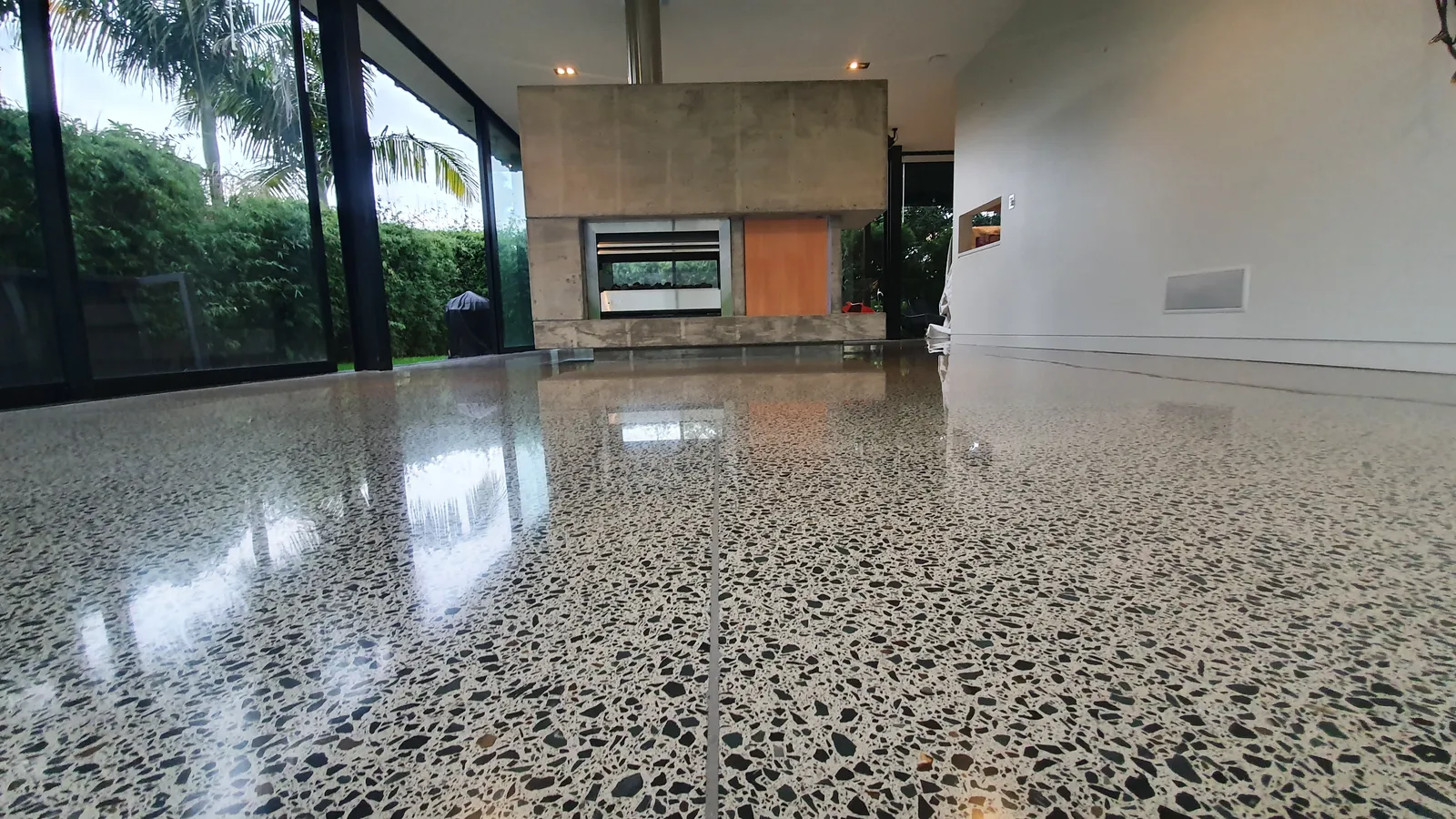
| After UFH section | finished-home-referbs--20210603-165317 | Polished concrete with fireplace feature - visual association of concrete + warmth |
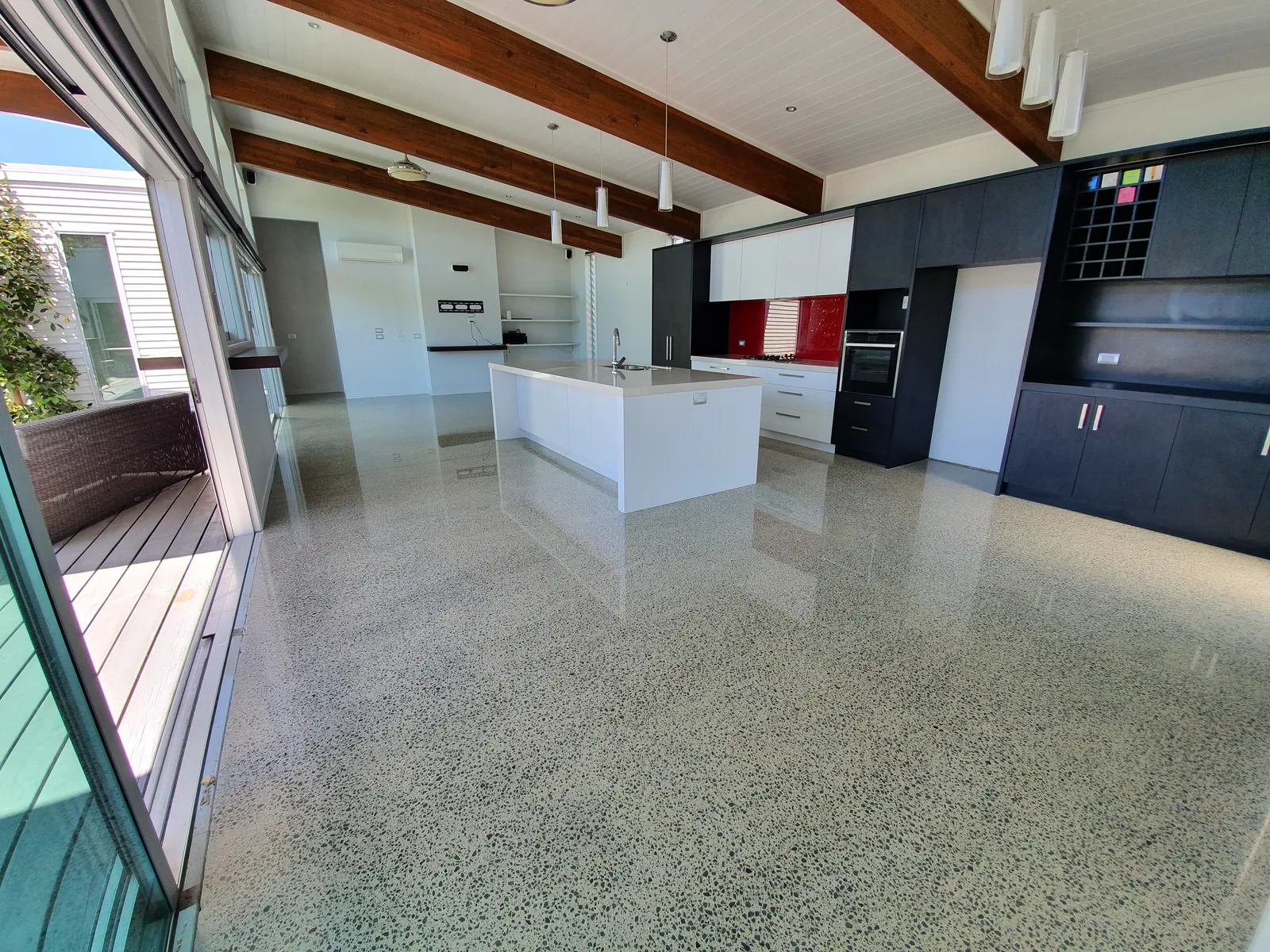
| Practical tips section | finished-home-referbs--20201216-152659 | Kitchen with exposed timber beams - warm materials paired with polished concrete |
| After practical tips | gloss-or-high-gloss--20200109-140152 | Open-plan family living space - shows polished concrete as warm, liveable, everyday flooring |