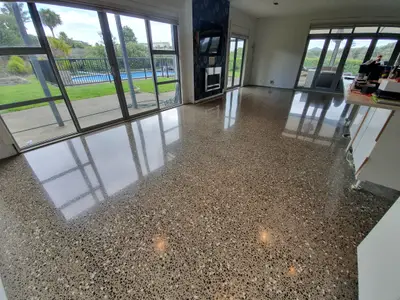
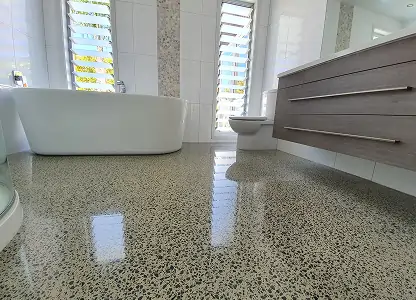
Polished concrete is one of the most pet-friendly flooring options available. It does not absorb odours like carpet, has no grout lines to trap pet hair, and is significantly more scratch-resistant than timber or vinyl. Most Auckland homeowners with dogs and cats find polished concrete easier to maintain than any other hard flooring option.

That said, there are a few practical considerations worth understanding before you commit. Here is an honest look at how polished concrete handles life with pets.
The Benefits for Pet Owners
No odour absorption. This is the biggest advantage over carpet and timber. If a pet has an accident, you wipe it up and the floor does not retain the smell. Carpet absorbs urine into the underlay where it is almost impossible to fully remove. Polished concrete is a sealed, non-porous surface.
No grout to trap hair and dirt. Tiled floors look clean until you inspect the grout lines. Pet hair, dander, and dirt settle into grout and require regular deep cleaning. Polished concrete is a continuous surface - a dust mop picks up everything.
Easy daily cleaning. A quick dust mop and a damp mop with pH-neutral cleaner is the entire routine. No specialist pet-safe cleaning products needed.
Hypoallergenic. For households with allergy-prone family members, polished concrete does not harbour dust mites, pet dander, or mould the way carpet does.
The Common Concerns
Will dog claws scratch polished concrete?
This is the question most pet owners ask first. The short answer is that everyday foot traffic from dogs does not damage mechanically polished concrete in any meaningful way. The densifiers applied during polishing harden the surface significantly.
| Flooring type | Scratch resistance with pets |
|---|---|
| Polished concrete | Very high - daily pet traffic causes no visible damage |
| Timber / hardwood | Low - visible scratching from claws within months |
| Vinyl / LVT | Medium - can dent and scratch over time |
| Ceramic tiles | High - but grout lines accumulate debris |
| Carpet | N/A - but shows wear paths and retains odour |
Over many years, high-traffic areas will develop a subtle patina - the same gradual dulling you get from any foot traffic. A rebuff every 3-5 years at $30-$50 per m2 + GST restores the sheen.
Large dogs running on polished concrete can occasionally leave very fine surface marks, but these are cosmetic and not structural damage. They blend into the floor's natural character over time.

Is polished concrete slippery for pets?
Dogs can slip on any smooth hard surface. On polished concrete, the risk is similar to tiles or timber. A semi-gloss (satin) finish provides more grip than high-gloss.
Practical solutions that work well:
Area rugs in high-traffic zones. Place rugs where dogs run, turn corners, or jump off furniture. This also protects the floor in areas that get the most wear.
Entrance mats. Catch grit from paws before it gets walked across the floor. Grit is the main cause of surface dulling over time on any polished floor.
Nail maintenance. Keeping dog nails trimmed improves traction on all hard floors, not just polished concrete.
We recommend the same semi-gloss finish for the entire floor rather than mixing finishes across rooms. Matte is slightly less slippery but more susceptible to staining - not ideal in homes with pets where spills and accidents happen.
What about water bowls and food messes?
Spills from water bowls and food are easy to wipe up. The key is not to leave standing water for extended periods. Polished concrete handles occasional spills without issue, but a puddle sitting for hours can potentially mark a grind-and-seal floor. Mechanically polished concrete is more forgiving because the finish is not a topical coating.
Place a mat under food and water bowls - this protects any flooring type and makes cleanup simpler.

How Polished Concrete Compares for Pet Owners
| Factor | Polished Concrete | Carpet | Timber | Tiles |
|---|---|---|---|---|
| Odour resistance | Excellent | Poor | Fair | Good |
| Scratch resistance | Very high | N/A | Low | High |
| Hair/dander cleanup | Very easy | Difficult | Easy | Medium (grout) |
| Slip risk | Moderate | Low | Moderate | Moderate |
| Long-term maintenance | Very low | High (replace) | Medium (resand) | Medium (regrout) |
| Hypoallergenic | Yes | No | Fair | Fair |
Maintenance Tips for Pet Owners
Daily. Dust mop to remove grit and pet hair. Grit tracked in on paws is the main cause of surface dulling over time.
Weekly. Damp mop with pH-neutral cleaner. Avoid vinegar-based cleaners or anything acidic.
As needed. Wipe up accidents immediately. Polished concrete does not absorb odours like carpet, but prompt cleanup is good practice on any floor.
Every 3-5 years. A professional rebuff restores the sheen. For households with large dogs, you may notice the floor dulling slightly faster in high-traffic areas - this is normal and a rebuff addresses it.
Real-World Advice
We have polished hundreds of floors across Auckland, and a large proportion of those homes have pets. The floors hold up well. The most common feedback from pet owners is that polished concrete is dramatically easier to keep clean than whatever they had before - usually carpet.
The only real adjustment is adding rugs in areas where dogs run and turn. That is good practice on any hard floor, not just polished concrete.

Frequently Asked Questions
Will my dog scratch polished concrete floors?
Everyday foot traffic from dogs does not damage mechanically polished concrete. The densified surface is much harder than timber or vinyl. Over years, high-traffic areas develop a subtle patina, but this is cosmetic and addressed with a rebuff ($30-$50/m2 + GST) every 3-5 years.
Is polished concrete slippery for dogs?
It is similar to tiles or timber. A semi-gloss finish provides reasonable grip. Adding area rugs in running zones, keeping nails trimmed, and using entrance mats all improve traction. Read our full guide on slip resistance.
How do you clean pet accidents off polished concrete?
Wipe up immediately with a damp cloth and pH-neutral cleaner. Unlike carpet, polished concrete does not absorb odours. No specialist cleaning products needed.
Is polished concrete good for allergy sufferers with pets?
Yes. Polished concrete does not harbour dust mites, pet dander, or mould the way carpet does. Regular mopping removes allergens from the surface completely. See our article on polished concrete and cold comfort for more on living with concrete floors.
How much does polished concrete cost for a family home?
For an average residential floor (50-70m2), expect around $100 per m2 + GST. Larger homes (70-200m2) come in at $80-$100 per m2 + GST. Full pricing details in our cost guide.
Can cats damage polished concrete?
No. Cat claws are much finer than dog claws and do not affect the surface at all. Polished concrete is one of the most cat-friendly flooring options - no carpet fibres to snag, no grout to scratch at.