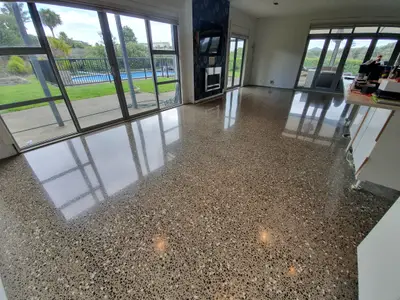
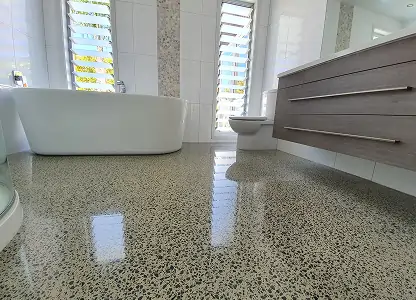
Yes, polished concrete is a hard surface - there is no getting around that. But thousands of New Zealand families live on it every day and would not go back. The reason is simple: what you give up in cushion underfoot, you gain in easy cleaning, better air quality for kids with allergies, and a floor that lasts 20+ years with good maintenance. It is a trade-off, and for most families, the trade-off works.

This article walks through the real concerns families raise - comfort, slipping, dropped items, noise, and cleaning - and gives you honest answers based on what we see in Auckland homes every week.
The Hardness Question - What It Actually Means Day to Day
Concrete scores around 7 on the Mohs hardness scale. That makes it harder than timber, tiles, and vinyl. It is a fact, and we will not pretend otherwise.
What that means in practice depends on how your family uses the floor. If you are comparing polished concrete to carpet, you will notice the difference immediately - it is firmer, cooler, and louder. If you are comparing it to ceramic tiles or engineered timber, the difference in hardness is much smaller than most people expect.
| Surface | Hardness (relative) | Warmth underfoot | Forgiveness on drops |
|---|---|---|---|
| Carpet | Soft | Warm | Very forgiving |
| Vinyl / LVP | Medium | Neutral | Moderate |
| Engineered timber | Medium-hard | Neutral-warm | Low |
| Ceramic tiles | Hard | Cool | Very low |
| Polished concrete | Hard | Cool (without heating) | Very low |
The table tells you what your body already knows - hard floors are not as forgiving. But tiles are just as hard, and nobody questions whether a tiled kitchen is "too hard for families." The real question is whether the benefits outweigh the trade-off, and for most families, they do.
Comfort Underfoot - Rugs Solve Most of It
The most common concern from families is comfort - standing in the kitchen cooking dinner, kids playing on the floor, walking barefoot in winter. These are real considerations.
Rugs and mats are the practical answer. Most Auckland families with polished concrete use area rugs in living spaces where kids play and runners in hallways. This gives you the best of both worlds - the durability and easy cleaning of concrete in high-traffic zones, with soft spots where your family actually sits and plays.
Underfloor heating changes everything. If your budget allows it, hydronic or electric underfloor heating paired with polished concrete creates one of the most comfortable floor systems available. Concrete stores heat efficiently, so the floor stays warm for hours after the heating cycles off. We cover this in detail in our guide on whether polished concrete is cold in winter.

Footwear matters more than you think. Slippers or house shoes make a bigger difference on concrete than on any other surface. Many families find that switching to indoor footwear eliminates the comfort concern entirely.
Slip Safety - What Parents Need to Know
This is the concern that comes up most often from parents of young children. The short answer is that a satin (semi-gloss) finish - the one we recommend for most homes - provides grip comparable to ceramic tiles in dry conditions.
The longer answer depends on the finish level and whether the floor is wet. We have written a full breakdown of slip resistance ratings and finish types, but here is the family-specific summary.
Satin finish is the sweet spot. It looks clean and modern while providing solid grip for socked feet and bare feet. We recommend a consistent satin finish across the whole floor rather than mixing different finishes in different rooms.
Wet areas need mats, not a different finish. Bathrooms, laundries, and kitchen sink areas get mats or rugs for extra grip. This is the same advice that applies to tiles, timber, or any hard flooring - water on a hard surface is slippery regardless of the material.
Matte has better grip but worse durability. A matte (honed) finish provides the most traction, but it is more susceptible to staining and wear. For a family home where spills happen daily, the stain resistance of a satin finish is usually more valuable than the marginal extra grip of matte.
Dropped Items - The Honest Answer
If your toddler drops a ceramic plate on polished concrete, it will probably break. If they drop a glass, it will almost certainly shatter. This is no different from tiles.

The practical response from most families is the same one your parents used - switch to melamine plates and plastic cups during the toddler years. Phones in sturdy cases survive concrete drops just fine. The floor itself will not chip or crack from a dropped item in normal household use.
What about falls? Young children fall constantly, and a hard floor means more bumps. This is a genuine trade-off. Area rugs in play zones and a quality playmat in the main play area are how most families handle it. By the time kids are school-age, it is a non-issue.
Noise - It Is Louder, But Manageable
Polished concrete does not absorb sound the way carpet does. Footsteps are louder, dropped toys echo more, and the general noise level in an open-plan home with concrete floors is higher than it would be with carpet.
Most families find this settles into background noise within a few weeks. Rugs absorb a significant amount of sound, and soft furnishings (couches, curtains, cushions) do the rest. If you are building new, your designer or architect can factor acoustics into the ceiling and wall treatments.
The flip side is that concrete floors do not trap dust, pet hair, or allergens the way carpet does. For families with asthma or allergies, this is often the deciding factor.
Cleaning - Where Families Actually Win
This is where polished concrete earns its place in a family home. If you have kids, you know that floors take a beating - food spills, drink spills, mud, paint, playdough, and everything in between.

Daily cleaning is a damp mop and done. No grout lines collecting grime like tiles. No staining like timber. No wear patterns like carpet. A satin-finished polished concrete floor resists staining and cleans up faster than any other hard flooring option.
No replacement cycle. Carpet in a family home lasts 5-8 years before it needs replacing. Timber needs refinishing every 10-15 years. A mechanically polished concrete floor lasts 20+ years with good maintenance. A periodic rebuff every 3-5 years keeps it looking fresh, and that costs a fraction of carpet replacement.
Allergy-friendly. Carpet traps dust mites, pet dander, and allergens deep in the fibres where vacuuming cannot reach them. Polished concrete has nowhere for allergens to hide. For families with kids who have asthma or eczema, this is a meaningful health benefit.
The Real Reason Families Choose Concrete
It is not because concrete is the softest or quietest floor. It is because the total package - durability, cleaning ease, allergy benefits, and long-term cost - makes more sense than any other option when you look at the full picture.
Most families who contact us are not choosing between carpet and concrete. They are choosing between concrete and tiles. And when you compare polished concrete to tiles - same hardness, same slip considerations, but better stain resistance, no grout to maintain, and a longer lifespan - the choice becomes straightforward.
Frequently Asked Questions
Is polished concrete safe for children?
Yes. A satin (semi-gloss) finish provides grip comparable to ceramic tiles in dry conditions. For play areas, use area rugs or playmats. For wet zones like bathrooms, use mats for extra grip. The surface contains no volatile chemicals or fibres that affect air quality, making it a good choice for children with allergies or asthma.
Is polished concrete too cold for a family home in New Zealand?
Concrete does feel cool underfoot, especially in winter. Underfloor heating solves this completely - concrete stores heat efficiently and stays warm for hours after the heating cycles off. Without underfloor heating, rugs and slippers keep things comfortable. Read our full guide on polished concrete and winter warmth.
How much does polished concrete cost for a family home in Auckland?
For a typical family home with 50-70m2 of floor area, expect to pay around $100 per m2 + GST. Larger homes (70-200m2) come in at $80-$100 per m2 + GST. A rebuff every 3-5 years costs $30-$50 per m2, which is far less than replacing carpet or refinishing timber. For a full breakdown, see our Auckland pricing guide.
Does polished concrete scratch easily with kids and toys?
Mechanically polished concrete is extremely scratch-resistant. Normal household use - toy cars, building blocks, dragged furniture - will not damage it. Heavy sharp objects dragged with force can leave marks, but these are typically buffed out during a routine rebuff. It is far more scratch-resistant than timber or vinyl.
Can you use rugs on polished concrete?
Absolutely. Rugs are the most common way families add comfort, warmth, and sound absorption to polished concrete floors. Use a non-slip rug pad underneath to keep them in place. There is no risk of damage to the floor, and you can move or replace rugs as your family's needs change.
What finish is best for a family home?
Satin (semi-gloss) is our recommendation for family homes. It balances good grip, strong stain resistance, and a clean modern look. We apply a consistent finish across the whole floor rather than mixing different finishes in different rooms. Matte has slightly better grip but stains more easily - not ideal for a home with kids.
How long does polished concrete last in a family home?
With good maintenance, a mechanically polished concrete floor lasts 20+ years. A periodic rebuff every 3-5 years restores the sheen and keeps the surface performing well. Compare that to carpet (5-8 years), vinyl (10-15 years), or timber (refinish every 10-15 years), and the long-term value is clear.