

The single most useful question is whether they will do a sample grind on your actual slab before quoting a finish. Concrete is not a manufactured product, and nobody can tell you how your floor will look from a photo. Everything else on this list matters, but that one separates companies who will manage your expectations from companies who will manage your disappointment.

Polished concrete is one of the harder trades to compare quotes on, because two contractors can use the same words and mean very different jobs. This is what to ask, and roughly what a straight answer sounds like.
The Ten Questions
| Question | Why it matters |
|---|---|
| Will you do a sample grind first? | Nobody can predict a slab from a photo |
| What grind level are you quoting? | Light, medium and heavy are different jobs |
| What sheen, and can I see it in person? | Sheen is subjective and photos mislead |
| Is the finish mechanical, or a coating? | Coatings peel, mechanical polish does not |
| What is excluded from the quote? | Where surprise costs live |
| What happens if the slab is worse than expected? | Every old slab has surprises |
| Where does this sit in my build programme? | Getting the order wrong is expensive |
| How long will you be on site? | Affects whether you can live there |
| Who is actually doing the work? | Subcontracting is common |
| What does maintenance look like? | Ongoing cost varies enormously by system |
On the Floor Itself
Will you do a sample grind before quoting a finish? A sample grind means cutting a small test area on your slab to see what is actually in the concrete and how it responds. It reveals aggregate size and colour, how consistent the slab is, and whether the look you have in mind is achievable. The answer should be yes without hesitation. We do one on arrival as standard.
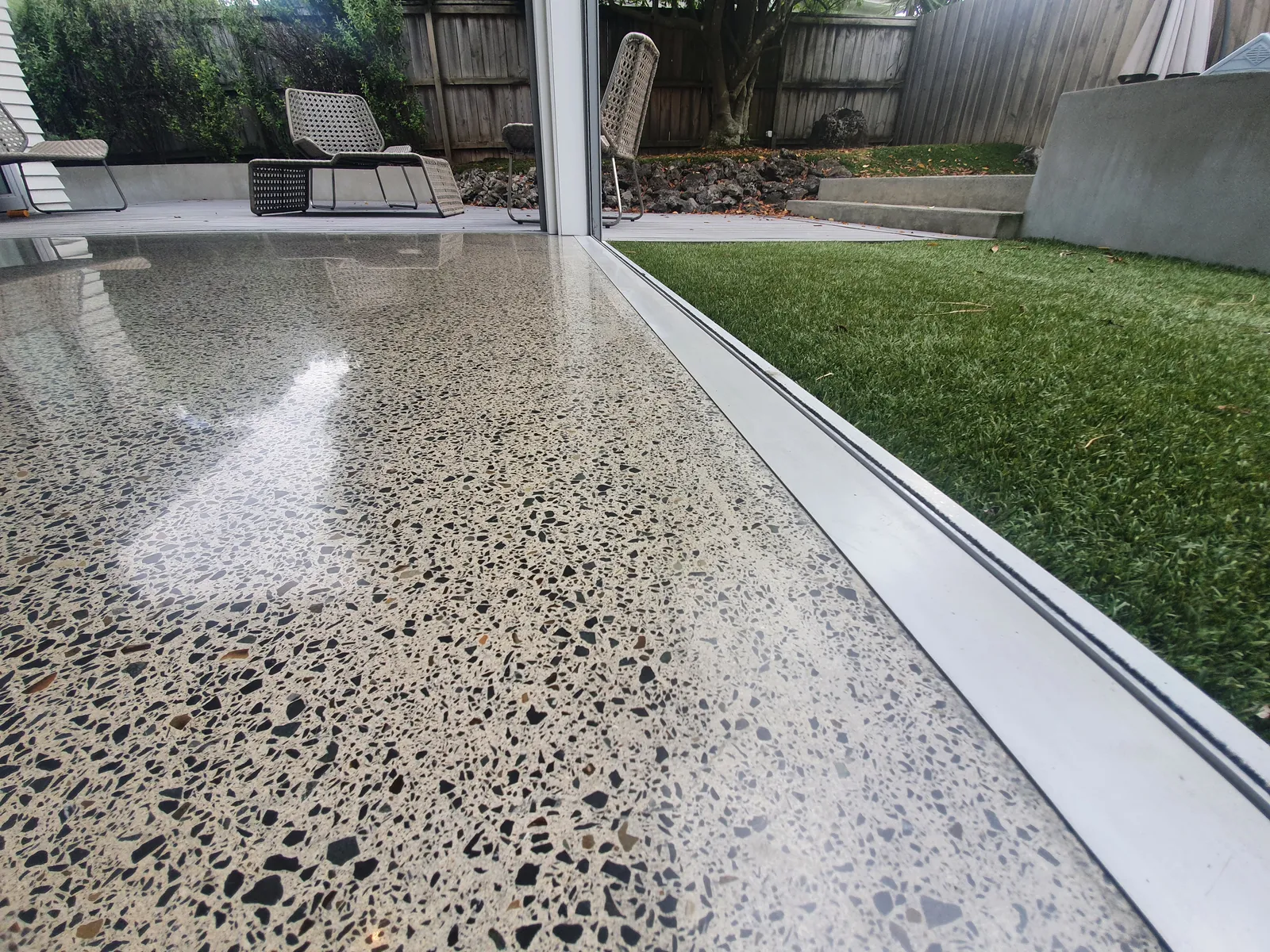
What grind level are you quoting? Grind level is how much stone gets exposed, and it is where a lot of misunderstanding starts. Salt and pepper is the lightest grind, where only the very tops of the stones are exposed and the cement stays as the background. Medium cuts deeper without chasing consistent large aggregate. Heavy removes significantly more material to fully expose the larger stones. If a quote just says "polished concrete", you do not yet know what you are buying.
Is salt and pepper realistic on my slab? Ask this specifically if you have seen a light, even, speckled floor you like. True salt and pepper needs a flat slab in good condition. On older floors, uneven slabs, or anywhere tiles or glue have been removed, it is often not achievable, and most renovation jobs end up medium to heavy. A contractor who promises salt and pepper on a forty year old slab without looking at it is guessing.
What sheen, and can I see it in person? Sheen runs matte, satin, semi gloss, gloss and high gloss, set by how far the polishing grits go. It is genuinely subjective, and it photographs badly. Ask to see the level they are quoting in real light. We generally recommend satin to semi gloss as a range for most homes.

On the System
Is this a mechanical polish or a coating? This is the question that costs people the most money when they get it wrong. A mechanically polished floor gets its finish from grinding and polishing the concrete itself through progressively finer grits, sealed with a penetrating sealer that soaks in. A coated floor has a film applied on top. Films eventually peel, flake and need stripping and redoing. Ask which one you are being quoted, and if it is a coating, ask what happens in year five.
What sealer do you use? Penetrating sealers soak into the concrete. Topical sealers form a layer on the surface. It is the same distinction as above and it determines what your maintenance looks like for the life of the floor.
What does maintenance actually involve? For a mechanically polished floor, ongoing care is normal cleaning plus a periodic rebuff every few years to bring the sheen back. Anything that involves stripping and reapplying a product on a cycle is a recurring cost you should know about before you sign, not after.
On the Quote
What is excluded? This is where the surprises live. Ask specifically about crack filling and repairs, removal of existing coverings, adhesive removal, moving furniture or appliances, and making good around edges and thresholds. Ask whether the price is plus GST, which is standard for trade services in New Zealand but worth confirming so you are comparing like with like.
What happens if the slab is worse than you expected? Old slabs hide things. Adhesive under carpet, patch repairs, tack strip damage running several millimetres deep, and ghosting from previous tiles all turn up once grinding starts. The answer you want is a clear process for what happens then, not silence. The right time to hear about a problem is before it is discovered, which is another argument for the sample grind.
Will things like tile ghosting fully disappear? If the answer is an unqualified yes, be cautious. Ghosting from a previously tiled slab reduces with a heavier cut but does not fully go away, because the cause is inside the concrete itself. Honest expectation setting here is a good signal about everything else.
On Timing and Logistics
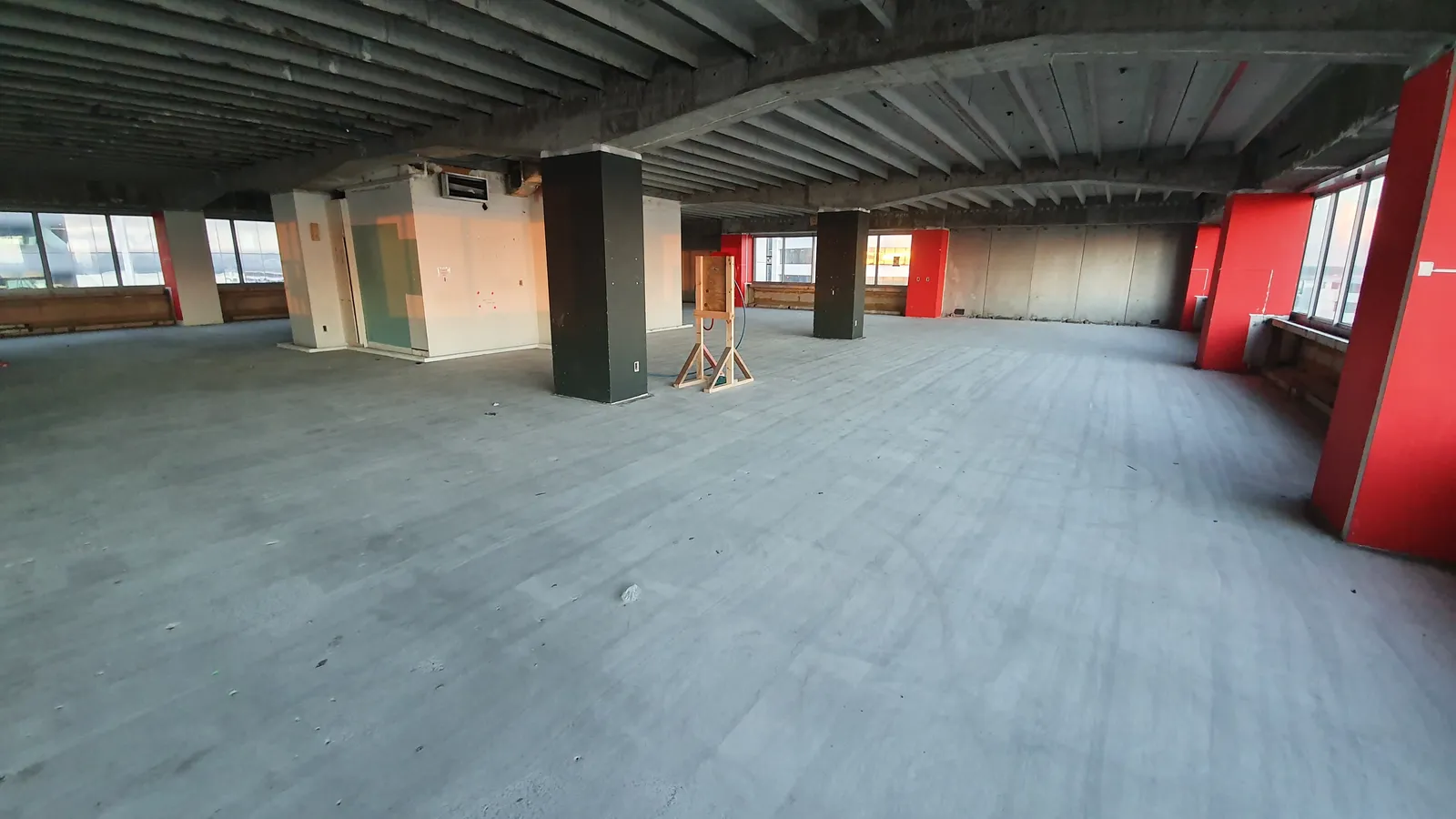
Where does the floor sit in my build programme? For a new build, grinding and polishing should happen before paint, and ideally before plaster, once the house is weathertight and gib lined. It must happen before skirtings and cabinetry go in. A heavy grind takes several millimetres off the surface, and skirtings fitted beforehand end up looking like they are floating above the floor. A contractor who is relaxed about sequencing has not thought it through. There is more in our guide to the best time to polish during a build.
How long will you be on site, and can we live here? Worth asking plainly. The answer depends on the size of the floor, how much repair work the slab needs, and how complex the layout is. Complex homes with lots of rooms and tight hallways take longer than simple open plan spaces, and they carry more risk of damage to painted walls and doorframes.
Who is actually doing the work? Ask whether the people quoting are the people grinding. Subcontracting is common across the trades and is not automatically a problem, but you should know who is turning up.
What a Good Answer Sounds Like
You are listening for specifics and for willingness to say no.
A contractor who tells you what your floor will not do is usually more reliable than one who agrees with everything. Concrete has genuine limits: ghosting does not fully disappear, cracks stay faintly visible after repair, salt and pepper is often unachievable on an old slab, and severely uneven floors need a topping rather than a polish. Anyone who talks about limits before you have raised them has been doing this a while.
Watch for the reverse too. Quotes that are notably vague, that do not name a grind level or sheen, that come without anyone visiting the slab, or that promise a specific photographed look sight unseen are the ones that turn into disagreements later.
Where Cost Fits In
Cost belongs in the conversation, but it is the last question rather than the first, because until the grind level, sheen and slab condition are settled, two quotes are not describing the same job.
Once you know what you are actually comparing, our Auckland polished concrete cost guide sets out what the work costs across different job types and sizes.
If you would like a straight answer about your own floor, send us a photo and we will tell you what is realistic before anyone comes out. Get a free quote.
Frequently Asked Questions
What is the most important question to ask a concrete polishing company?
Whether they will do a sample grind on your slab before quoting a finish. Concrete varies enormously and nobody can tell you how your floor will look without cutting a test area. It is the clearest signal of whether a contractor is setting realistic expectations.
How do I compare two polished concrete quotes fairly?
Make sure both name the same grind level and the same sheen, and that both have been to the property. Then check exclusions: crack repair, covering removal, adhesive removal and making good are the common gaps. Confirm both are plus GST.
Should I be worried if a quote is much cheaper?
Not automatically, but find out what is different. Usually it comes down to a lighter grind, less repair work included, a coating rather than a mechanical polish, or exclusions that reappear as variations later. Compare the scope before comparing the number.
What does a sample grind actually show?
What aggregate is in your slab and at what size, how consistent the concrete is, how it takes a polish, and whether the look you have in mind is achievable. It also surfaces problems like adhesive, patching or ghosting before they become a surprise.
Is polished concrete the same as a coated concrete floor?
No. A mechanical polish refines the concrete itself through progressively finer grits and is sealed with a penetrating sealer that soaks in. A coating is a film applied on top, and films eventually peel and need stripping and redoing. Ask which one you are being quoted.
When should polishing happen during a new build?
Before paint, and ideally before plaster, once the house is weathertight and gib lined. Always before skirtings and cabinetry. A heavier grind takes several millimetres off, so skirtings fitted first end up looking like they are floating.
Can a contractor tell me what my floor will look like from a photo?
Not reliably. They can tell you the range of likely outcomes, which is useful. Anyone committing to a specific look from a photo alone is guessing.


