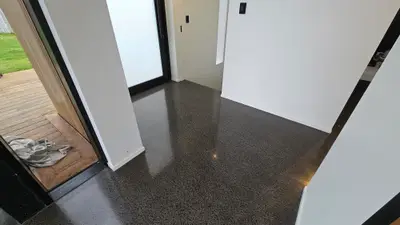
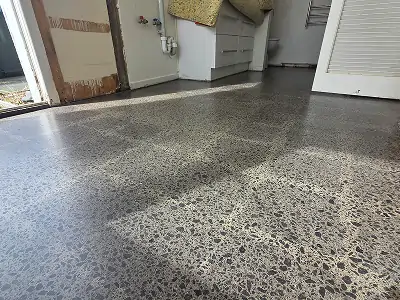
Yes. Most old and existing concrete slabs can be ground and polished to a good finish, even if polishing was never part of the original plan and even if the slab is decades old. The slab does not need to be purpose-poured. What matters is its current condition: age, flatness, surface contamination, and how it responds to a test grind.
Older and renovation slabs almost always need a medium to heavy grind rather than a light one. Here is why, what you realistically get, and where the limits are.
About this guide. We grind and polish concrete floors across Auckland every week - new builds, renovations, and everything in between. This article covers what we actually find on existing slabs and how we work out whether they're suitable for polishing. Reviewed by Bowie Houston.
Last reviewed: June 2026 | Author: Bowie Houston, Director, Diamond Shine Concrete
A lot of the floors we work on weren't originally spec'd for polishing. The homeowner pulled up carpet and found a slab. A builder poured a standard structural slab and the owner decided later they wanted polished concrete instead of tiles. A renovation exposed a floor that had been covered for decades. In all of these cases, the question is the same: can we work with what's there?
The short answer is yes - with some caveats. The result depends on the slab, not just on us.
What We Do First: The Sample Grind
Before we commit to any outcome or quote a specific finish level, we do a sample grind on arrival. We run the machine over a small section of the floor to see how the slab responds.
The sample tells us:
- How hard or soft the concrete is (affects grinding speed and how much material comes off)
- What aggregate is present and how it's distributed
- Whether there are glue or adhesive residues that need a heavier cut
- How consistent the surface is across the slab
- Whether tile ghosting is present and how visible it will remain after grinding
This is the most important step on any renovation or existing-slab job. We set honest expectations based on what we see in that first pass - not based on what the floor looked like before we started.
What Determines the Result?
Slab age and pour quality
Most Auckland slabs poured from the 1980s onward can be polished. Older pre-1990 slabs can also be polished beautifully - they often have more character in the aggregate than newer slabs. The older the slab, the more likely it needs a medium-to-heavy grind to level and flatten it, because older concrete was finished with simpler tools and has had more time to develop variations and settle.
Newer slabs poured for residential builds since the 2000s are generally flatter and more consistent. That doesn't mean they're all suitable for a light finish - it means they give us a better starting point.
| Slab era | Typical condition | Likely grind level needed |
|---|---|---|
| Post-2000 new build slab | Flat, consistent, no coatings | Light to medium |
| 1990s residential slab | Mostly flat, minor settling | Medium |
| Pre-1990 slab | More variation, possible patching | Medium to heavy |
| Renovation slab (carpet removed) | Glue residue, tack strip holes | Medium to heavy |
| Renovation slab (tiles removed) | Adhesive residue, possible tile ghosting | Heavy |
Flatness
A slab doesn't need to be perfectly flat to be polished. We routinely grind 3-5mm off high points to level a floor as part of the polishing process. Moderate unevenness - up to 8mm or so across a room - is well within grinding range.
Where flatness becomes a problem is when a slab has a severe slope or dip across a whole room (more than 15-25mm). In those cases, grinding alone can't fix it economically. The practical path is either a concrete topping overlay poured over the existing slab, or levelling the floor and laying an alternative floor covering instead.
DSC does not polish over self-levelling compound. Our grinders are heavy - even the lightest machine is around 500kg - and running that over a thin layer of self-leveller leads to cracking and failure. If a slab genuinely needs levelling beyond what grinding can handle and you want a polished result, a concrete topping is the only reliable option. If you're happy to go with tiles, timber, vinyl, or carpet instead, self-leveller is a perfectly good prep step for those systems.
See our guide to uneven slabs and what grinding can fix for the full flatness matrix.
Surface contamination: glue, adhesive, and old coatings
This is where existing slabs most often catch homeowners by surprise. Carpet adhesive, tile thinset bedding, vinyl glue, paint, and old sealers all affect how the slab grinds.
Carpet adhesive cannot be removed with a light grind. It smears and burns if the diamond tooling isn't aggressive enough. A heavier cut takes it off cleanly. One thing homeowners can do before we arrive: pull up the tack strips yourself - it's straightforward work that saves on-site time and keeps the job moving.
Tile thinset and adhesive also needs a heavier pass. More importantly, tile removal often leaves ghosting - visible patches where the tile layout was bonded to the slab. More on that below.
Paint and old sealers come off during grinding but may require more passes depending on how thick and how old the coating is.
The practical effect of surface contamination is that it rules out the lightest grind levels for most renovation jobs. True salt and pepper - where only the very tips of the aggregate are exposed and the cement matrix remains the background - is rarely achievable on a slab that has had carpet adhesive or tile adhesive on it. The slab demands more material removal to get below the contamination layer, which means more aggregate is exposed.

The aggregate underneath
Once we're grinding, what comes up is what's in the slab. Different builders use different aggregate mixes, and the size, colour, and distribution of stones varies. Most Auckland residential slabs have a natural mix of grey and cream stones that produces a characterful finish. Some slabs have coarser aggregate that creates a more dramatic look; some stay subdued even with a heavy grind. We can't predict this from a visual inspection - the sample grind is the only reliable way to see it.
This is one of the reasons polished concrete is distinctive: every floor is different, because every slab is different.
The Honest Bit: Tile Ghosting
If tiles have been removed from the slab, there's a very good chance tile ghosting will be present. Ghosting is the faint imprint of the tile layout - visible as lighter or darker patches corresponding to where the tile adhesive was laid.
Grinding reduces tile ghosting by exposing fresh concrete and blending colour variations across the surface. A heavier grind helps. But grinding does not fully remove tile ghosting. The adhesive and moisture differences penetrate deeper into the slab than the grind goes, and the underlying variation in the concrete remains.
The sample grind on arrival shows you what the floor will actually look like. If the ghosting is severe enough that the client isn't comfortable with it, the honest advice is that polished concrete may not be the right option for that floor. We'd rather tell you that upfront than deliver a result that disappoints.
For a full explanation of why ghosting is permanent and how we manage it, see our tile ghosting guide.

When Polish Is NOT the Right Call
Polishing is the right answer for the vast majority of existing slabs we see. But there are situations where we'd tell a homeowner honestly that a different path makes more sense.
Severely uneven slabs where grinding can't level the floor economically. If the dip across a room is 25mm or more, the realistic options are a concrete topping (then polish the topping) or an alternative floor covering. We don't polish over self-levelling compound.
Slabs with structural cracking or movement. Wide cracks (3mm or more) that step up or down across the slab may indicate movement. Hairline cracks are normal and grind out well. Structural movement needs an engineer's assessment before any floor work.
Slabs with extreme tile ghosting where the homeowner wants a uniform floor. If the floor has extensive old tile patterns and the client is set on a consistent, uniform result, polished concrete over that slab will likely disappoint. Tiling, timber, or vinyl gives more control over final appearance.
Very thin or compromised slabs. Rare, but some older slabs are thinner than standard or have sections that have been poorly repaired. We assess this during the site visit.
What This Costs
Renovation jobs - where the slab has had carpet, tiles, or other floor coverings removed - are priced at $90-$120 per m2 + GST for a standard residential floor. This renovation tier reflects the extra grinding time needed to remove adhesive residue and level the slab.
For comparison, a new build slab in good condition averages ~$100 per m2 + GST for a 50-70m2 floor. The renovation range overlaps because condition varies so much - a relatively clean 1990s slab costs less to prep than one that's had three layers of vinyl over carpet adhesive.
The minimum charge for any job is $2,250 + GST. This applies to small areas under 20m2.
Our full polished concrete cost guide breaks down what affects the quote and what you can realistically expect across different job types.
Frequently Asked Questions
Can you polish a concrete slab that was poured as a standard structural slab?
Yes. Most standard residential and commercial slabs can be ground and polished. The slab doesn't need to be purpose-poured for polishing - it needs to be structurally sound and in a condition where grinding can achieve the result you're after. We assess this with a sample grind on arrival before committing to any specific finish.
What grind level will an older or renovation slab need?
Most renovation and older-slab jobs need a medium-to-heavy grind. Carpet adhesive needs a heavier cut to remove properly (it smears with light grinding). Tile adhesive is similar. Older slabs are less flat and benefit from more material removal to level the surface. True salt and pepper - the lightest grind - is rarely achievable on renovation jobs and is most suited to newer, flat slabs without surface contamination.
Can you match the finish of a slab that was purpose-poured for polishing?
Often yes, and sometimes the existing slab looks better. The aggregate in older concrete can be more varied and characterful than the standard mix in a new build. The difference is in the process - existing slabs need more prep work, which is reflected in the price - not in the quality of the finished floor.
How much does it cost to polish an existing concrete slab in Auckland?
Renovation-tier jobs (carpet removal, tile removal) are priced at $90-$120 per m2 + GST. Average residential (~$100) applies to straightforward slabs in reasonable condition. The minimum charge is $2,250 + GST. See our pricing guide for the full breakdown.
Will tile ghosting show on a polished existing slab?
It depends on the slab. Grinding reduces tile ghosting significantly - a heavier grind more so - but it doesn't fully remove it. The colour and chemical differences from the old adhesive penetrate deeper than the grind goes. We do a sample grind on arrival so you can see exactly what the floor will look like before any work is committed. If ghosting is a concern, that's the most reliable way to make an informed decision.
What if the slab is too uneven to polish?
If the slab has a severe slope or dip (more than 15-25mm across a room), grinding alone isn't enough. For those jobs where you still want a polished result, the option is a concrete topping - poured over the existing slab and brought flat, then ground and polished. Where a polished finish isn't essential, self-levelling compound followed by tiles, timber, or vinyl is the straightforward solution. DSC does not polish over self-levelling compound.
How do you check if an existing slab is suitable for polishing?
The best way is a site visit and a sample grind. The sample shows us how the slab responds, what the aggregate looks like, whether ghosting is present, and how flat the surface is. It takes a few minutes and tells us far more than any visual inspection. Contact us to arrange a free site visit.
Talk to Diamond Shine Concrete
Not sure whether your slab is a good candidate for polishing? We've worked with existing slabs of every type across Auckland - older villas, 1990s homes, recent renovations, and commercial spaces. Have a look at our grinding and polishing services for more on our process and what's included, or get in touch for a free site visit and quote.
Internal Links Used
1. `/services/grinding-polishing` (money-page link - grinding and polishing service overview) 2. `/resources/uneven-concrete-slabs-grinding` (cross-link - flatness and what grinding can fix) 3. `/resources/tile-ghosting-fix` (cross-link - tile ghosting honesty) 4. `/resources/polished-concrete-cost-auckland` (cross-link - pricing guide)
Images Used
| Position | Catalog ID | Why selected |
|---|---|---|
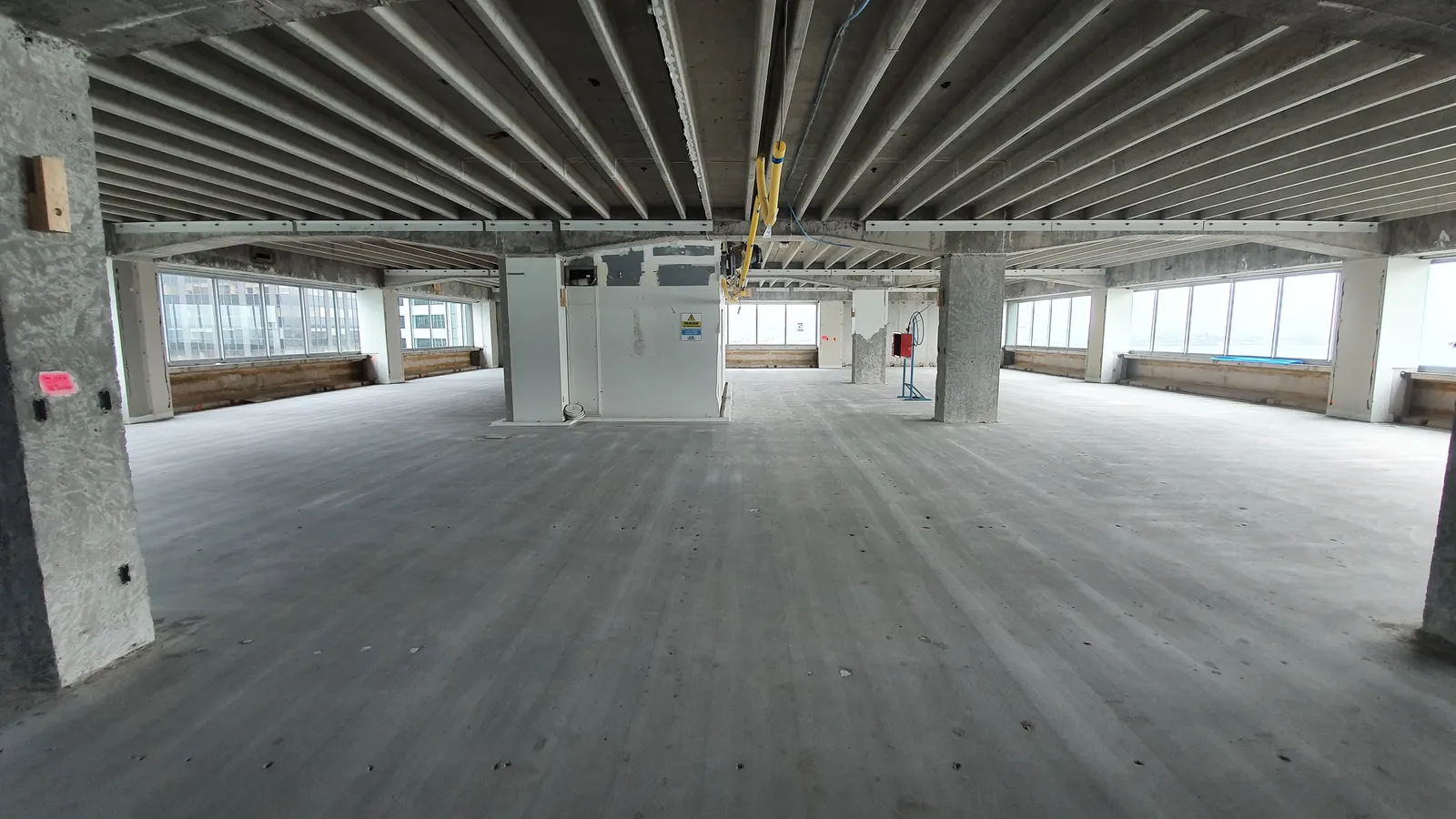
| Hero | `prep-grinding--20210813-125607` | Commercial floor mid-prep grinding - directly shows the grinding stage on an existing slab |
| Body 1 | `old-concrete-pre-1990--20220511-120136` | Pre-1990 residential slab after renovation polish - shows what an older existing slab looks like polished |
| Body 2 | `old-concrete-pre-1990--20230414-150849` | Polished pre-1990 kitchen floor with dense aggregate - older slab renovation result |
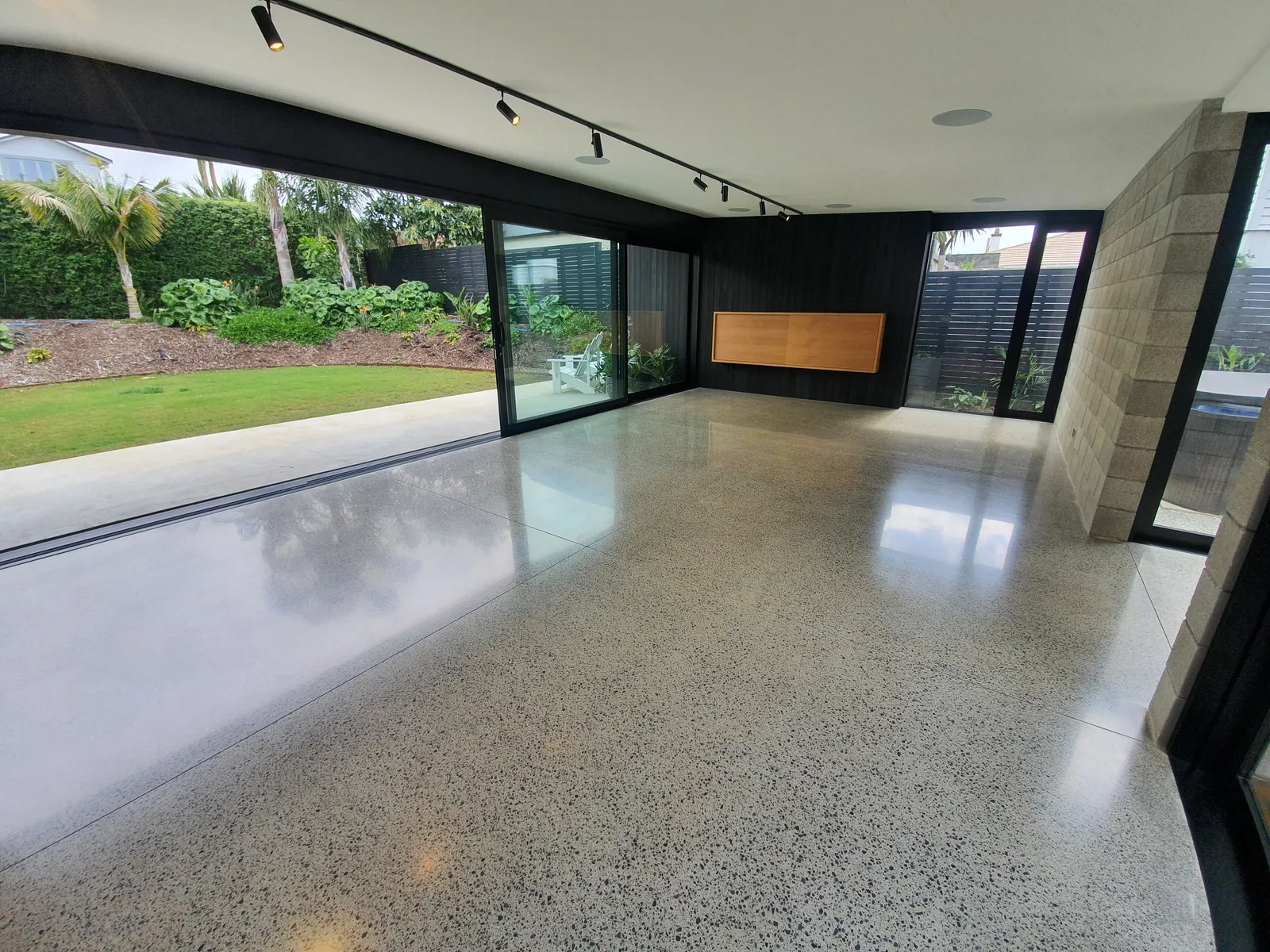
| Body 3 | `finished-home-referbs--20200929-141248` | Finished renovation result - open-plan with natural aggregate exposure after medium grind |