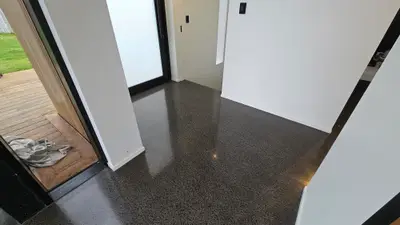
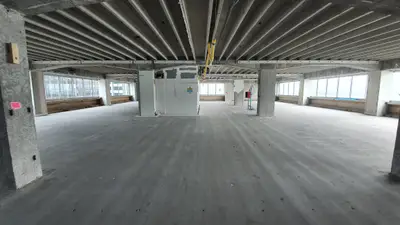
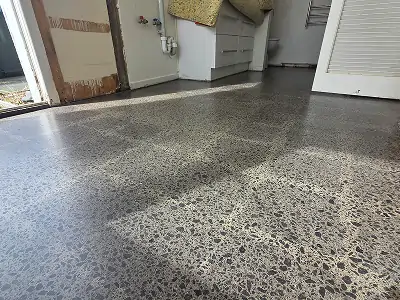
Grinding can flatten mild to moderately uneven concrete slabs - it's one of the things polishing was designed to do. We routinely grind 3-5mm off the high points to level a slab and blend the result into a clean polished finish. Where grinding can't help is severe slope across the slab (more than 10-15mm dip across a room) or where the slab is structurally compromised. In those cases the options are a concrete topping before polishing, or levelling the slab and laying an alternative floor (tile, timber, vinyl, or carpet) instead - we don't polish over self-levelling compound. This article covers how to tell the difference and what each fix costs.

About this guide. We grind and polish concrete slabs across Auckland every week. The diagnostic framework in this article comes from 14 years of dealing with uneven slabs of every type, from 1990s villas to recent new builds. Reviewed by Bowie Houston.
Last reviewed: May 2026 | Author: Bowie Houston, Director, Diamond Shine Concrete
We grind and polish hundreds of floors across Auckland and unevenness is one of the most common surprises homeowners discover when they pull up carpet or tiles. Most of the time it's fixable. Sometimes the right answer is "level first, polish second." Knowing which is which saves money and avoids redo work.
Why Are Concrete Slabs Uneven?
Concrete is poured wet and finished by hand or machine. Even with good workmanship, a slab can end up uneven for a few reasons:
Trowelling variations. The screed and trowel passes don't always hit perfectly flat - especially on older slabs poured before laser-levelling was standard.
Settling over time. Soil movement under the slab can cause subtle dips, particularly in older Auckland homes on clay soils.
Add-on rooms or extensions. Where a new slab section meets an old one, there's often a small step or transition.
Surface damage. Tack strips, glue residue, paint, and old sealers create raised areas. Tile thinset bedding can leave raised ridges where tiles were lifted.
Cracks or settlement. Visible cracks can indicate slab movement. Some are cosmetic, others structural - we'll diagnose on site.
For most homes we visit, the unevenness is in the 3-8mm range. That's well within grinding territory.
How Much Unevenness Can Grinding Fix?
Standard concrete grinding can take off 3-8mm at a time without difficulty. With heavier passes we can take more, but at some point it becomes more economical to level the slab with a topping compound rather than keep grinding.
| Unevenness across the room | Best fix |
|---|---|
| 0-3mm | Standard grinding handles it as part of polishing |
| 3-8mm | Heavier grind levels the high points |
| 8-15mm | Deep grinding, or step up to a concrete topping if it's borderline |
| 15-25mm | Concrete topping (proper overlay), then polish the topping |
| 25mm+ | Concrete topping, or level the slab and lay an alternative floor |
Severe slopes (more than 25mm dip across a room) usually need a topping. The topping is poured over the existing slab and brought to a flat finish, then we grind and polish that surface.
For most Auckland homes built since the 1990s, slabs fall in the 0-8mm range. Older homes (pre-1990) and homes with extensions may have larger variations. Our carpet removal article covers what we typically find when carpet comes up.
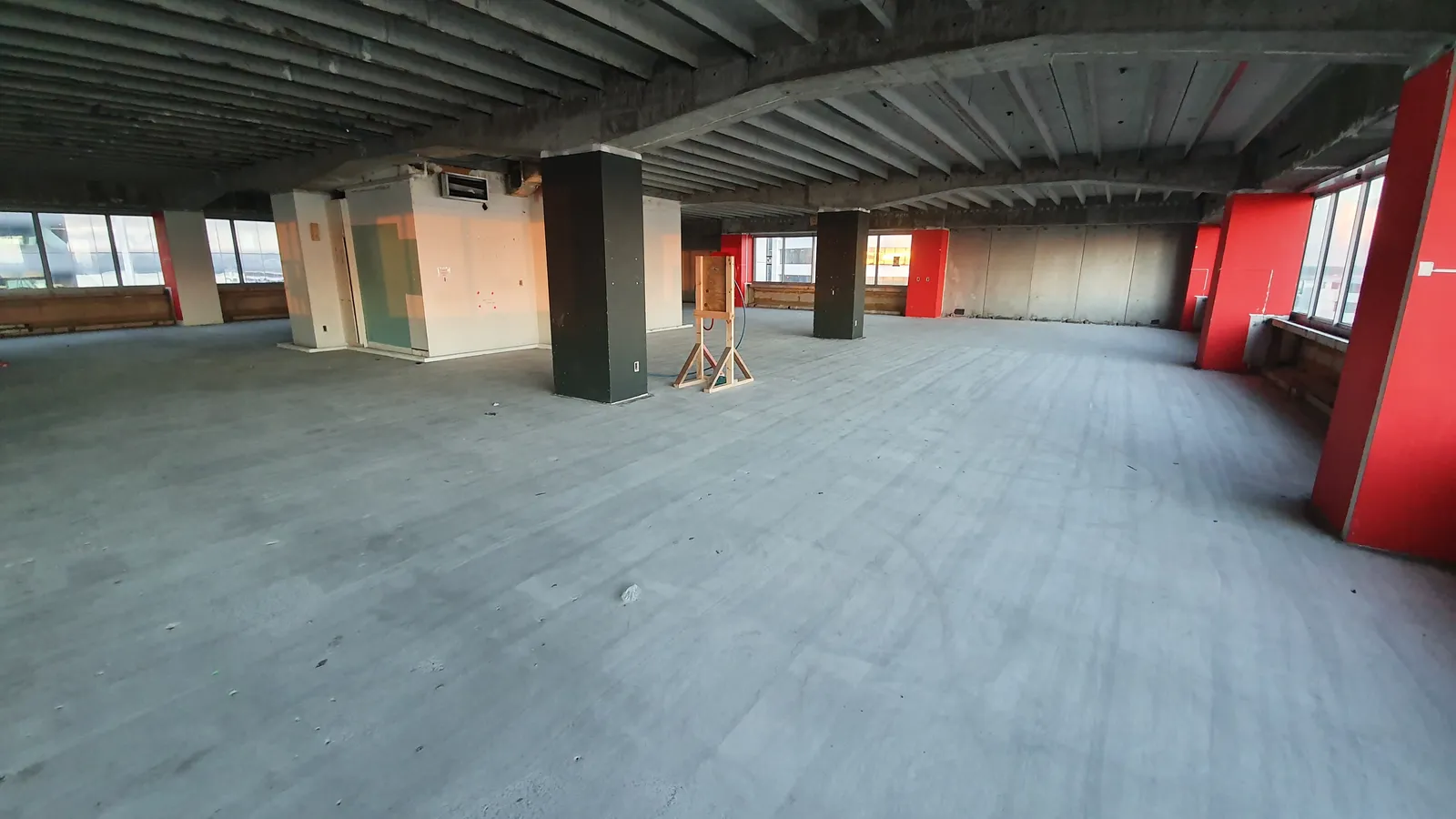
How to Tell If Your Slab Is Within Grinding Range
You can do a rough check yourself before calling us:
1. Lay a long straight edge across the floor. A 1.8m or 2.4m level or a long straight aluminium offcut works. Place it on the floor and look for gaps under it.
2. Measure any visible gaps. A 5mm gap means the floor dips 5mm relative to the high points along that line. Move the straight edge around the room to find the worst zones.
3. Check transitions and edges. Doorway transitions, additions, and along walls are where unevenness usually shows worst.
4. Photograph any cracks. Hairline cracks are normal and grindable. Wide cracks (3mm+) or cracks that step up/down may indicate movement - we'll want to see those before quoting.
5. Check for rocking tiles or hollow-sounding patches (if tiles are still down). These can indicate sub-floor problems separate from slab evenness.
If your worst gap is under 8mm, grinding will almost certainly handle it. Above that, we'd want to see the floor in person.
What About Old Pre-1990 Slabs?
Older Auckland slabs are often less flat than modern ones. They were poured with simpler tools, sometimes by hand, and have had decades to settle. The good news: most older slabs polish beautifully once ground. The aggregate exposed is often more colourful and characterful than newer slabs.
Key differences in older slabs:
- More likely to need medium-to-heavy grind to level
- May have visible patching, cracks, or repair lines that get blended through grinding (not always fully removed - cracks can read through as faint lines)
- Surface contamination (paint, glue, old sealers) is common and needs to come off
- Tile ghosting from removed tiles is permanent - grinding reduces but doesn't fully eliminate it
We've polished older slabs back to stunning floors in many Auckland villas and bungalows. The result has more character than a brand-new slab. The trade-off is more grinding time and a more expensive job.
For more on what to expect when removing existing flooring, see our carpet and tile removal article. If the floor is also dull or worn from previous polish, our restoration and rebuff guide covers what's possible.
What If Grinding Alone Won't Cut It?
When a slab is too uneven for grinding, the right path depends on whether you still want a polished finish.
Concrete topping (overlay) - the polishable option
A proper concrete overlay poured over the existing slab and brought to a flat finish, usually 25-50mm thick. Once it has cured, we grind and polish the topping like any other slab.
Pros: Most reliable for severely uneven floors. Creates a fresh, polishable surface. Cons: Most expensive option, raises floor height significantly (impacts doors and skirtings), longer construction time. Use when: Severe slope, or when extensions and sections need to be unified, and you want a polished concrete finish.
A topping is a different scope of work, so for these jobs we recommend talking to a concrete layer about the overlay before we get involved with the grind and polish.
Why we don't polish over self-levelling compound
Self-levelling compound is a thin, pourable cementitious layer that flows out flat. It's a common fix under tile, timber, vinyl, and carpet, but it's not something we polish. Our machines are heavy - even the lightest grinder weighs around 500kg - and running that weight over a few millimetres of weaker self-leveller leads to cracking, delamination, and failure over time.
So where a slab genuinely needs levelling beyond what grinding or a topping can do, the realistic path is to prepare the slab, apply self-levelling compound if needed, and then install an alternative flooring system (tile, timber, vinyl, or carpet) rather than trying to polish over it. If your heart is set on polished concrete, the topping route above is the option that works.
What This Costs in Auckland
| Job type | Price per m2 (+ GST) |
|---|---|
| Standard polish (slab in good condition) | ~$100 (50-70m2 residential) |
| Renovation/carpet removal polish (medium-heavy grind) | $90-$120 |
| Restoration polish (regrinding existing polished floor) | $60-$100 |
| Concrete topping + polish | varies - quote separately |
Most homes we work on are in the standard or renovation range. Concrete toppings are the exception, not the rule. Our pricing guide for Auckland breaks down what affects each quote.
Frequently Asked Questions
How much can grinding take off a concrete slab?
Standard grinding handles 3-8mm comfortably. Heavier grinding can take more, but past 15-25mm a concrete topping is usually the more economical and reliable fix if you want a polished finish. Beyond that, the choice is a topping or levelling the slab and laying an alternative floor.
How much does it cost to level an uneven concrete floor in Auckland?
For grinding-only levelling as part of a polish job, expect renovation-tier pricing of $90-$120 per m2 + GST. For a polished finish on a severely uneven slab, a concrete topping is quoted separately and depends on thickness. See our pricing guide for full ranges.
Can I polish concrete that has visible cracks?
Yes, in most cases. Hairline cracks polish out or blend during grinding. Wider cracks (3mm+) usually remain visible as faint lines after polishing - we manage them through colour-matched filling and grinding to blend. Severe cracks indicating slab movement need structural assessment first.
What's the difference between grinding and self-levelling?
Grinding takes material AWAY from the slab to flatten it, and it's what we do to prepare a floor for polishing. Self-levelling compound ADDS a thin layer to bring low spots up - but we don't polish over it, because our machines are too heavy and the thin layer cracks and delaminates. Self-leveller is the right call when you're laying tile, timber, vinyl, or carpet rather than polishing. For a polished finish on a badly uneven slab, a concrete topping is the option that works.
Will grinding remove tile ghosting?
Grinding reduces tile ghosting but rarely eliminates it entirely. The colour and chemical differences in the slab where tiles were laid penetrate deeper than grinding goes. We always do a sample grind on arrival so you can see what the floor will look like before committing. Our tile ghosting article has the full picture.
How long does grinding an uneven slab take?
For a typical 50-70m2 residential floor needing medium-to-heavy grind, the polishing job runs 3-5 days. Severely uneven slabs needing extra grinding passes can add 1-2 days. If a concrete topping is needed first, that's a separate job with its own cure time before we grind and polish.
Will I be able to tell the floor used to be uneven?
Once polished, no. A properly ground and polished slab reads as a single flat surface. Faint shadows from where the worst dips were filled may show under raking light at certain angles, but they're not visible in normal use.
Talk to Diamond Shine Concrete
Not sure if your uneven slab can be ground flat? We've polished hundreds of residential and commercial floors across Auckland, the North Shore, East Auckland, West Auckland, and South Auckland. Have a look at our grinding and polishing services for the full process and what's included, or get in touch for a free site visit and quote.