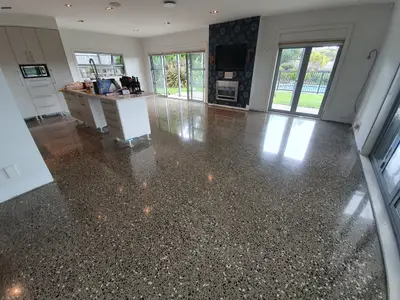
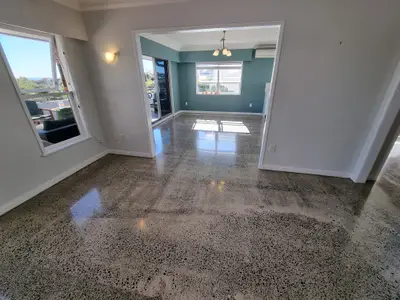
Yes. A 10-year-old mechanically polished concrete floor can almost always be reground and repolished back to a fresh finish. Because the polish runs deep into the slab rather than sitting on top as a coating, our machines cut back through the worn surface, re-expose clean stone and cement, then repolish to your chosen sheen. In Auckland this restoration work runs $60-$100 per m2 + GST.
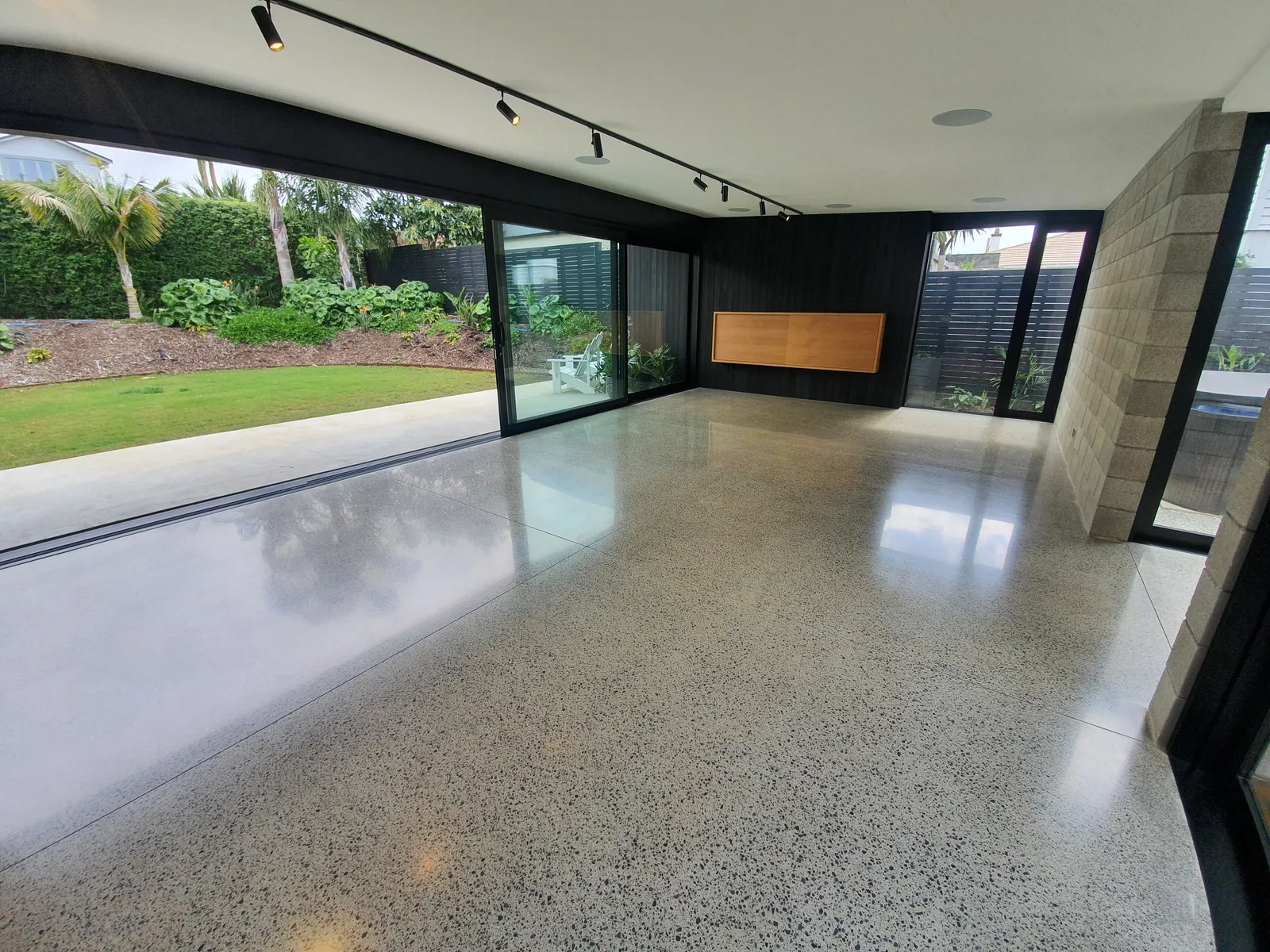
If your polished floor has gone dull, scratched or patchy after a decade of foot traffic, you have not "worn it out". You have worn the top layer of a finish that goes millimetres deep. This guide explains why grinding and polishing can be redone, when a full regrind is the right call versus a lighter refresh, what the process looks like on site, and what it costs in Auckland.
Regrind and Repolish, Rebuff, or Start Fresh?
There are three ways to bring a tired polished floor back. The right one depends on how worn the surface is, not on the age of the slab. Here is how they compare.
| Option | What it involves | Best when | Price band (+ GST) |
|---|---|---|---|
| Rebuff | Re-hit the higher polishing grits to lift the sheen. No aggressive grinding. | Floor is lightly dulled, no deep scratches, done every 3-5 years as maintenance | $30-$50 per m2 |
| Regrind and repolish | Cut back through the worn surface, re-expose clean stone and cement, repolish to your chosen sheen | Floor is dull, scratched, patchy or the sheen has flattened after years of traffic | $60-$100 per m2 |
| Full new polish | Only relevant if the existing floor is a coating that has to be stripped first, or a covering is being removed | Not usually needed on an already mechanically polished slab | ~$100 per m2 |
Most 10-year-old floors that "look tired" fall into the middle row. The stone and cement are still there and still hard. What has gone is the fine, reflective surface, and that is exactly what a regrind and repolish rebuilds.
Why a Polished Floor Can Be Reground and Repolished
Mechanically polished concrete is not a paint, a film or a topical coating. The finish is created by grinding and polishing the slab itself through progressively finer diamond grits, so the shine you see is the concrete surface, refined. That is the key reason the process can be repeated.
The polish has depth. We are working the top few millimetres of the slab, not a thin layer sitting on top. When the surface dulls, there is plenty of sound concrete underneath to cut back into and re-refine.
There is no coating to fail. DSC uses penetrating sealers that soak into the concrete rather than forming a film on top. Nothing peels, flakes or delaminates, so restoration is a matter of re-refining the surface rather than stripping a failed product off it.
The slab keeps improving with a densifier. Part of the process is a densifier that hardens the surface. Re-treating during a regrind leaves the floor denser and more wear-resistant than a cheap once-over ever would.
This is also why a well-maintained mechanically polished floor lasts 20+ years with good maintenance. It does dull over time, like timber or tiles, but unlike carpet or a coated floor it can be brought back rather than ripped out and replaced.
Signs Your Floor Is Ready for a Regrind
After ten years of shoes, furniture and cleaning, a few things tend to show up. A regrind and repolish is worth considering when you see:
Flattened sheen in the walkways. Traffic lanes and doorways lose their reflectivity first while the edges of the room still look sharp. That contrast is the classic sign the surface has worn unevenly.
Fine scratching and dull haze. Grit dragged across the floor over years leaves micro-scratches that scatter light and read as a cloudy, tired look.
Patchiness or watermarks that will not clean off. If mopping no longer restores the look, the wear is in the surface itself, not the dirt on top of it.

If the floor is only lightly dulled with no real scratching, a rebuff may be all it needs and it is the cheaper option. If the wear is deeper or uneven, a full regrind and repolish is the honest fix. We assess this on site before quoting.
What the Regrind and Repolish Process Involves
Restoring an existing polished floor follows the same grinding and polishing sequence as a new floor, adjusted to what the slab needs.
1. Assess and sample grind. We look at how worn the surface is and do a small test area so you can see how the floor responds before committing to the whole space.
2. Grind back the worn surface. We cut through the tired top layer with diamond tooling. How deep depends on the wear and whether you want to keep the existing aggregate look or expose a little more stone.
3. Repolish through the grits. We work back up through progressively finer grits to your chosen sheen, then re-apply densifier and a penetrating sealer.
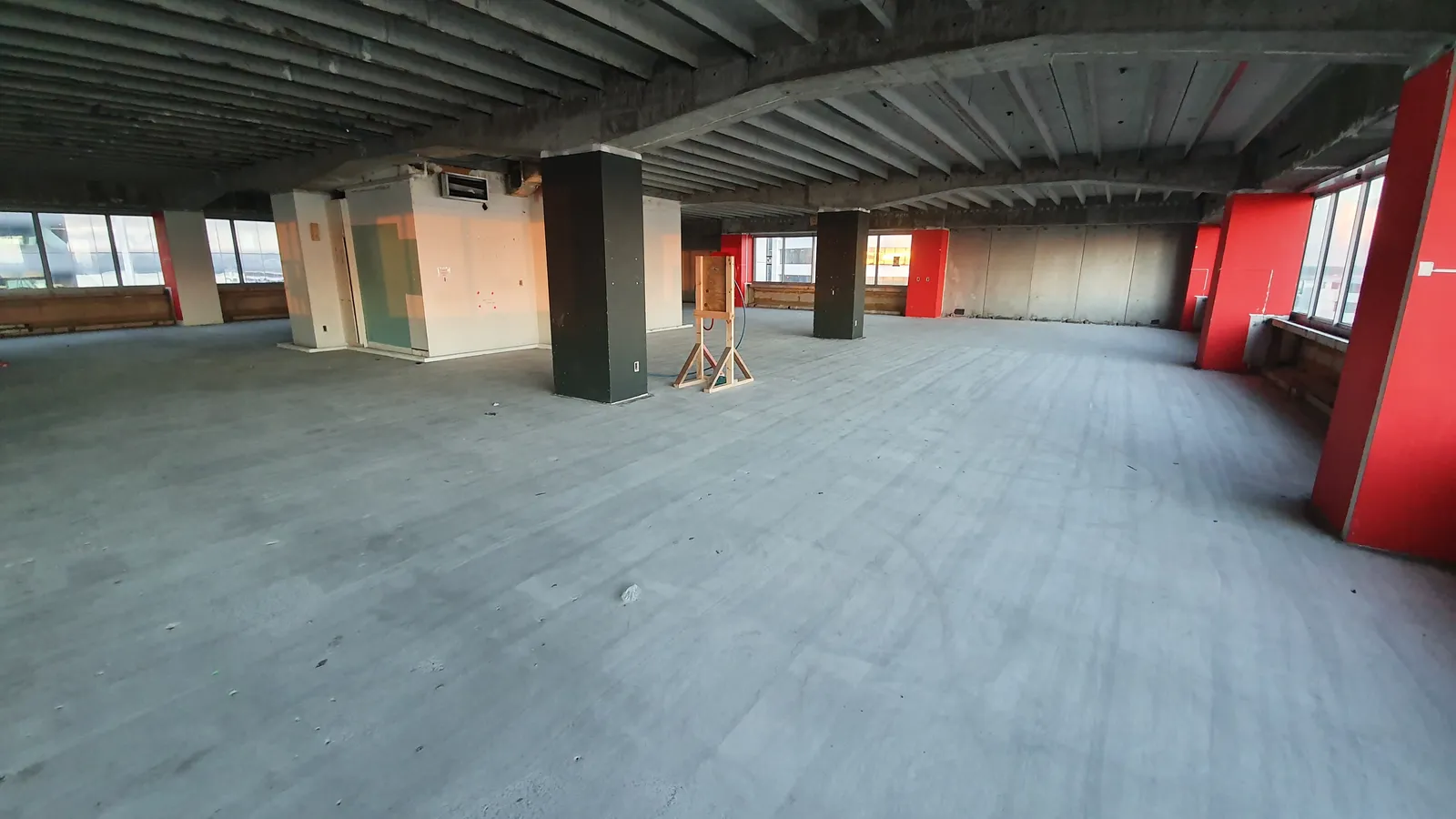
DSC uses the same process across the whole floor, so the finish stays consistent from wall to wall with no special treatment at edges or entrances. On an occupied home we work room by room where we can to keep disruption down.
What Finish Will You End Up With?
A regrind lets you keep the look you have or adjust it. Because we are cutting back into the slab, a heavier cut will expose a little more aggregate, while a lighter cut keeps the existing stone pattern close to what it was.
For sheen, we recommend satin to semi-gloss for most homes. Satin (around 200 grit) and semi-gloss (around 400 grit) are distinct, adjacent levels, and satin to semi-gloss is the sweet spot that looks great and hides day-to-day wear well. A matte finish is less slippery but is more prone to staining and showing wear, so it is a trade-off worth talking through. Sheen is subjective, so we point to the on-site sample so you can see the actual look before we commit.

One honest note: a true light "salt and pepper" look is not always achievable on an older floor, because past wear, repairs or the original grind depth set the character of the slab. We will tell you what your specific floor can realistically deliver at the sample stage rather than promise a finish it cannot hit.
How Much Does It Cost to Regrind and Repolish in Auckland?
Restoring an existing polished floor by regrinding and repolishing runs $60-$100 per m2 + GST in Auckland. Where you land in that band depends on the floor size, how worn it is, how much furniture has to be worked around, and whether you want more aggregate exposed. A lighter maintenance rebuff, where the floor is only mildly dulled, is $30-$50 per m2 + GST. Very small areas are subject to a $2,250 + GST minimum charge, because the machinery, set-up and labour are much the same whether the space is large or small.

Restoration is almost always cheaper than tearing up the floor and installing a new one, and you keep the concrete you already own. For a full breakdown of what drives the price, see our polished concrete cost guide. If your floor was mechanically polished years ago and simply needs bringing back, our concrete grinding and polishing service covers the regrind and repolish work.
Get a free quote and we will assess your floor and give you an honest recommendation.
Frequently Asked Questions
How much does it cost to regrind and repolish a polished concrete floor in Auckland?
Regrinding and repolishing an existing polished floor runs $60-$100 per m2 + GST. A lighter rebuff, where the floor is only mildly dulled, is $30-$50 per m2 + GST. A $2,250 + GST minimum charge applies to very small areas. The exact figure depends on floor size, how worn it is and how much aggregate you want exposed. Our cost guide breaks down what affects the price.
Can any 10-year-old polished floor be reground and repolished?
Almost always, yes. Because mechanically polished concrete is the refined surface of the slab rather than a coating, there is sound concrete underneath to cut back into and repolish. We do a sample grind on site first so you can see how your specific floor responds before committing.
Is a regrind the same as a rebuff?
No. A rebuff re-hits the higher polishing grits to lift the sheen on a lightly dulled floor and costs less. A regrind cuts back through a worn, scratched or patchy surface to re-expose clean stone and cement, then repolishes it. We recommend the right one after assessing your floor.
Will the floor look exactly the same as before?
It can look very close, or you can change it. A lighter cut keeps the existing stone pattern, while a heavier cut exposes a little more aggregate. We finish to satin or semi-gloss for most homes and confirm the look with an on-site sample before we start.
How long will a reground and repolished floor last?
With good maintenance, a mechanically polished floor lasts 20+ years. Like timber or tiles it will slowly dull again with traffic, but it can be rebuffed or reground and repolished as many times as the slab depth allows, rather than replaced.
How long does the job take and can I stay in the house?
Most residential restorations take a couple of days depending on size and layout. On an occupied home we work room by room where possible to keep disruption down. We will give you a clear timeline with your quote.