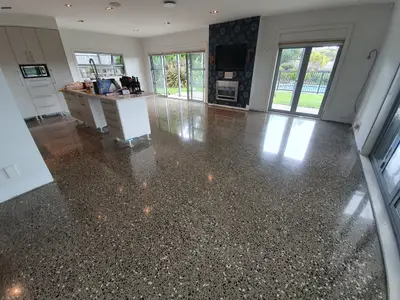
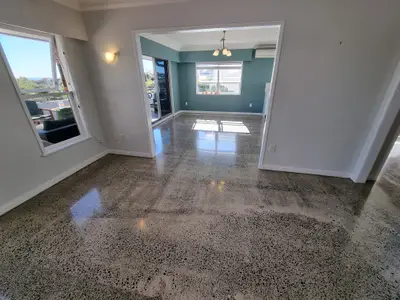
If your polished concrete floor looks patchy, the honest first step is a sample grind. Most patchiness comes from the slab itself, not the polishing. A deeper, heavier grind blends and reduces uneven areas, but some slab characteristics are permanent. Patching almost always makes things more noticeable, so avoid it.

A patchy floor is one of the most common concerns we hear about, whether it is an existing polished floor that never looked even or an old slab you are hoping to grind and polish for the first time. This guide explains why floors look patchy, what grinding and polishing can realistically do about it, and where the limits are. We have polished hundreds of floors across Auckland, and the biggest favour we can do you is to be straight about what is fixable and what is a permanent feature of your concrete.
Why a Polished Concrete Floor Looks Patchy
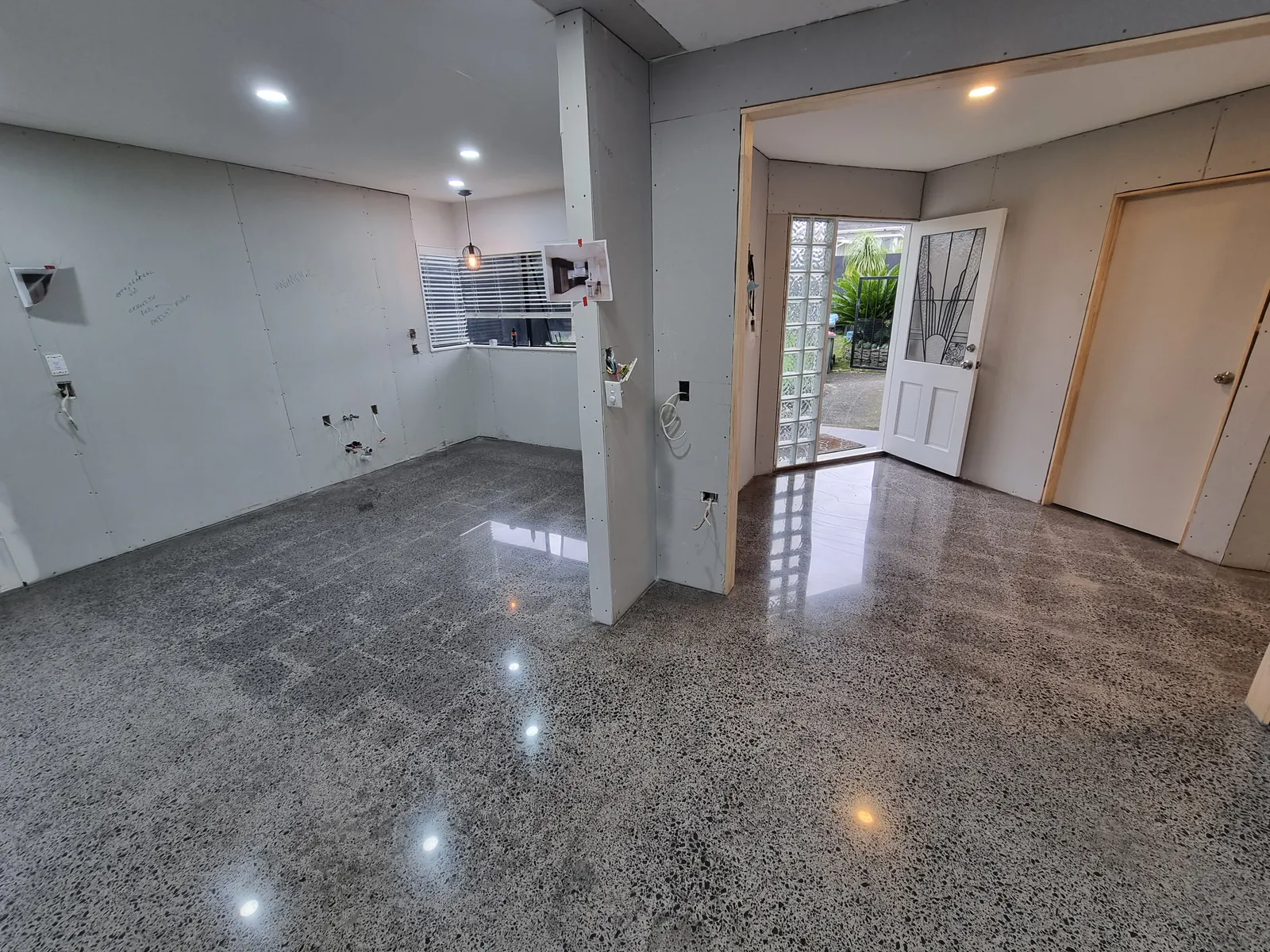
Patchiness is almost always a slab characteristic, not a fault in the polishing process. Concrete is a natural, poured material, so no two areas are identical. Here are the usual causes.
Uneven stone exposure. If a slab is not perfectly flat, the grinder cuts deeper into the high spots and skims the low spots. That means more aggregate shows in some areas and less in others, which reads as patchiness or banding across the floor.
Slab inconsistency. Different concrete loads, mix variation, and how the slab was trowelled and power-floated all change how the surface looks once ground. Older slabs and slabs poured in stages are the most variable.
Moisture and curing differences. Areas that dried or cured at different rates can hold slightly different colour. This shows up as darker or lighter patches, and it is locked into the slab.
Tile or adhesive ghosting. Where tiles, vinyl, or carpet glue were once stuck down, the adhesive soaks into the concrete and leaves a shadow. Grinding reduces and blends ghosting, but it does not remove it.
Old patch repairs. Previous concrete patches almost never match the surrounding slab. They take polish differently and often stand out more, not less.

Patchy vs Natural Character: A Quick Reference
Before assuming a floor is faulty, it helps to know which look is a genuine problem and which is simply the character of polished concrete. This is where expectations matter most.
| What you are seeing | Cause | What can realistically be done |
|---|---|---|
| Uneven aggregate / banding | Slab not flat, so grind depth varies | A heavier grind blends and reduces the variation |
| Dark or light patches | Moisture and curing differences | Minimised by a deeper cut; some colour is permanent |
| Tile or glue shadows (ghosting) | Adhesive soaked into the slab | Reduced and blended, never fully removed |
| Standout patch repairs | Older repairs read differently | Blended by grinding; do not add more patches |
| Cloudy or dull patches | Worn or failing surface, not the slab | Often restored by a regrind and repolish |
Natural variation in stone exposure and tone is part of what people love about polished concrete. It is a poured stone floor, not a printed tile. The goal is a consistent, blended finish with character, not a flawless factory surface.
What Grinding and Polishing Can Realistically Do
Grinding and polishing is the on-site process of mechanically cutting the surface with progressively finer diamonds. For a patchy floor, the lever we have is grind depth.
A deeper, heavier grind exposes more of the aggregate below the surface, which tends to be more consistent than the top skin of the slab. Going heavier blends high and low areas, reduces the contrast between patches, and minimises shadows like ghosting. It is the single most effective thing we can do about patchiness.
What it will not do is erase everything. Ghosting, deep staining, adhesive penetration, and colour differences from curing live inside the slab. A heavier cut minimises them, but some can remain visible. We will never tell you grinding removes them completely, because that is not true.
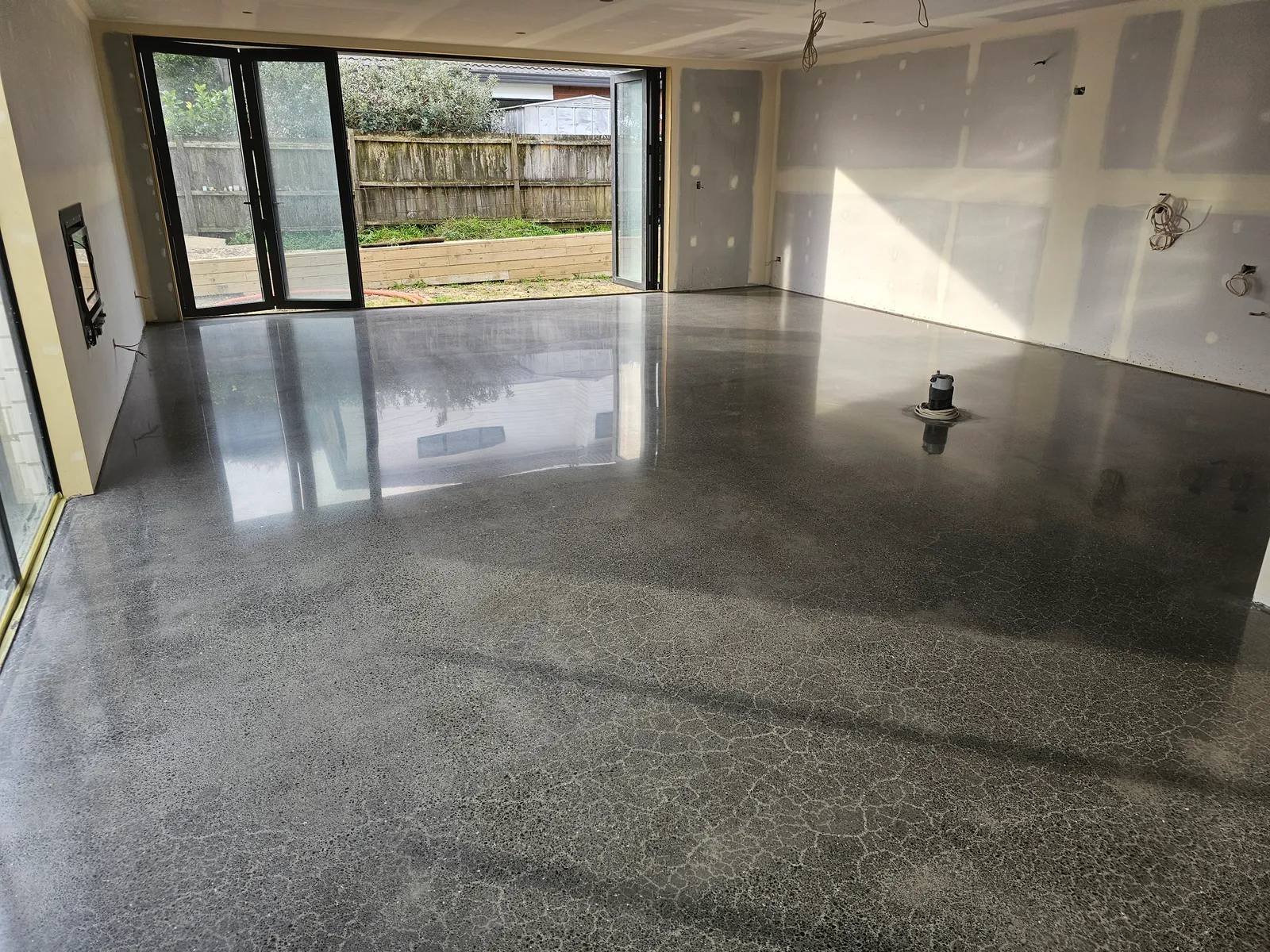
Note that we use the same process across the entire floor. We do not treat edges or entrances differently, and we do not add anti-slip particles or topical coatings. Our finishes use a penetrating sealer that soaks into the concrete rather than sitting on top of it.
We Do a Sample Grind on Arrival
Because every slab responds differently, we carry out a sample grind on site before committing to a full floor. We grind a test area to a couple of depths so you can see exactly how your concrete reacts: how much aggregate appears, how patches blend, and how much variation remains.
This is the honest way to set expectations. If the sample shows that a floor will always carry some ghosting or colour variation, you get to decide with your eyes open, before any money is spent on the full job. Most renovation and older-slab jobs end up needing a medium to heavy grind rather than a light one, precisely because a heavier cut does the best job of blending imperfections.
If you are hoping for a true salt and pepper look, be aware that salt and pepper is the lightest grind, where only the very tops of the stones are exposed and the cement stays as the background. On an older, patchy, or previously tiled slab, that light finish is often not achievable, because it leaves too much of the original inconsistency on show. Our salt and pepper finish guide explains the grind levels in full.
What Not To Do
Do not patch it. Trying to patch a patchy floor almost always makes it worse. A new patch will not match the polish, colour, or aggregate of the surrounding slab, so instead of hiding a problem area you draw more attention to it.
Do not rely on a topical sealer to mask it. A film-forming topical sealer might slightly hide variation at first, but it scratches, peels, and clouds over time, and it changes the whole character of the floor. It is not a fix.
Do not pour self-levelling compound and polish over it. Our machines are heavy, and polishing over a thin layer of self-leveller leads to cracking and failure. For a badly compromised or very uneven slab where you still want a polished look, the right path is a proper concrete topping or overlay that we then grind and polish once cured.
When Polished Concrete May Not Be the Answer
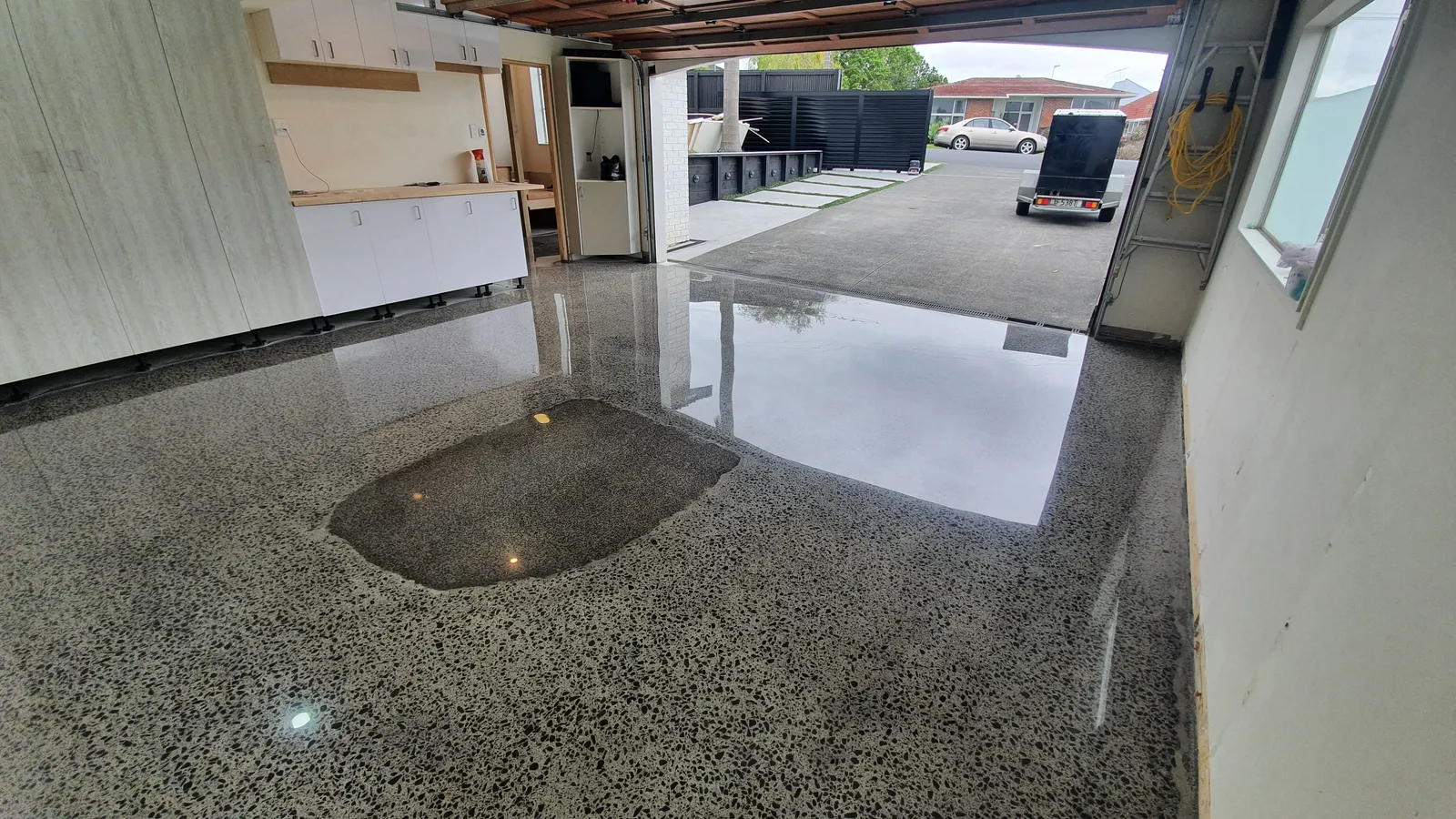
We would rather lose a job than leave a customer disappointed. If you want a perfectly uniform floor with zero variation, an old or heavily compromised slab may not be the right candidate for polishing. Ghosting and slab colour differences are permanent characteristics, and no amount of grinding changes that.
In those cases the realistic options are a concrete topping or overlay before polishing, or an alternative covering such as tile or timber. The sample grind tells us which way to go. If the slab is sound and simply tired or dull rather than truly patchy, a regrind and repolish usually brings it back beautifully and lasts 20 or more years with good maintenance. You can learn more on our concrete grinding and polishing page.
Frequently Asked Questions
How much does it cost to fix a patchy polished concrete floor?
If the slab is sound and we are regrinding and repolishing an existing polished floor, restoration usually runs around $60-$100 per m2 + GST. A first-time polish of an old renovated slab is closer to the average residential rate of around $100 per m2 + GST. The exact figure depends on the slab, so we confirm it after the on-site sample grind. See our polished concrete cost guide for full pricing.
Can grinding remove patchiness completely?
No, and anyone who promises that is overselling. A heavier grind blends and reduces patchiness by exposing more consistent aggregate, but slab characteristics like ghosting, deep stains, and curing colour differences are permanent to some degree. We use "reduces" and "blends" because that is what is honestly achievable.
Why does my floor look blotchy in some areas and not others?
Usually because the slab is not perfectly flat, so the grinder cuts to different depths, or because moisture and curing differed across the pour. Both are baked into the concrete. A deeper, more even grind minimises the contrast, which is why we often recommend a medium to heavy cut on patchy floors.
Will a topical sealer hide the patches?
Not reliably, and we do not recommend it. Film-forming topical sealers can lightly mask variation at first but then scratch, peel, and cloud. We use penetrating sealers that soak into the concrete instead, which is why our floors do not peel.
Should I patch the bad spots before you polish?
Please do not. Patching a floor before polishing almost always makes the patchy areas more obvious, because a patch will not match the aggregate or polish of the surrounding slab. Leave it to the grind, which blends far better than any patch.
Is a patchy look actually a defect?
Often it is not. Natural variation in stone exposure and tone is a normal, valued feature of polished concrete, since it is a poured stone floor rather than a printed surface. True defects are things like a failing surface or a badly uneven slab, and the sample grind tells us which one you have.