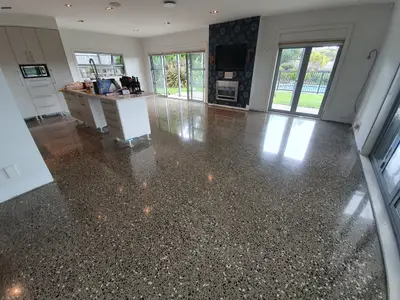
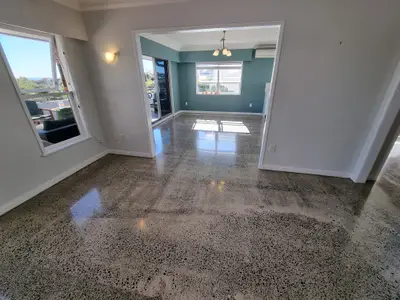
Yes, most scratches on polished concrete can be removed or made far less visible. Light surface marks buff out during a rebuff. Deeper scratches that reach the aggregate need a regrind and repolish. Very deep gouges can be blended and minimised, but not always erased completely. The right fix depends on how deep the scratch goes.
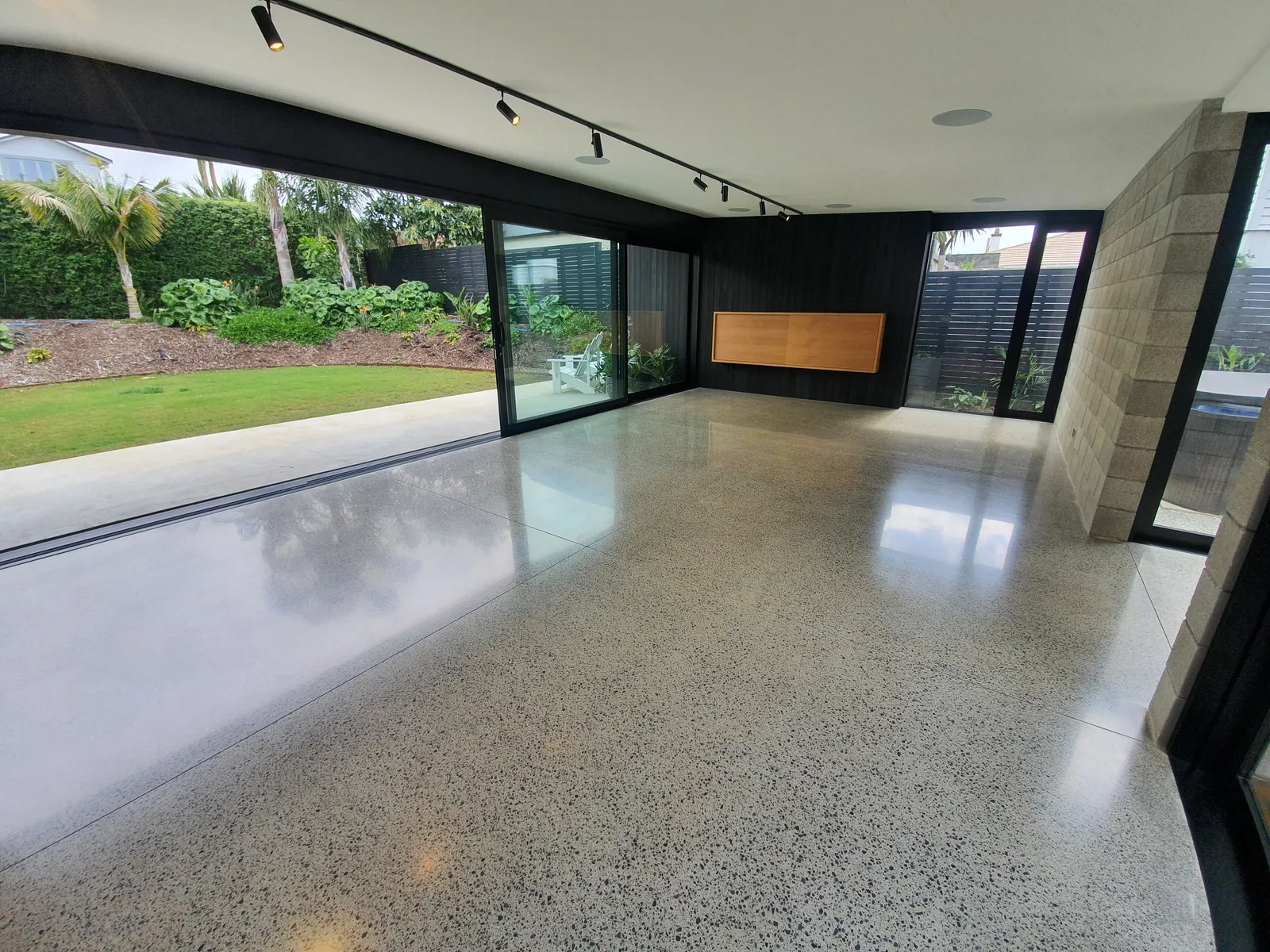
Polished concrete is one of the toughest floors you can put in a home or commercial space, but it is not indestructible. Grit, dragged furniture, and dropped tools can all leave marks over the years. The good news is that because the finish is created by grinding and polishing the concrete itself, we can usually work the same surface again to bring back the shine. This guide covers what causes scratches, what we can realistically fix, and what it costs in Auckland.
Can polished concrete actually be scratched?
Polished concrete resists scratching far better than timber, vinyl, or a coated floor, but no floor is scratch-proof.
The finish is not a coating sitting on top of the slab. We create it by grinding and polishing the concrete through progressively finer grits, then sealing it with a penetrating sealer that soaks into the surface. Because there is no film on top, there is nothing to peel, flake, or scratch off the way a topical coating or epoxy would. That is a big part of why polished concrete lasts 20+ years with good maintenance.
What does scratch it is grit. Fine sand and dirt tracked in on shoes or trapped under furniture legs act like sandpaper. Most scratches you see on a polished floor are shallow surface marks in the very top layer, not deep gouges into the stone. That distinction matters, because it decides how we fix them.
What kind of scratch do you have?
Not all scratches are equal. The depth of the mark decides the repair. Here is how we categorise them.
| Scratch type | What it is | Can we remove it? | How we fix it |
|---|---|---|---|
| Light surface marks | Fine scuffs and hairline scratches in the top polished layer | Yes, almost always | Rebuff (re-polish the surface) |
| Moderate scratches | Visible lines you can feel with a fingernail, into the sealed cement matrix | Yes, in most cases | Localised or full regrind and repolish |
| Deep scratches or gouges | Marks that cut into the exposed aggregate stone | Reduced and blended, not always fully erased | Regrind, repolish, sometimes fill |
| Etch marks (acid or chemical) | Dull spots from spills, not true scratches | Yes | Repolish the affected area |
For a light scuff, a rebuff is all it takes. For anything deeper, we grind back and repolish so the repair blends into the rest of the floor. We run the same process across the whole floor rather than spot-patching, so you do not end up with an obvious patch.

Removing light scratches: a rebuff
The most common fix is a rebuff. We re-polish the top layer of the floor, working out fine scratches and restoring the sheen, then reapply the penetrating sealer.
A rebuff does not grind into the stone. It refreshes the surface you walk on, so it is quick, low-mess, and the most affordable way to keep a floor looking sharp. Most floors benefit from a rebuff every 3 to 5 years anyway as normal wear dulls the finish, so if your scratches are light, a scheduled rebuff often handles them as part of routine maintenance.
Rebuff cost in Auckland: $30-$50 per m2 + GST, typically every 3 to 5 years. A minimum charge of $2,250 + GST applies to very small floors.
If your floor is simply looking tired or dull rather than scratched, the same rebuff process usually brings it back. We cover that in more detail in our guide on how long polished concrete lasts.
Removing deeper scratches: a regrind and repolish
When a scratch is deep enough to catch a fingernail or cut into the aggregate, a rebuff will not reach it. These need a regrind, where we grind back further and take the floor through the polishing grits again.
This is the same work as restoring a worn or damaged polished floor. We grind past the depth of the scratches, expose fresh surface, repolish to your chosen sheen, and reseal. Because we regrind the whole area rather than one spot, the finish stays consistent and the repair disappears into the floor.
Restoration cost in Auckland: $60-$100 per m2 + GST for a regrind and repolish of an existing polished floor. It costs more than a rebuff because it removes more material and takes the floor back through the full polishing sequence.
Very deep gouges that go well into the aggregate can be minimised and blended, but be realistic: if a stone has been chipped out, grinding reduces how obvious it is rather than making it vanish. We will always tell you honestly what a floor will and will not do before we start.
Why your finish affects how much scratches show
The sheen level you chose has a big effect on how visible scratches are day to day.
Higher-gloss floors reflect more light, so fine scratches show up more easily, the same way they do on a glossy car bonnet or a black benchtop. A satin to semi-gloss finish scatters light more softly and hides everyday marks better, which is one reason it is our default recommendation for most homes.
Matte floors hide scratches best of all because they reflect the least light. The trade-off is that matte is more susceptible to staining and general wear, so it is not automatically the right call. Satin sits at roughly a 200 grit polish and semi gloss at around 400 grit; they are distinct, adjacent levels, and sheen is subjective, so we always do a sample grind on site so you can see the real look before committing.
Whatever finish you choose, we run it consistently across the whole floor. We do not mix finishes room to room, and slip resistance comes from the finish level and grind depth, never from anti-slip additives. If you want to dig into sheen and grip, see our guide on whether polished concrete is slippery.
How to prevent scratches in the first place
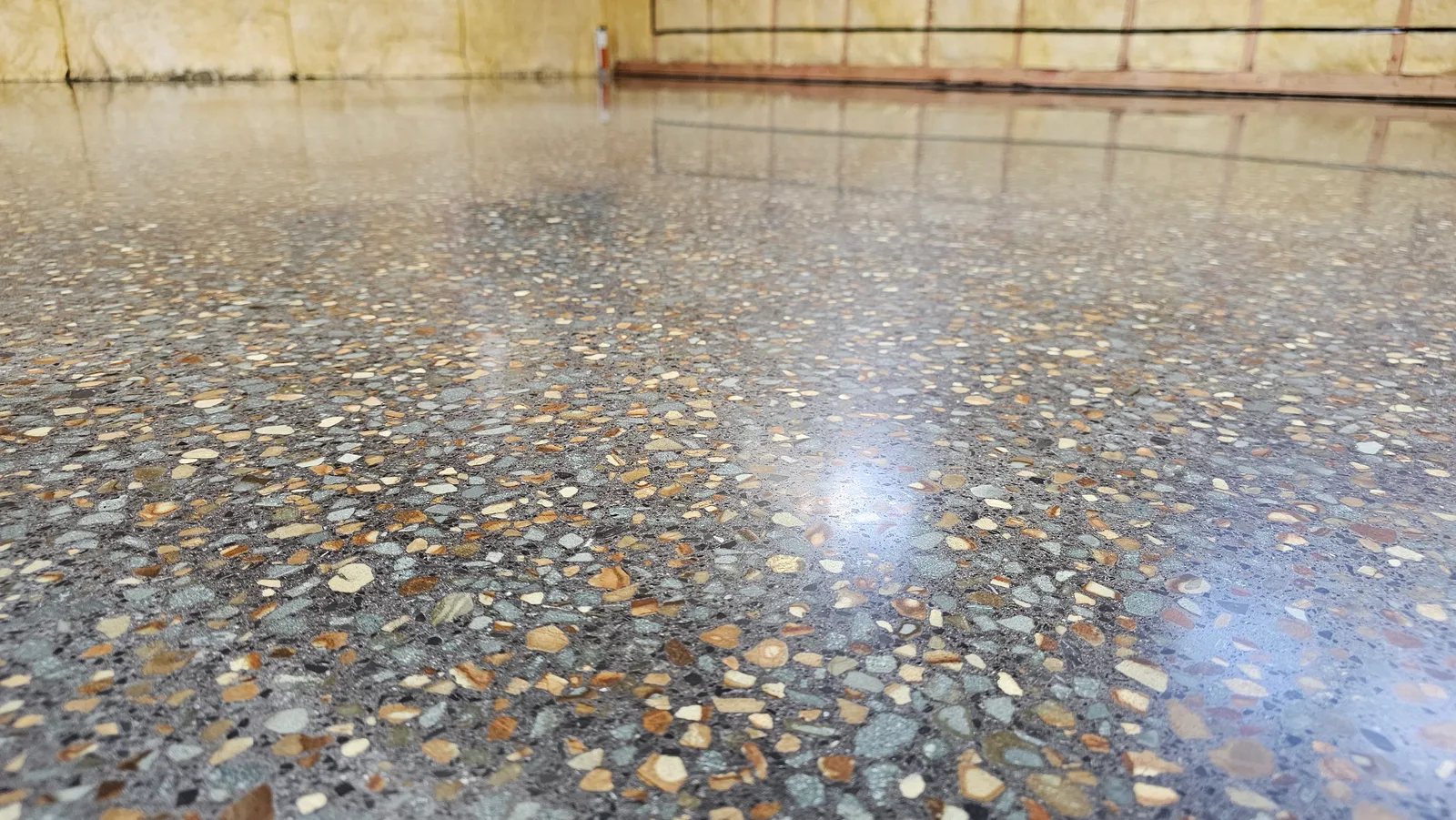
Prevention is cheaper than any repair. A few simple habits keep a polished floor looking new for years.
Keep grit off the floor. Sweep or dust-mop regularly and use a doormat at every entrance. Tracked-in sand and dirt are the number one cause of fine scratching.
Use felt pads under furniture. Chairs, tables, and anything that gets moved should have soft pads on the feet. Replace them when they wear through.
Lift, do not drag. Move heavy furniture and appliances rather than sliding them across the floor.
Mop with a neutral cleaner. Skip harsh acidic or abrasive products. A pH-neutral cleaner and warm water keep the sealer and sheen in good shape.
Wipe spills promptly. The penetrating sealer resists staining well, but acidic spills like wine or citrus are best cleaned up quickly so they do not etch a dull mark.

Setting realistic expectations
Here is the honest version. Light and moderate scratches on a polished concrete floor are very fixable, and most homes never need more than an occasional rebuff. Deeper scratches need a regrind, which costs more but restores the floor properly. The deepest gouges into the aggregate can be blended and made far less noticeable, but a perfect erase is not always possible.
Because polished concrete is the concrete itself rather than a coating, we can keep working the same floor for decades. That is the real advantage. A scratched coated floor often means stripping and recoating; a scratched polished floor just needs grinding and polishing again. We have polished and maintained hundreds of floors across Auckland, and in almost every case a scratched floor comes back looking excellent.
If your floor has picked up marks and you want an honest assessment, get a free quote or read more about our concrete grinding and polishing service.
Frequently Asked Questions
How much does it cost to remove scratches from polished concrete in Auckland?
It depends on depth. A rebuff for light surface scratches runs $30-$50 per m2 + GST, and floors usually need one every 3 to 5 years anyway. A full regrind and repolish for deeper scratches runs $60-$100 per m2 + GST. A minimum charge of $2,250 + GST applies to very small floors. We give you an exact figure after seeing the floor.
Will scratches ever come back?
Everyday use will put fine marks on any floor over time, which is why we recommend a rebuff every few years as normal maintenance. Following simple prevention habits, felt pads, doormats, and regular sweeping, slows scratching down a lot. Because it is the concrete itself, the floor can be reworked as many times as needed over its 20+ year life.
Can you fix just one scratched area instead of the whole floor?
We can grind back a localised area, but we take care to blend it so it matches the rest of the floor. Running the process across a larger area usually gives the most consistent result, because the whole surface stays uniform rather than leaving an obvious patch. We will advise the best approach once we see the scratch.
Do topical sealers or coatings help hide scratches?
No, and we do not use them. DSC uses penetrating sealers that soak into the concrete rather than topical coatings that sit on top. Topical coatings scratch and peel, then need stripping and recoating. A penetrating sealer keeps the floor low-maintenance and means scratches can be polished out of the concrete itself.
Does a matte or satin finish hide scratches better than high-gloss?
Yes. Lower-sheen finishes reflect less light, so fine scratches are less visible. Matte hides them best but is more prone to staining and wear, so we usually recommend a satin to semi-gloss finish as the best balance for most homes. Sheen is subjective, so we do a sample grind on site so you can see the real look first.
Is polished concrete more scratch-resistant than tiles or timber?
Generally yes. Polished concrete is harder and has no coating to scratch off, so it handles daily wear better than timber or vinyl and resists chipping better than many tiles. No floor is scratch-proof, but polished concrete is one of the most durable options and, unlike most floors, scratches can be polished back out.