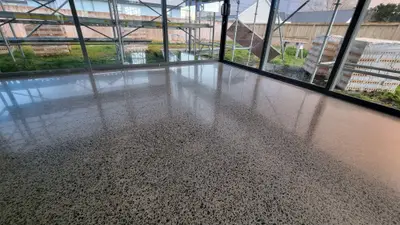
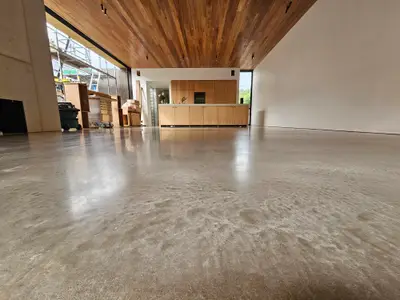
Yes - polished concrete can be coloured. The most common options Auckland homeowners choose are charcoal, near-black, warm grey, and golden-brown tones. Colour is achievable on both new builds and existing slabs, though the way you get there is different depending on your situation.

About this guide. Diamond Shine Concrete has been grinding and polishing floors across Auckland for 14 years. The colour options described here are based on jobs we've completed, reviewed by Bowie Houston.
Last reviewed: June 2026 | Author: Bowie Houston, Director, Diamond Shine Concrete
The richest, most consistent colour comes from colouring the concrete mix at the time of the pour - which applies to new builds only. For existing slabs, the natural stone and aggregate the slab reveals through grinding and polishing is the main source of colour and character. This article covers both paths.
Colour Options at a Glance
Before we go deeper, here is a quick reference table for where colour comes from and what applies to your situation.
| Colour approach | When it applies | Colour range |
|---|---|---|
| Integral oxide colour (added to the concrete mix) | New builds only - added at the pour | Broad: charcoal, black, warm brown, terracotta, grey, off-white |
| Natural aggregate exposed by grind level | All slabs - existing and new | Depends on the stone in the slab: warm river stone, dark basalt, light quartz, grey cement matrix |
| Concrete dyes / tints (surface-applied) | Existing slabs - applied after grinding | More limited than integral colour; consult on-site |
| Decorative aggregate mix (specified at pour) | New builds only | Custom river stones, recycled glass, or coloured aggregate in the mix |
The key insight: if you want a specific, consistent colour across the floor, the time to specify it is when the slab is poured. Once a slab is poured and set, the colour you get is largely what the aggregate and cement deliver as grinding and polishing exposes them.
New Builds: Colour at the Pour
If you are building new, this is where the most control lives. Oxide pigments are mixed directly into the concrete before it is poured. They are integrated throughout the slab - not a surface coating - so the colour holds all the way through the material.
Popular colour choices in Auckland new builds:
Charcoal and near-black. The most popular choice we see for modern NZ homes. Pairs well with black joinery, dark timber, and white or light grey walls. The dark aggregate creates a dramatic, high-contrast floor that photographs beautifully and complements contemporary architecture.
Warm grey. A step warmer than natural grey cement. Softens the industrial quality while keeping the clean, minimal look that polished concrete is known for.
Golden and warm brown tones. Natural river stone aggregate in a warm-toned mix creates a honey or golden-brown floor. These show particularly well in open-plan living spaces with timber accents.
Off-white and cream. Light oxide colours keep the floor bright and open-feeling. Works well in coastal or Hamptons-style builds.
For new build timing - the polish happens once the house is weathertight and gib lined, before paint, and ideally before gib stopping. This matters for coloured jobs as well as standard jobs. See our guide to when is the best time to polish during a build for the full build sequence.
Existing Slabs: What the Aggregate Reveals
If you have an existing slab and want to polish it, the colour you end up with comes from what is in the concrete. You can not add integral colour to an existing slab.
What you get depends on:
The aggregate in the slab. Older Auckland slabs often have river stone aggregate - warm, natural tones with browns, greys, and occasional greens. Some slabs have darker basalt stone. Some have predominantly grey quartz. Until you grind, you do not know exactly what is there.
The grind level. This is one of the biggest levers. A lighter grind (salt and pepper) only exposes the very tips of the stones - the cement remains the background and the colour reads as grey with a light speckle. A heavier, full-exposure grind opens up significantly more stone surface, bringing the aggregate colour into the floor strongly. A medium grind sits in between.
Note on salt and pepper: salt and pepper is a light grind and achieves a fine speckle effect. It is only reliably achievable on newer, flat slabs. Older slabs, slabs with tile adhesive, or slabs with surface variation usually require a medium-to-heavy grind. We carry out a sample grind on arrival so you can see exactly what your slab looks like before committing.
The sheen level. A satin to semi-gloss finish is the default recommendation for most residential jobs. Higher gloss levels intensify the colour and bring out more depth in the stone. Matte finishes read flatter and can make aggregate colours feel more muted - but matte is also more susceptible to staining and wear compared to satin or semi-gloss, which is worth factoring in for living areas.

How Colour and Grind Level Interact
The two decisions - what colour the slab carries and how deeply to grind - are separate choices but they interact directly with the final look.
A charcoal-oxide slab ground to full exposure will look different from the same slab ground to salt and pepper level. The full-exposure grind reveals more stone and the colour reads richer and more complex. The lighter grind keeps the cement matrix as the visible field, and the colour is less saturated overall.
For new builds: work with your builder and DSC early to align the concrete specification (aggregate type, oxide colour) with the grind level you want. The combination is what produces the final floor.
For existing slabs: the grind level is the main variable DSC can control. The sample grind on arrival shows you what the slab delivers before the full job proceeds.
See also: salt and pepper finish guide for grind level detail, and our full grinding and polishing service page for the process overview.
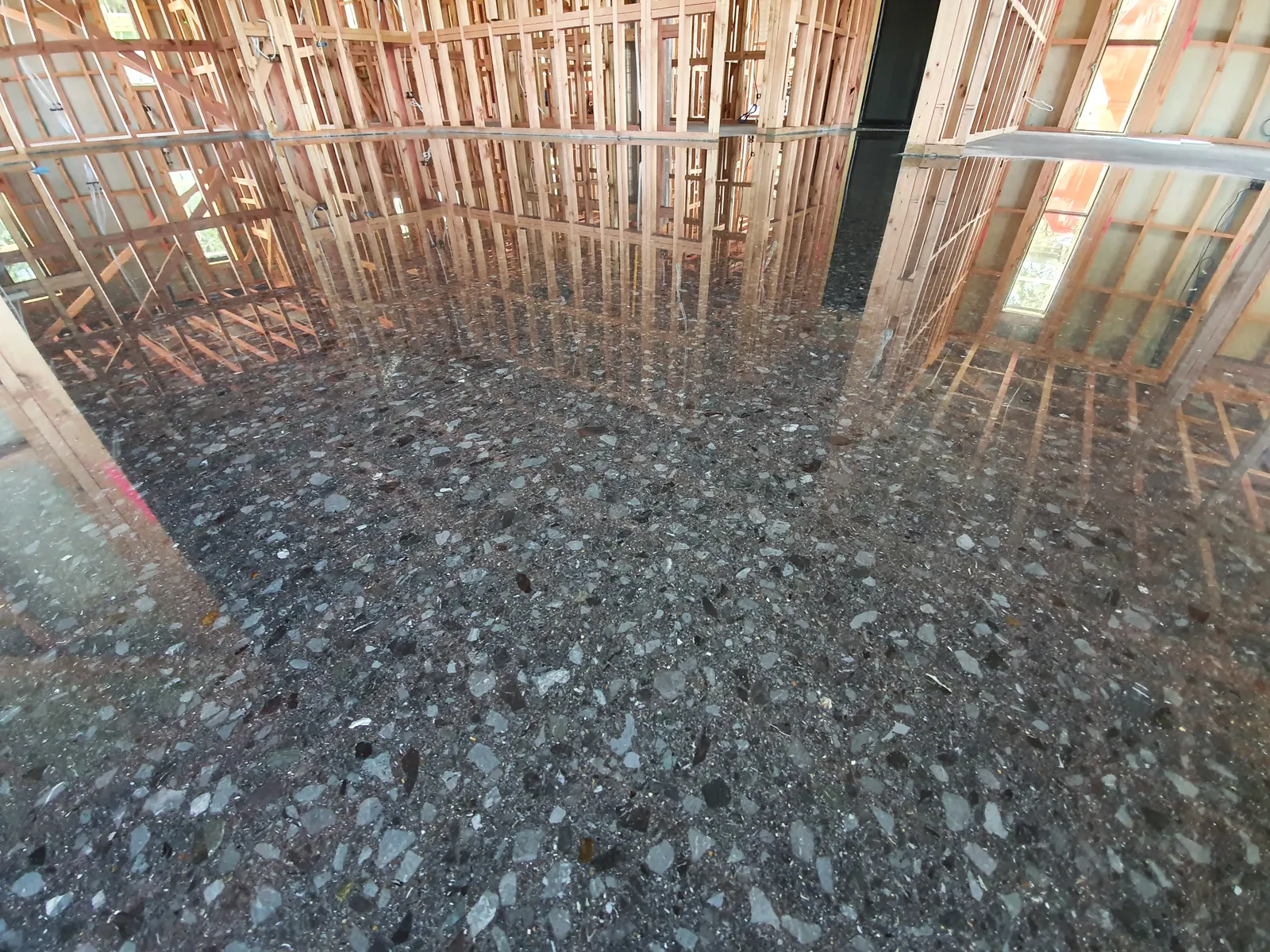

What Does Coloured Concrete Cost?
Polished concrete is priced per square metre based on the job size and specification - not on the colour choice. General residential ranges from the DSC price list:
| Job type | Price per m2 (+ GST) |
|---|---|
| Average residential (50-70m2) | ~$100 |
| Larger residential (70-200m2) | $80-$100 |
| Finished homes (detailed work) | $120-$130 |
| Minimum charge (under 20m2) | $2,250 flat rate |
Colour choice - whether oxide at the pour or the natural aggregate palette - is a specification decision, not a separate line item you price per colour. The best way to understand what a coloured floor will cost for your home is to get a free site quote. DSC carries out a sample grind on arrival so you see the actual result before committing.
For full pricing context, see our polished concrete cost guide for Auckland.
Frequently Asked Questions
Can you add colour to an existing polished concrete floor?
The honest answer: you can not add integral oxide colour to an existing slab - that is only possible at the pour. What you can influence is the grind level, which determines how much aggregate colour is revealed. Some concrete dyes and tints are available for existing slabs, but the result depends heavily on the slab and the specific product. This is best discussed on-site. If strong, consistent colour is a priority, a new build is where you have the most control.
What is the most popular colour for polished concrete floors in Auckland?
Charcoal and near-black are consistently the most requested colours for modern Auckland new builds. For existing slabs, natural warm grey is the most common outcome. Golden and warm-brown tones from river stone aggregate come up regularly on bespoke jobs.
Does a darker floor show dirt more?
A darker high-gloss floor will show footprints and dust more obviously than a mid-grey satin floor. This is a real trade-off to factor in. Most homeowners find it manageable with a regular sweep and damp mop. If your home has a lot of foot traffic or pets, a satin-finish mid-tone grey often performs better day to day than a near-black high-gloss.
Can you get polished concrete that looks black?
Yes. A near-black polished concrete floor is achievable with a dark oxide colour added at the pour, ground to a medium or full-exposure level and polished to semi-gloss or gloss. The aggregate still shows through - the floor does not read as flat painted black but has depth and variation. This is one of the most popular looks DSC delivers on Auckland new builds.
Does grind level change how the colour looks?
Yes, significantly. A light (salt and pepper) grind leaves the cement matrix as the dominant surface, which reads as grey regardless of what aggregate is underneath. A heavier grind exposes more stone and brings the aggregate colour forward strongly. If you want the colour of the slab to show, a deeper grind is the way to get there.
How does the sheen level affect colour?
Higher sheen levels (semi-gloss, gloss, high-gloss) intensify colour depth - the floor looks richer and the aggregate reads more vividly. Satin finishes give a softer, more understated colour. Matte is the flattest option but comes with more staining and wear risk, so satin to semi-gloss is the default recommendation for living areas.
Does coloured polished concrete last as long as standard polished concrete?
Yes. Mechanically polished concrete with integral colour is the same material - the pigment is throughout the slab. The durability and lifespan (20+ years with good maintenance) is the same as any mechanically polished concrete floor. The colour does not fade with normal use.
Talk to Diamond Shine Concrete
If you are designing a new build and want to nail the floor colour from the start, or you want to see what your existing slab can deliver, we carry out a sample grind on every job so you can see the result before committing. Have a look at our grinding and polishing services for what the full process includes, or get in touch for a free site visit and quote.