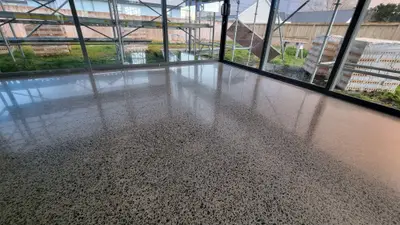
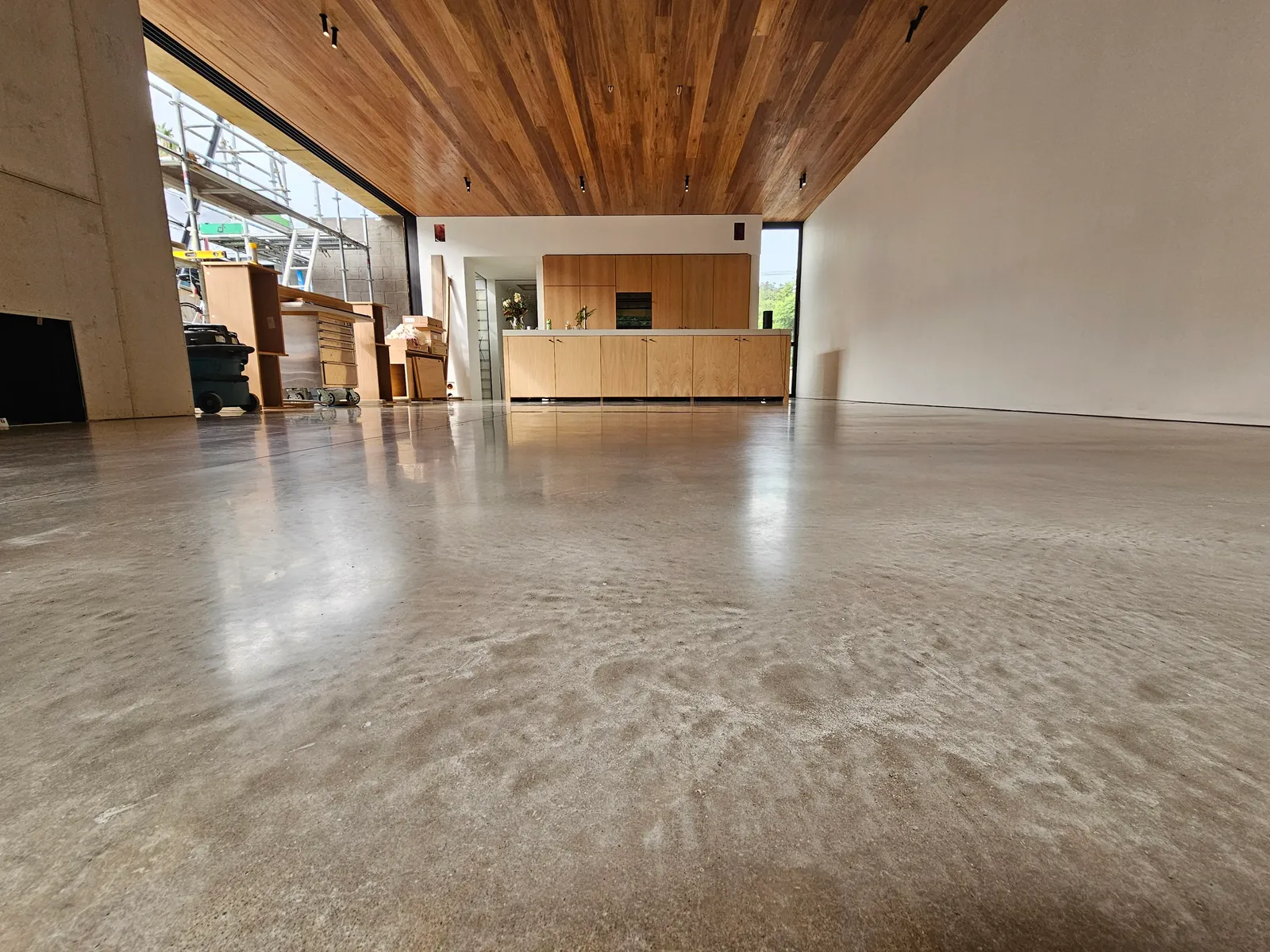
Polished concrete sheen runs across five levels, from matte up to high-gloss, set by how far we take the final polishing grits. For most NZ homes we polish, the satin to semi-gloss range is the right choice. It reflects enough light to make the home feel bright, hides scratches and wear better than high-gloss, offers good slip resistance, and ages gracefully. High-gloss is the "wow" finish for showrooms and feature spaces but shows scratches and wears more obviously. Matte (the lowest sheen) is less slippery but stains more easily and looks utilitarian. The single biggest mistake homeowners make is choosing high-gloss because it looks impressive in showrooms - then living with the scratch visibility for years. Here's the honest breakdown so you can decide with confidence.
About this guide. Finish choice is the most-discussed decision for any polished concrete project. The recommendations in this article come from 14 years of polishing across Auckland and feedback from homeowners living with each finish level over time. Reviewed by Bowie Houston.
Last reviewed: May 2026 | Author: Bowie Houston, Director, Diamond Shine Concrete
We polish hundreds of floors across Auckland every year. Finish choice is the most discussed decision after grind level, and the one that most affects daily life with the floor. Bowie's view after 14 years: a satin to semi-gloss finish is the answer for almost every home.
The Five Sheen Levels Explained
Sheen is set by how far we take the final polishing grits. The higher the grit, the more the surface reflects. There are five recognised levels:
| Finish | Polishing grit | Reflectivity | Where it works |
|---|---|---|---|
| Matte | ~100 | Minimal - reads as a soft surface | Workshops, garages, commercial back-of-house |
| Satin | ~200 | Low to moderate - a gentle sheen | Homes wanting an understated finish, busy areas |
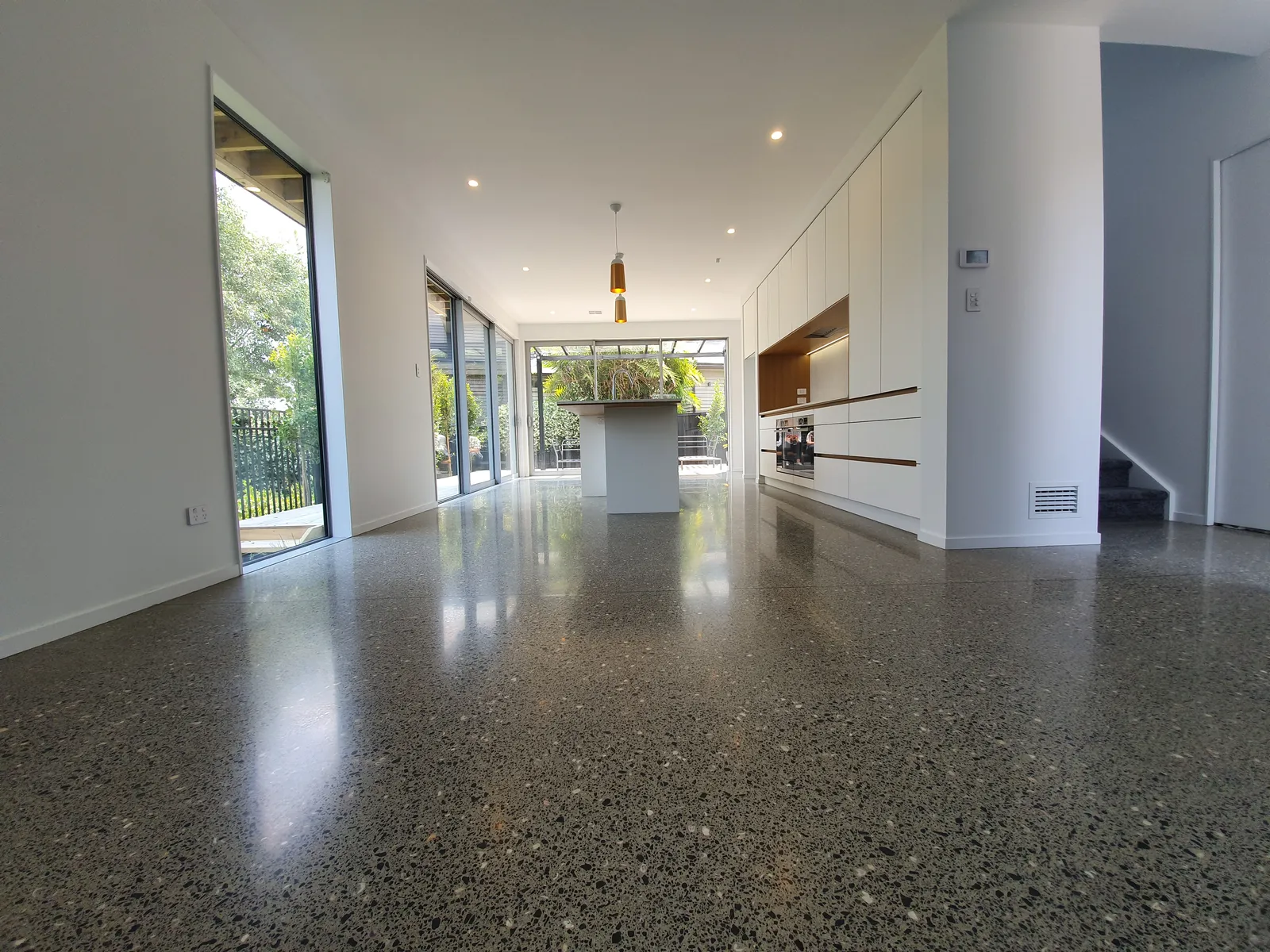
| Semi-gloss | ~400 | Moderate - reflects light without a mirror effect | Most homes, retail, hospitality, offices |
| Gloss | ~800 | High - a clear, bright reflection | Feature areas, showrooms |
| High-gloss | ~1500-3000 | Mirror-like reflection | Showrooms, dramatic statement floors, classic-car displays |
Satin and semi-gloss are adjacent levels, not the same thing. Satin sits a step below semi-gloss, with a softer sheen. Most homes we polish land somewhere in the satin to semi-gloss band, which is why we group them as the default recommendation.
Sheen is subjective. What one person calls semi-gloss, another finds too glossy, and vice versa. The grit numbers above are a guide, not an exact science. The most reliable way to lock in your finish is the sample grind we do on arrival, so you see the actual sheen on your own slab before we commit.
A common misconception: sheen level is a separate choice from grind level. You can have a high-gloss finish over a heavy grind (full aggregate exposure) just as you can have a satin finish over a light grind (salt and pepper). The two decisions are independent.
For more on grind levels and how they change the look, see our salt and pepper finish guide.
Why Satin to Semi-Gloss Is Our Default Recommendation
After 14 years of polishing across Auckland, the satin to semi-gloss range is what we recommend for almost every home. Here's why:
Better at hiding daily wear
Floors get scratched. Furniture gets dragged, dogs run across them, kids drop toys. Every scratch shows. The question is HOW much it shows.
On high-gloss, every scratch interrupts the mirror reflection. Even a tiny scratch from a chair foot reads as a clear line under direct light. On satin, scratches read as faint variations in the surface that disappear into the natural variation of the floor. The same scratch is roughly 3x less visible on satin.
For a floor that needs to look good for 5-10 years before the first rebuff, satin holds up much better visually.
Right level of light reflection
Satin reflects enough light to make a room feel bright and spacious. It catches the morning sun, brightens overcast days, and reflects downlights at night without bouncing them straight back into your eyes.
High-gloss can be too much. In a north-facing room with afternoon sun, full-gloss polished concrete acts like a giant mirror - the glare can be uncomfortable to look at, and TVs and lighting reflect off the floor distractingly.
Better slip resistance
Both satin and high-gloss are safe for normal residential use, but satin tests slightly better when wet. For households with kids and pets running around in socks, satin is the lower-risk choice.
For more on slip behaviour, see our slip resistance article.
Easier to maintain consistency over time
When the floor needs a rebuff (every 3-5 years), it's easier to bring a satin finish back to its original look than to perfectly match high-gloss across the whole floor. Satin forgives minor variations between original polish and rebuff. High-gloss reveals every variation.
When High-Gloss Is the Right Choice
High-gloss has its place. We recommend it when:
The space is a showroom or feature area rather than a daily-use home. Think classic car displays, boutique retail, hospitality entries, or architectural feature rooms.
The floor will be lightly trafficked - foot traffic on display floors causes minimal wear, so the scratch visibility issue is reduced.
The aesthetic priority is dramatic reflection - some homes are designed around the mirror-like floor reflecting glass walls and feature lighting. In those homes, high-gloss is the right call.
The aggregate is the star of the show - heavy-grind floors with prominent decorative aggregate look spectacular at high-gloss. The reflection accentuates the stones.
The trade-off is committing to more frequent rebuffs (every 2-4 years for a high-traffic high-gloss floor vs 3-5 years for satin) and accepting that scratches will be more visible until the next rebuff.
When Matte Makes Sense
Matte is the least common residential choice, but it has its place:
Workshop and garage spaces where the floor is purely functional. See our garage floor article for the polished concrete options and cost context.
Industrial and commercial back-of-house where slip resistance is the top priority and visual quality matters less.
Wet-area zones where slip resistance needs to be maximised - though a satin to semi-gloss finish over a heavier grind, plus mats or runners in the wettest spots, is usually a better solution than going matte.
Owners who specifically want a non-reflective floor - some prefer the soft, matte aesthetic. It's a valid look but less common in NZ.
The big trade-off: matte stains more easily and shows wear faster. Acidic spills (wine, lemon, tomato) etch matte more visibly than gloss. For most homeowners this rules out matte for kitchens and dining areas.
What About Mixing Finishes?
Don't. Use one finish across the entire floor.
This is one of Bowie's strongest pieces of advice after 14 years of polishing. Theory says you could put matte in bathrooms (better slip), satin in living, and gloss in feature rooms. In practice it looks chaotic and doesn't work.
We've never done a mixed-finish job in 14 years - and don't recommend it. The consistent floor is what makes polished concrete look premium. Different finishes from room to room read as a mistake, not a design choice.
If you want extra slip resistance in wet zones, the right answer is a quality bath mat or runner in those specific spots, not changing the floor finish.
Cost Differences Between Finishes
The good news: finish level doesn't significantly change the price for new polished concrete floors. The work to achieve a satin finish vs a high-gloss finish differs by 1-2 final polishing passes - a few hours on a typical job, not days.
| Finish | Price impact (per m2 + GST) |
|---|---|
| Matte | Slight saving ($5-10 per m2 less than satin) |
| Satin to semi-gloss | Standard pricing - this is our default reference |
| High-gloss | Slight premium ($5-15 per m2 more than satin) |
For a typical 70m2 home, the difference between matte and high-gloss is around $700-$1,750 + GST. Most homeowners pick the finish based on look and feel, not cost.
For full pricing detail, see our polished concrete cost guide.
How to Decide for Your Home
The simple decision tree:
1. Is this a daily-use home? Yes -> satin to semi-gloss. Done. 2. Is it a showroom, feature space, or lightly used? Maybe high-gloss is right. 3. Is it a workshop, garage, or industrial space? A matte polished finish often suits these purely functional spaces. 4. Are you torn between options? Visit our showroom or ask for sample reference photos. Most homeowners settle on satin to semi-gloss once they see the trade-offs.
We do a sample grind on arrival for every job, which lets you see the planned finish on your actual slab before we commit. This is the most reliable way to confirm your finish choice.
Frequently Asked Questions
What's the difference between satin, semi-gloss, and high-gloss polished concrete?
They're different points on the same sheen ladder, set by how far we take the final polishing grits. Satin (around 200 grit) is a gentle, low-to-moderate sheen. Semi-gloss (around 400 grit) reflects a bit more light without a mirror effect. They're adjacent levels, not the same thing, and both sit in the mid-sheen range we recommend for homes. Gloss (around 800) and high-gloss (around 1500-3000) are mirror-like. Matte (around 100) is non-reflective with a soft surface. Sheen is subjective, so a sample grind on your slab is the best way to confirm the look. We recommend the satin to semi-gloss range for most homes.
How much does polished concrete cost in Auckland?
Standard residential polished concrete runs ~$100 per m2 + GST for a typical 50-70m2 home. Finish level adds or subtracts $5-15 per m2. Our pricing guide covers the full range.
Will high-gloss show every scratch?
Yes - this is the main practical drawback. On high-gloss, even fine scratches read as visible lines under direct light. On satin, the same scratches blend into the floor's natural variation and are far less noticeable. For daily-use homes, satin is the better long-term choice.
Is matte polished concrete a good idea?
Matte works for workshops and industrial settings but stains more easily than satin or gloss in residential use. For most NZ homes, satin is a better choice - similar slip resistance with much better stain resistance.
Can I change the finish from gloss to satin later?
Yes, during a future rebuff or restoration regrind. We can take a high-gloss floor down to satin without removing it - just adjusting the final polish steps. Going the other way (satin to high-gloss) is also possible but requires more work.
What finish do you recommend for a kitchen?
Satin to semi-gloss. It handles cooking spills, slip risk, and daily traffic better than gloss or matte. We cover this in detail in our polished concrete kitchen guide.
Is high-gloss worth the extra cost?
Only if the look is the priority and you accept more visible scratches over time. For 80% of homes we polish, the satin to semi-gloss range gives a better long-term result. For the other 20% (showrooms, feature rooms), high-gloss is the right call.
Still Not Sure Which Sheen You Want?
Sheen is genuinely subjective, and it photographs badly. What one person calls semi gloss, the next finds too glossy. Nobody settles this from a screen, which is why we do a sample grind on your own floor before anything is committed. Seeing the level in your own light, at the time of day that matters to you, is the only reliable way to choose.
We have ground and polished hundreds of residential and commercial floors across Auckland, the North Shore, East Auckland, West Auckland and South Auckland. Our grinding and polishing service page covers the full process and what is included, and the Auckland cost guide has the pricing.
If your floor has already been polished and you are having second thoughts about the sheen, that is fixable. Send us a photo and we will tell you what is involved. Get a free quote.
Internal Links Used
1. `/resources/salt-and-pepper-finish-guide` (grind level vs finish level) 2. `/resources/is-polished-concrete-slippery` (slip resistance by finish) 3. `/resources/polished-concrete-cost-auckland` (pricing detail) 4. `/services/grinding-polishing` (service overview)
Images Used
| Position | Catalog ID | Why selected |
|---|---|---|
| Hero | `plain-surface-polish--20240408-142237` | Modern open-plan living with semi-gloss finish - subject-matches the recommended satin choice |
| Body 1 | `decorative-mixes--20191206-120637` | Open-plan kitchen and living with semi-gloss polished concrete - additional satin example |