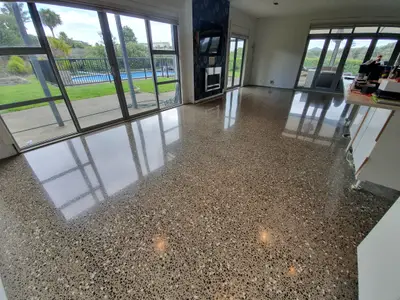
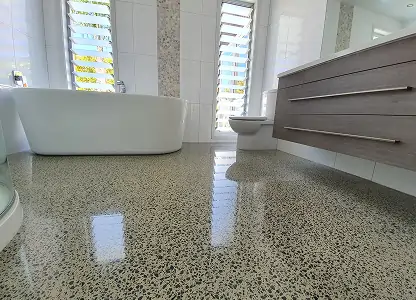
A mechanically polished concrete garage floor handles oil, tyres, dropped tools, and water far better than a raw slab, and it looks far better than a DIY coating. For most Auckland garages, polishing the existing slab is the best long-term value: a hard-wearing finish that lasts 20+ years with light maintenance, costs around $100-$140 per m2 + GST, and ties the garage in with the rest of the home. Here's what to consider before you commit.
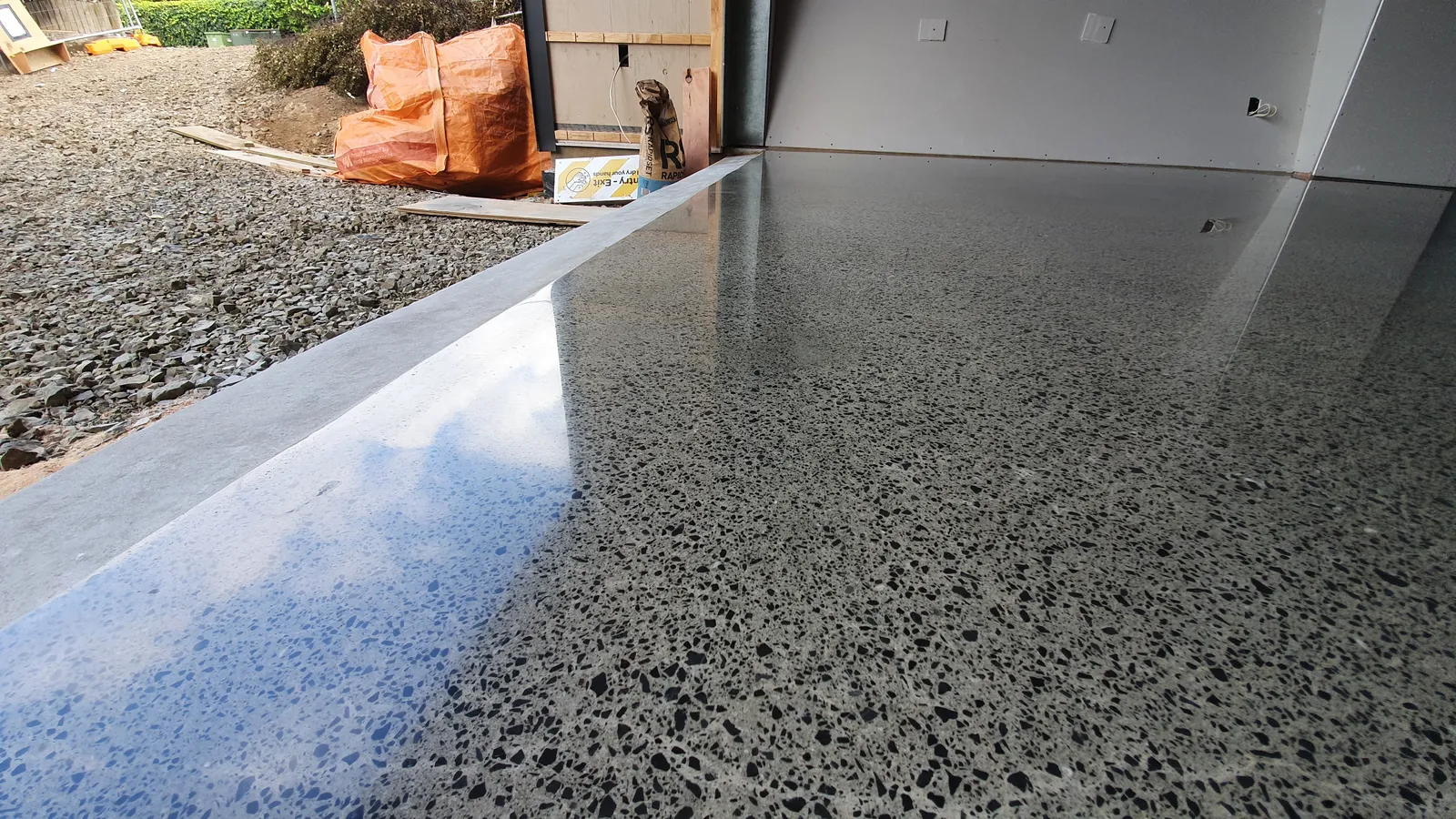
About this guide. We polish dozens of garage floors across Auckland every year and have seen what works and what fails (especially DIY epoxy kits). The advice here is based on 14 years of garage-floor work and is reviewed by Bowie Houston.
Last reviewed: May 2026 | Author: Bowie Houston, Director, Diamond Shine Concrete
We polish dozens of garage floors across Auckland every year. Garages are the second-most-asked-about space after open-plan living - and the most common DIY mistake we get called in to fix is a failed garage floor coating. Picking the right finish the first time saves hundreds of dollars and looks better for longer.
Why Garages Need More Than a Raw Slab
A raw concrete garage floor is porous. Over time it absorbs:
- Oil drips from cars (permanent staining)
- Tyre marks (rubber transfer that's nearly impossible to remove)
- Water and salts (can lead to surface deterioration)
- Cleaning chemicals (some attack untreated concrete)
- Tool scratches and impact marks
The raw slab also generates dust constantly - small concrete particles released as the surface wears under foot and tyre traffic. Garage owners often complain about needing to sweep weekly, which gets old fast.
Mechanically polishing the slab fixes all of this. The polishing process densifies the surface itself, so it stops dusting, resists stains, and wipes clean. There's no coating to peel or flake, because the finish is the concrete.
Why Polished Concrete Works So Well in a Garage
Choose a polished concrete garage floor if:
The garage is attached to the home and visible from inside. A polished floor reads as a continuation of the home's interior, not a workshop. Many Auckland homes with attached garages now polish the garage to match the rest of the house.
You use the garage as a showroom or hobby space. Classic car owners, motorcycle enthusiasts, and home gym setups benefit from the premium look and easy cleaning.
You want the floor to last 20+ years without major recoating work. Mechanically polished concrete is a once-and-done finish with light maintenance - the polish is part of the slab, so there's nothing to strip back and reapply.
You're tired of dust and staining. Polishing seals the surface mechanically, so the constant concrete dust stops and spills wipe up instead of soaking in.
What Finish Suits a Garage Floor
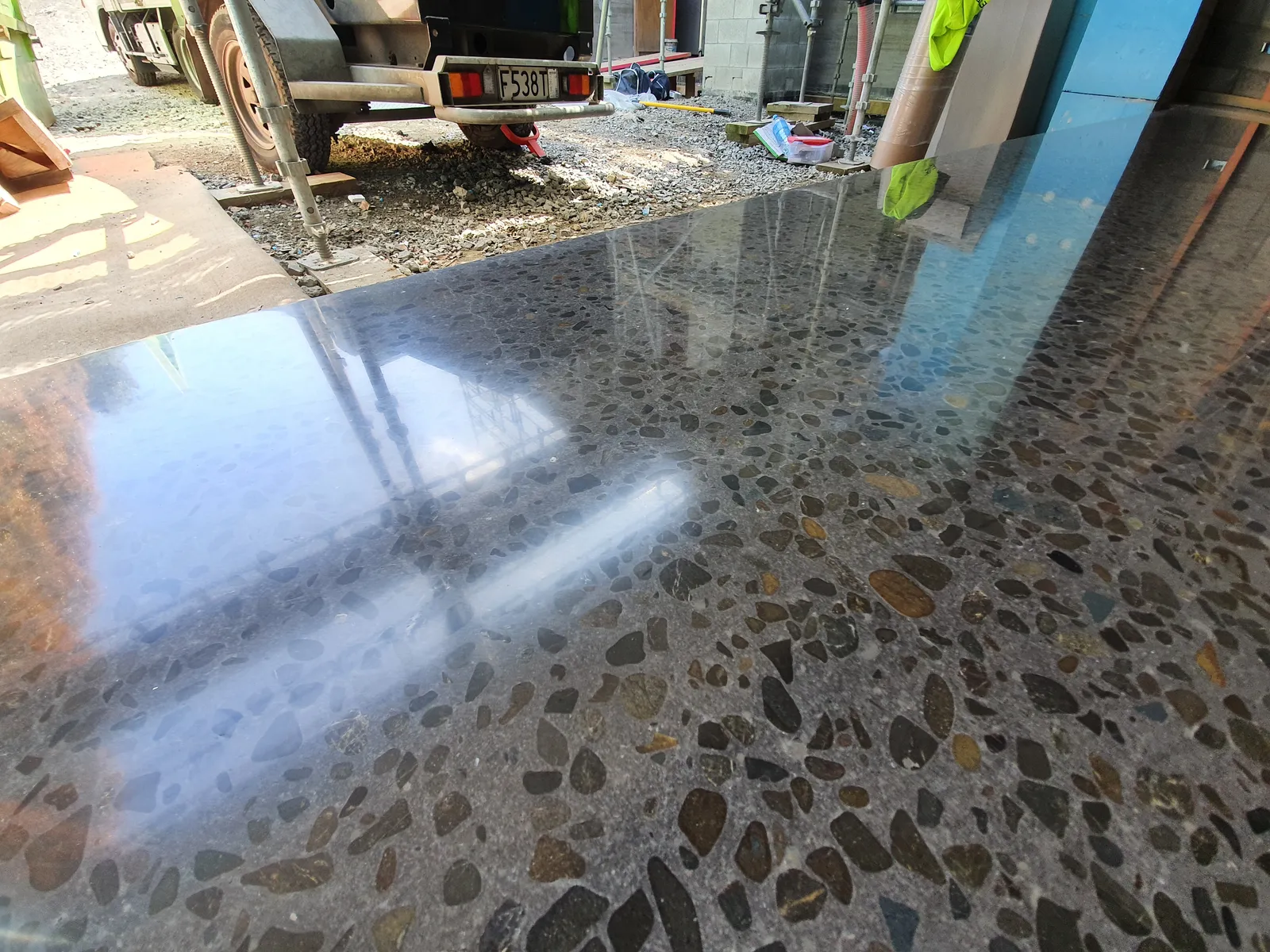
For a garage, we recommend a satin to semi-gloss finish. It gives good slip resistance, a premium look, and shows wear less than full high-gloss. High-gloss reads more reflective and shows scratches and tyre scuffs sooner, so it's best kept for showroom-style garages that see light traffic.
Keep in mind that sheen perception is subjective - what one person calls semi-gloss, another finds too glossy. We do a sample grind on arrival so you can see the planned finish on your actual slab before we commit. Use one finish across the whole garage floor for a consistent look; mixing sheen levels reads as a mistake.
Why DIY Epoxy Kits Are a False Economy
The most common bad-result garage floor we see in Auckland is a peeling DIY epoxy coating. Here's why these kits often fail:
Surface prep is hard to do right. Most kits include an acid wash or recommend sanding. Neither prepares the slab as well as proper diamond grinding. Without good prep, the epoxy fails to bond.
Moisture testing is usually skipped. Auckland slabs can carry significant moisture, especially older ones. Epoxy applied over a damp slab lifts within months.
Coverage is thin. DIY kits typically apply a 0.3-0.5mm film. It scuffs, hot-tyre-lifts, and yellows over time. A mechanically polished floor has no film to lift, because the finish is ground and polished into the slab.
Edges and joints are weak points. Without proper detailing, the coating peels at edges first.
By the time the homeowner calls us to fix it, the failed coating needs full mechanical removal before we can lay a proper finish. That removal often costs as much as the original DIY job. Grinding and polishing the slab from the start avoids the whole problem.
What Garage Polishing Actually Looks Like
For a typical 30-40m2 single garage:
Day 1. Site setup, garage cleared by homeowner, machinery in. Initial grind to remove any existing coatings, sealers, or oil staining and expose clean concrete. Sample grind area shown to homeowner for sign-off.
Day 2. Progressive grind passes (medium then fine grits). Vacuumed and cleaned between passes. Crack and joint repairs as needed.
Day 3. Final polishing passes and seal. Cleanup. Site walk-through.
Day 4 (cure). Floor cures - no vehicle traffic for 24-48 hours.
For a double or triple garage (50-80m2), add 1-2 days. The homeowner needs the garage clear for the duration - vehicles and stored items need to be moved out.
What This Costs in Auckland
| Job type | Price per m2 (+ GST) |
|---|---|
| Polished concrete garage (single, 25-40m2) | $120-$140 |
| Polished concrete garage (double+, 40m2+) | $100-$120 |
| Re-polish/refresh existing polished garage (rebuff) | $30-$50 |
Single garages sit at the higher end of these ranges because of detail work around walls, drainage, and workshop fixtures. For very small garages (under 20m2) our $2,250 + GST minimum charge applies. Larger garages benefit from economies of scale. Our polished concrete pricing guide covers the full picture.
Frequently Asked Questions
How much does it cost to polish a garage floor in Auckland?
For a typical single garage (25-40m2), polished concrete runs $120-$140 per m2 + GST. Larger garages are slightly cheaper per m2. Total for a single polished garage typically lands $3,000-$5,500 + GST. A $2,250 + GST minimum charge applies for very small garages (under 20m2).
Can a garage floor be polished if it's been painted or sealed before?
Yes - we'll grind off the existing coating during the prep stage. Heavily painted or epoxy-coated floors take longer to prep, which adds cost. We can quote accurately after a site visit.
What's better for a garage floor - polished concrete or epoxy?
Properly applied commercial epoxy can be excellent, but DIY epoxy kits often fail within 1-3 years due to poor prep and thin application. Mechanically polished concrete outperforms DIY epoxy for longevity and look, with no coating to peel or lift. For a serious epoxy floor you'd need a commercial epoxy contractor, and the price is usually higher than polishing the slab you already have.
Will my polished garage floor handle car tyres and oil?
Yes. Tyre marks wipe off with pH-neutral cleaner. Oil drips that are cleaned within a day cause no issue. Long-standing oil stains can etch the polish if left for weeks - regular wiping prevents this.
Is a polished concrete garage floor slippery?
A satin to semi-gloss polished garage floor offers good slip resistance, and all our finishes meet the slip standards used in commercial buildings. High-gloss reads more reflective and is usually best avoided in a working garage where water and oil get tracked around. For residential context see our slip resistance article. For commercial slip rating documentation, see our slip ratings guide.
Can underfloor heating be added to a garage floor?
Only at slab pour stage for hydronic systems - which is rare for garages but possible for new builds. Electric mat systems can be added later via overlay, but for garages this is rarely worth the cost. Most garage owners use a portable heater or radiant heater for the workshop area instead.
What finish should I choose for a garage floor?
We recommend satin to semi-gloss as the default - good slip resistance, premium look, and it shows wear less than high-gloss. Don't mix finishes across the garage - one finish across the whole floor for consistency.
Talk to Diamond Shine Concrete
Considering a polished concrete finish for your Auckland garage? We've polished hundreds of residential and commercial floors across Auckland, the North Shore, East Auckland, West Auckland, and South Auckland. Have a look at our grinding and polishing services for the full process and what's included, or get in touch for a free site visit and quote.