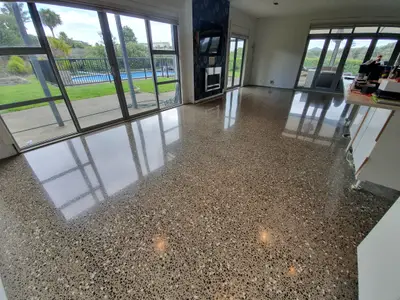
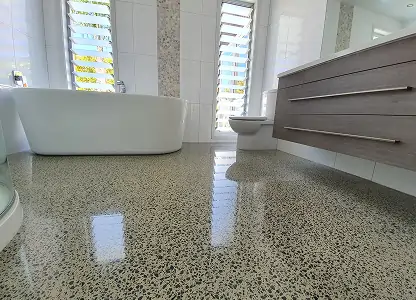
Polished concrete is one of the best flooring choices for a modern NZ kitchen. It's durable enough to handle daily cooking life, easy to clean, runs uninterrupted from the kitchen into open-plan living, and the look complements almost any cabinetry style. The honest trade-offs: it can stain from acidic spills (lemon, wine, tomato) if not cleaned quickly, it's harder underfoot than timber, and the finish dulls over years and needs the occasional rebuff. For most modern kitchens we've polished across Auckland, the upsides far outweigh the trade-offs.

About this guide. Kitchens are the most-used room in any home and we've polished hundreds of them across Auckland. The advice here is based on 14 years of hands-on work, drawn from feedback from kitchen-floor owners over time and reviewed by Bowie Houston.
Last reviewed: May 2026 | Author: Bowie Houston, Director, Diamond Shine Concrete
This article is for anyone weighing polished concrete against tiles, timber, or vinyl plank for their kitchen. We polish hundreds of floors across Auckland and the kitchen is usually the most-used room - so we've seen what works and what doesn't.
Why It Works in Kitchens
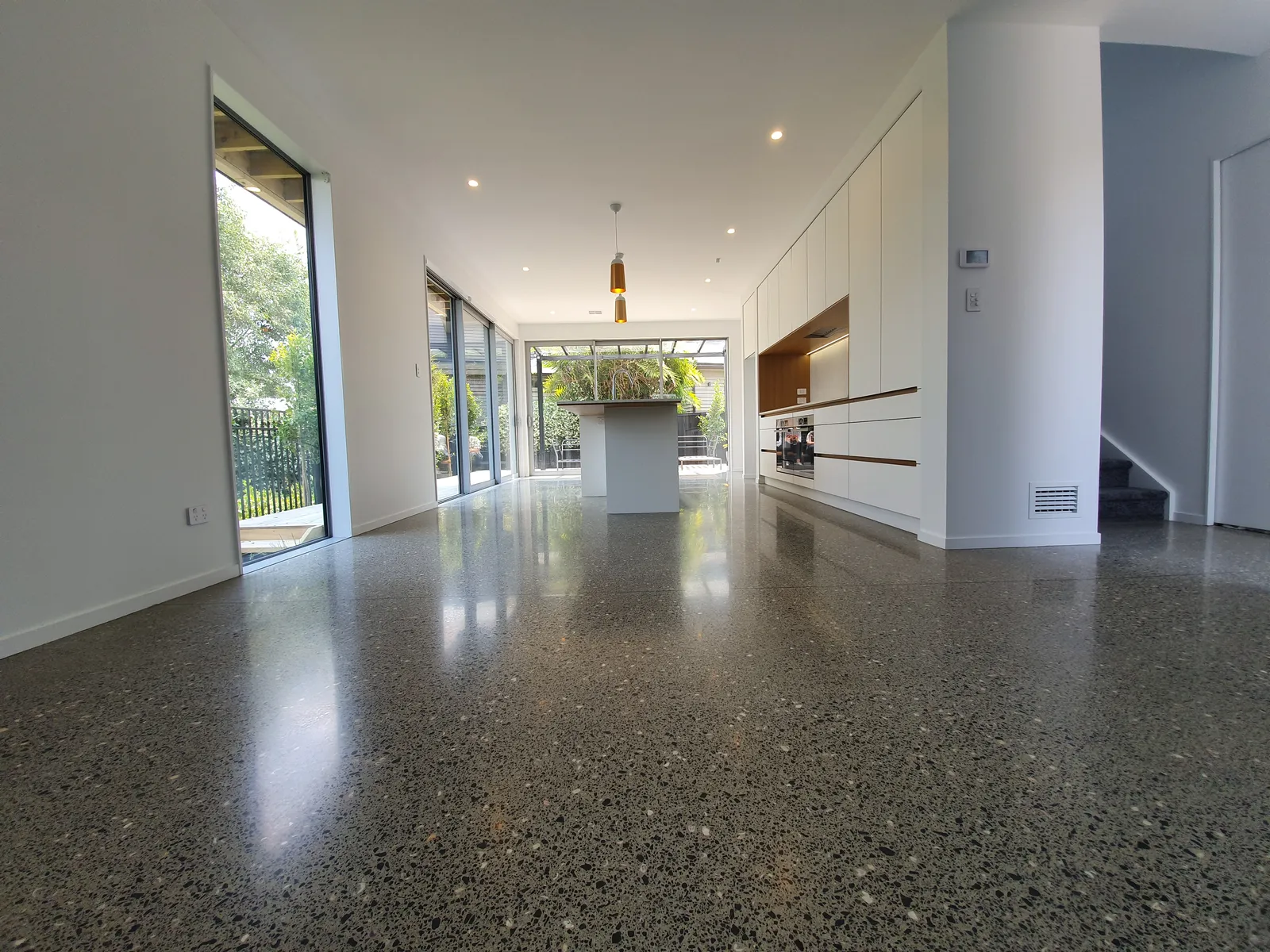
Modern open-plan layouts blur the line between kitchen and living. Running one floor finish through both spaces makes the home read bigger, simpler, and more cohesive. Polished concrete does this better than almost any other material - one continuous surface, no thresholds, no clashing textures.
| Kitchen demand | How polished concrete handles it |
|---|---|
| Daily foot traffic | Excellent - hardest residential floor surface |
| Hot pans, dropped utensils | Better than timber and vinyl, similar to tiles |
| Water and steam from cooking | Sealed and stable - no warping like timber |
| Easy cleaning | Sweep and damp mop - no grout lines |
| Visual flow into living areas | Seamless when polished as one continuous surface |
| Resale appeal | Strong - reads as premium finish in modern homes |
The other big plus: there are no grout lines. Every tiled kitchen we've replaced had grout that had darkened, stained, or cracked along the high-traffic paths. Polished concrete is one continuous surface, and the cleaning routine is shorter than tiles.
What About Stains?
The honest answer: yes, polished concrete can stain. The stain risk depends on the finish level and how quickly spills get cleaned up.
Acidic spills (lemon juice, vinegar, wine, tomato sauce, citrus juice) are the highest risk. They can etch the polish if left for hours. Wipe these up within an hour and you'll have no problem.
Oil and fat splashes sit on the surface and can darken the finish over time if not cleaned. Wiping after each cook is enough.
Water and most spills are fine. Polished concrete is sealed at the surface and doesn't absorb water like raw concrete.
The single most useful habit: wipe the floor near the cooktop and prep area at the end of every cook. Most stain calls we get come from a single forgotten spill that sat overnight, not from regular wear. We cover cleaning routines in detail in our longevity guide for polished concrete.
Hardness Underfoot
This is the trade-off most kitchen-considerers worry about. Concrete is harder than timber, vinyl, or carpet. If you stand at the sink for an hour every night, you'll feel it.
Two practical fixes:
A good kitchen mat in front of the sink and the prep area. A 60x90cm mat with cushioning takes most of the standing-fatigue out of long cooking sessions. We're not selling these - they're worth investing in for any hard-floor kitchen, including tiles.
Supportive footwear at home if you cook a lot. House slippers with a real sole help more than people expect.
For homes with kids who play in the kitchen, the same hardness that's tough on adult feet is also harder for dropped knees. Most families adapt within weeks. We've never had a parent regret choosing polished concrete after the fact - but it is fair to factor in if you have very young kids who tumble often.
Finish Choice for Kitchens
We recommend a satin to semi-gloss finish for kitchens. Here's why:
- Slip resistance: Better than full gloss when the floor's wet (after sink splash or mop). High-gloss is still safe but reads slipperier.
- Showing scratches: Satin shows scratches less obviously than high-gloss. Kitchen utensils, pet claws, and dropped knives all happen.
- Light reflection: Reflects enough light to make the kitchen feel bright without bouncing too much glare off the windows or downlights.
We used to recommend high-gloss as the headline option. After years of feedback, satin is the smarter choice for kitchens - and it's our default recommendation for whole-home polished concrete jobs. Don't mix finishes across rooms - we run the same finish across the entire floor for consistency.
For more on the finish trade-offs (matte vs satin vs gloss), see our satin vs semi-gloss vs high-gloss guide. For grind level options, see our salt and pepper finish guide.
Cost for a Polished Concrete Kitchen Floor
Polished concrete is priced per square metre, not per room. A typical kitchen sits within a larger open-plan area, so the kitchen square metres are usually part of a whole-floor quote rather than a standalone job.
| Job type | Price per m2 (+ GST) |
|---|---|
| Average residential (50-70m2) | ~$100 |
| Larger residential (70-200m2) | $80-$100 |
| Large open (200m2+) | ~$60 |
| Finished homes (detailed work, kitchens with cabinetry already in) | $120-$130 |
Standalone kitchen polishing (kitchen-only, with cabinetry already installed and the rest of the home a different floor) is rare and ends up at the high end - the detail work around cabinets and appliances eats time. Almost every kitchen we polish is part of a whole-floor job and prices accordingly.
For pricing detail and what affects each quote, see our polished concrete cost guide for Auckland.

What About Existing Kitchens?
If your kitchen has tiles or timber and you're considering switching to polished concrete, the answer depends on what's underneath:
Tiles over a slab. The slab almost always polishes well. Tile removal exposes the concrete, which we then grind and polish. Tile glue often needs a heavier grind to remove cleanly - light grinding burns the adhesive. We cover this in our carpet and tile removal article.
Timber over a slab. Same logic. The timber and underlay come up, we grind through any adhesive residue, and polish from there. Heavier grind is usually needed.
Tile or timber over a sub-floor (no slab). This is rare in modern Auckland homes but does happen in older builds. If there's no concrete underneath, polished concrete isn't an option - you'd be looking at a different finish.
A site visit confirms what's possible. We do a sample grind on arrival before any major work, so you can see how the slab responds before committing.
Frequently Asked Questions
How much does it cost to polish a kitchen floor in Auckland?
For a kitchen as part of a whole-floor polish (50-70m2 total area), expect around $100 per m2 + GST. Larger open layouts (200m2+) come down to around $60 per m2. Standalone kitchen-only jobs sit at the higher end ($120-$130) due to detail work around cabinetry. Our pricing guide breaks down what affects each quote.
Will my polished concrete kitchen floor stain from cooking spills?
Acidic spills (lemon, vinegar, wine, tomato sauce) are the main risk if left for hours. Most spills cleaned up within an hour cause no issue. Daily wipe-ups near the cooktop and prep area prevent virtually all kitchen stains.
Is polished concrete too cold for an NZ kitchen?
Polished concrete IS cooler underfoot than timber or vinyl, but most homeowners adapt quickly. With underfloor heating, it's actually warmer than tiles. For more on thermal comfort, see our cold floor article.
Will I scratch the floor with kitchen utensils or chair feet?
Polished concrete is harder than timber and most plastics, so dropped utensils rarely scratch it. Chair feet can leave marks if dragged - felt pads on chairs and stools fix this. Kitchen knives dropped point-down can chip the surface but this is rare.
Can polished concrete handle hot pans straight off the stove?
Yes. The polished surface tolerates direct heat from pans far better than timber or vinyl. We don't recommend setting a 200C cast iron straight onto the floor for fun, but accidental contact won't damage it.
Does polished concrete kitchen floor need sealing?
Mechanically polished concrete (the kind we recommend) doesn't have a topical sealer that needs renewing. The polishing process densifies the surface itself. The only maintenance is a periodic rebuff every 3-5 years to keep the shine. Grind and seal floors do have a sealer - we cover the difference in our grind and seal vs mechanical polish guide.
What kitchen layouts work best with polished concrete?
Open-plan kitchens that flow into living areas are the strongest fit - the floor reads as one continuous surface and makes the home feel bigger. Closed galley kitchens still work but lose some of the visual benefit. Island bench kitchens are where polished concrete looks best.
Talk to Diamond Shine Concrete
Considering polished concrete for your kitchen renovation or new build? We've polished hundreds of residential and commercial floors across Auckland, the North Shore, East Auckland, West Auckland, and South Auckland. Have a look at our grinding and polishing services for the full process and what's included, or get in touch for a free site visit and quote.