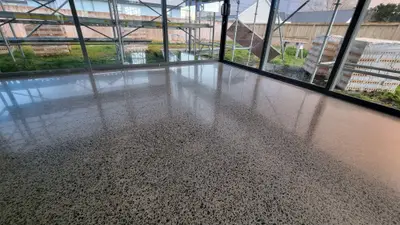
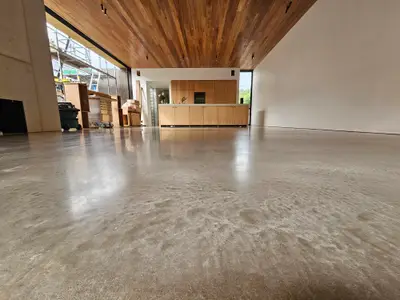
The difference is how much stone you see. Salt and pepper is a light grind that exposes only the very tops of the stones, so the cement stays the background and you get a fine, even speckle. Heavy aggregate is a full-exposure grind that removes more material to reveal the larger stones, giving a bold, terrazzo-like look.

Both looks come from the same process. Grinding and polishing a concrete floor means running heavy machines over the slab with progressively finer diamond tooling. How deep that first cut goes decides how much aggregate (the stones in the concrete) gets exposed. We have polished hundreds of floors across Auckland, and this single choice is the biggest driver of the finished look.
The Grind Levels at a Glance
There are four recognised grind levels, from no grind at all through to full exposure. Aggregate exposure is one choice; the sheen (how shiny the floor is) is a completely separate choice we cover further down.
| Grind level | Correct name | What you see | Typical use |
|---|---|---|---|
| No grind | Cream / architectural | Smooth cement surface, no stone. Only works on a flat, well-finished slab | Newer, power-floated slabs in good condition |
| Light grind | Salt and pepper | Only the very tops of the stones exposed. Fine, even speckle with cement as the background | Newer, flat slabs where a subtle look is wanted |
| Medium grind | Standard flattening | Cuts deeper without chasing large stones. Natural finish that keeps the slab's character | Most everyday floors, "what it is, it is" |
| Heavy grind | Full aggregate exposure | Larger stones fully revealed, bold terrazzo-like pattern | Feature floors, older slabs that need levelling |
The names matter. "Salt and pepper" specifically means the lightest grind. It is not a catch-all term for any exposed-stone floor, and it is not the same as a medium or heavy grind.
Salt and Pepper: The Light Grind
Salt and pepper is the lightest grind we do that still exposes stone. We take just enough off the surface to open up the very tops of the aggregate, creating a fine speckle across the floor.

The key thing to understand is that the cement is the background, or matrix, and the small flecks of stone sit within it. The cement is not "the pepper" and the stone "the salt". The stone flecks are what you notice; the cement is the field they sit in. The result is calm and understated, closer to a solid-coloured floor with subtle texture than a busy stone pattern.
The honest caveat. True salt and pepper is often not achievable on older or uneven slabs. To get that even, minimal exposure you need a slab that is flat and consistent to begin with. If your floor is out of level, or where carpet, glue, or tiles have been lifted, we usually have to grind deeper to level the surface and blend the damage. That pushes the floor into medium or heavy territory whether you planned it or not. For more on this, see our salt and pepper finish guide.
If you are polishing a slab after removing carpet, read our guide on polishing concrete after carpet removal first. Old adhesive and tack-strip damage almost always call for a heavier cut than a light salt and pepper grind.
Heavy Aggregate: Full Exposure
Heavy aggregate, or full exposure, is the opposite end of the scale. We grind deeper into the slab to remove more of the cement surface and reveal the larger stones underneath.

The two close-ups above are polished to the same sheen, so the only difference you are seeing is the depth of grind. In the heavy grind, large grey and dark stones sit tightly packed across the floor, giving that bold, terrazzo-like character. It is a striking, high-impact look that suits feature spaces, entrances, and open-plan living where you want the floor to be part of the design.
Heavy grinding also has a practical side. On older slabs that are not flat, a deeper cut helps level the floor and blend cracks, patches, and old damage into the overall stone pattern. This is why many renovation and carpet-removal jobs end up as a medium to heavy grind, depending on what we find once we start.
One honest point about exposure. The stones you see are whatever the original supplier put in the mix. We are exposing the aggregate that is already there, not adding decorative stone, so colour and size vary from slab to slab. That is part of the appeal, but also why every floor is a little different.
Medium Grind: The Middle Ground
Between the two sits the medium grind, often described as standard flattening or "what it is, it is". It cuts deeper than a light salt and pepper without chasing consistent large-stone exposure.
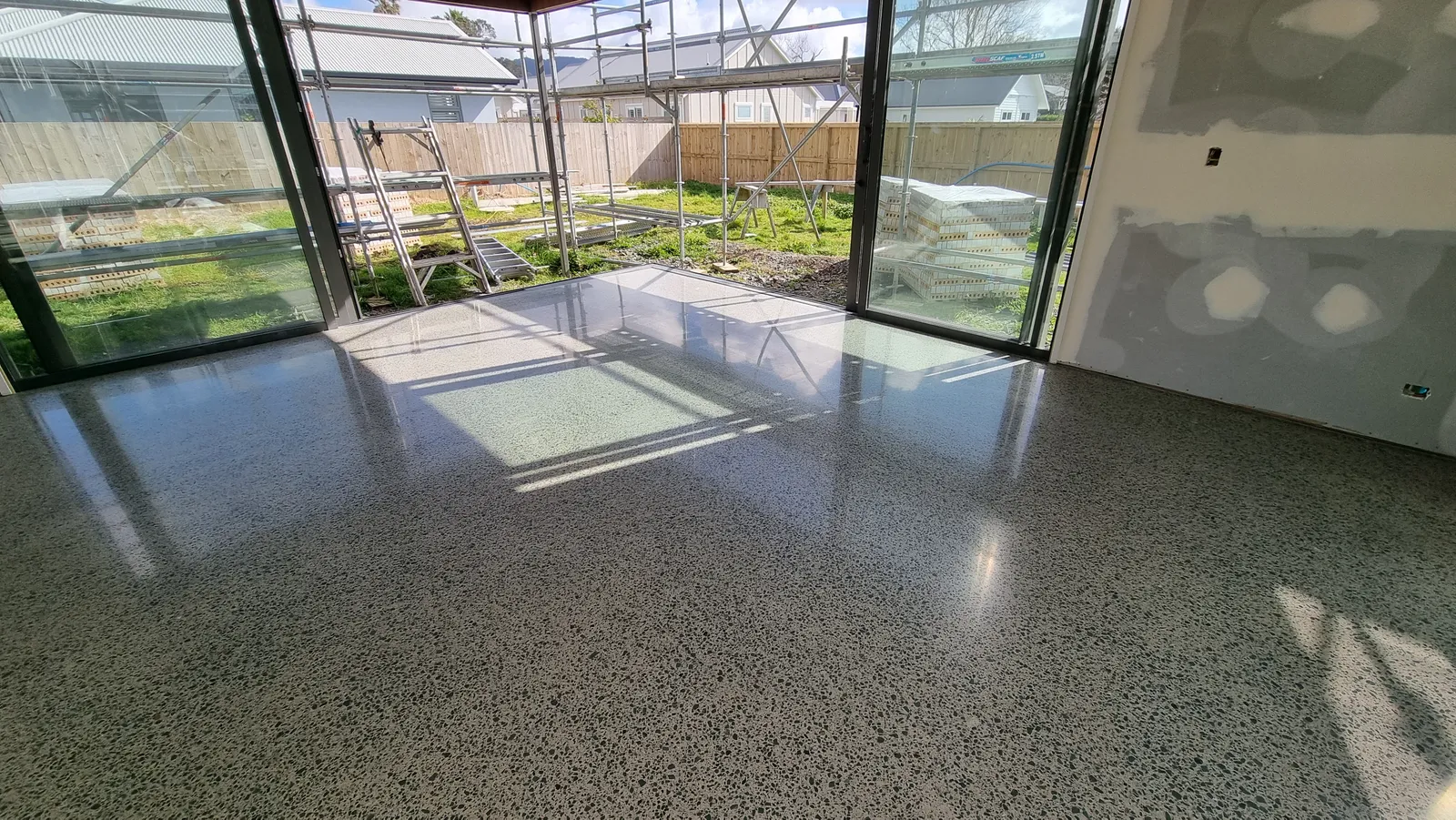
A medium grind keeps the natural character of the slab and is the most common outcome for everyday floors. You get some stone showing, but the overall effect stays understated. If you like the idea of salt and pepper but your slab is not perfectly flat, a medium grind is often where you realistically land.
Sheen Is a Separate Choice
Here is the point people most often get wrong. How much aggregate you expose, the grind level, is one decision. How shiny the floor is, the sheen, is a completely separate one. You can have a light salt and pepper floor in a satin finish, or a heavy aggregate floor in a satin finish. The two choices do not depend on each other.
Sheen runs from matte, through satin and semi-gloss, up to gloss and high-gloss, set by how far we take the final polishing grits. Matte is less slippery but more prone to showing stains and wear, so for most homes we recommend a satin to semi-gloss finish across the whole floor. It looks clean, wears well, and is easy to live with. We use the same process and the same sheen across the entire floor rather than mixing finishes room to room.
Which One Should You Choose?
Choose based on the look you want and, just as importantly, what your slab will allow. If you want a calm, understated floor and you have a newer, flat slab, salt and pepper is worth aiming for. If you want a bold feature floor, or your slab is older and needs levelling, heavy aggregate is the honest choice. Most floors land somewhere in the middle.
The only reliable way to know how your specific slab will look is an on-site sample grind. We grind a small test patch on arrival so you can see the actual stone, colour, and exposure your concrete produces before committing to the full floor. A polished floor lasts 20+ years with good maintenance, so it is worth getting the look right up front. You can always book a free quote and we will talk you through the options for your slab. To understand how the grinding and polishing process works end to end, see our concrete grinding and polishing service.
Frequently Asked Questions
Does heavy aggregate cost more than salt and pepper?
Not usually by much. The main drivers of price are floor size and slab condition, not the grind level itself. A typical residential floor of 50-70m2 runs around $100 per m2 + GST, larger floors of 70-200m2 sit at $80-$100 per m2 + GST, and there is a $2,250 + GST minimum charge for very small areas. For a full breakdown, see our polished concrete cost guide.
Can any concrete floor be ground to heavy aggregate?
Most can, but the result depends on the concrete mix. We are exposing the stone that is already in your slab, so the colour and size of aggregate vary from floor to floor. An on-site sample grind shows you exactly what your slab will reveal before you commit.
Is salt and pepper achievable on an old slab?
Often not. True salt and pepper needs a flat, consistent slab. Older floors, or slabs where carpet, glue, or tiles have been removed, usually need a deeper medium to heavy grind to level the surface and blend the damage. We will tell you honestly what your slab can realistically do.
Is heavy aggregate more slippery than salt and pepper?
Slip resistance comes from the sheen and grind depth, not the aggregate look on its own. All our finishes, including gloss, pass the required slip standards. For wet areas we can grind a little deeper for extra grip rather than changing the finish or adding any coating.
Does the grind level change how long the floor lasts?
No. Both salt and pepper and heavy aggregate are mechanically polished concrete and both last 20+ years with good maintenance. Like timber or tiles, the floor will dull gradually over the years and can be rebuffed to bring back the shine.
Can I mix salt and pepper in one room and heavy aggregate in another?
We do not recommend it, and in practice it is extremely rare. We keep the same grind level and the same sheen across the whole floor for a consistent, connected look throughout the home.