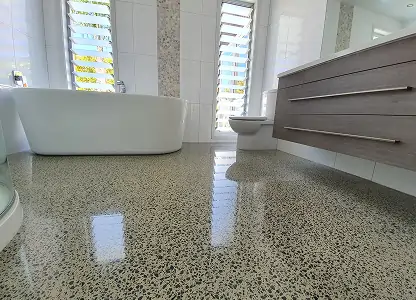
Warm water and a pH-neutral cleaner with a microfibre mop is all a mechanically polished concrete floor needs. Sweep or vacuum the grit first, because grit is what scratches. Avoid anything acidic, anything with bleach, and abrasive pads. Done properly this takes about the same effort as cleaning tiles, and less than timber.
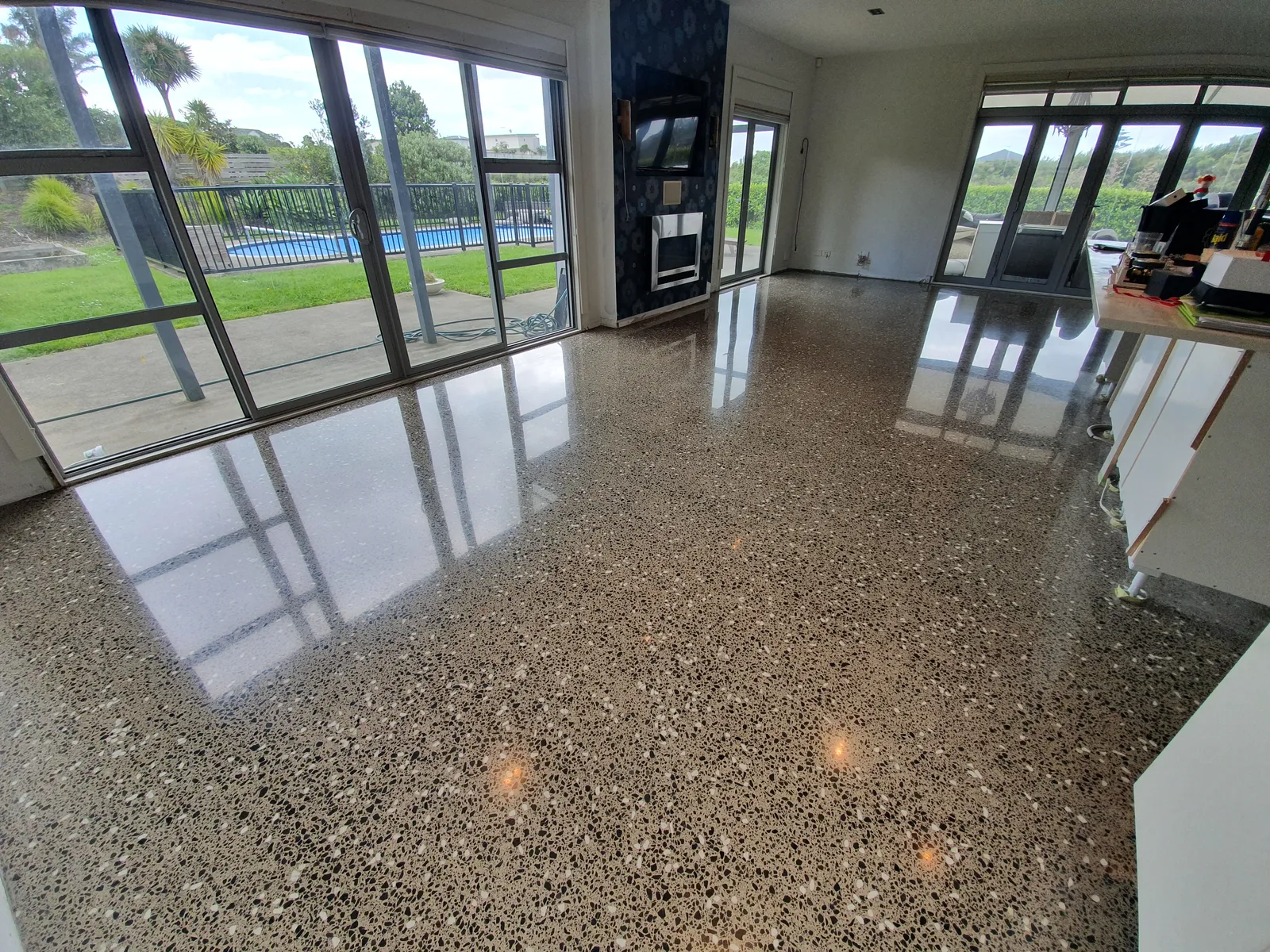
That is the whole answer for day to day cleaning. The rest of this article covers what actually damages a polished floor, why some of the advice online is wrong for the New Zealand market, and how to tell the difference between a floor that needs cleaning and a floor that needs work.
The Short Version
| Do this | Avoid this |
|---|---|
| Sweep, dust mop or vacuum regularly | Letting grit sit and get walked in |
| Warm water, microfibre mop | Sopping wet mopping and leaving puddles |
| pH-neutral cleaner when you need one | Vinegar, citrus, or any acidic cleaner |
| Wipe spills reasonably promptly | Bleach and bleach-based bathroom sprays |
| Mats at external doors | Abrasive pads, scouring powders, wire wool |
| Felt pads under furniture | Dragging furniture and appliances |
Why Grit Is the Real Enemy
The single most useful thing you can do for a polished concrete floor is deal with grit before it gets walked around.
Polished concrete is hard, but sand and road grit tracked in on shoes act like sandpaper underfoot. Over years, that traffic is what dulls the sheen in the walkways while the edges of the room still look new. It is the same reason a hallway wears before a spare bedroom does.
A doormat at every external door and a regular sweep or vacuum does more for the long term look of the floor than any cleaning product will.

What Actually Damages Polished Concrete
Acidic cleaners. This is the big one, and it is where a lot of general household advice goes wrong. Vinegar gets recommended constantly as a natural floor cleaner. Concrete is cement based, and acid attacks cement. Vinegar, lemon, citrus based cleaners and descalers will etch the surface and take the sheen off. The damage is not always obvious immediately, which is why people keep doing it.
Bleach and harsh bathroom products. Bleach based sprays are aggressive on the sealer and can discolour the surface. If it is designed to strip mould off grout, it does not belong on a polished floor.
Abrasives. Scouring powder, abrasive pads and wire wool will scratch the polish. There is no cleaning job on a polished floor that needs them.
Standing liquid. Wine, oil, cooking spills and pet accidents left to sit can penetrate. Concrete is porous, and a penetrating sealer reduces absorption rather than eliminating it. Wipe things up when you notice them and you will not have a problem.
Dragging things. Appliances and unpadded furniture legs cause most of the scratches we get asked about. Felt pads are cheap.
Matte Floors Need a Bit More Care
Worth knowing if you have a matte finish, or you are choosing one.
Matte is genuinely less slippery than a gloss finish, and that is why people pick it. The trade-off is that matte is more susceptible to staining and visible wear, because the surface has less of a polished, closed structure for spills to sit on top of. Marks show up sooner and take more effort to keep on top of.
That is not a reason to avoid matte. It is a reason to be a little quicker with spills, and it is part of why we usually recommend satin to semi-gloss as the practical range for most homes.

Wet Areas, Laundries and Bathrooms
Polished concrete handles water fine. It is what gets specified in supermarkets and commercial kitchens.
What we do not recommend is switching to a different finish level in wet rooms. In fourteen years we have not done a mixed finish job, and we do not recommend starting now. It looks disjointed and it creates a maintenance boundary in the middle of a house. Use mats and rugs in the spots that get wet rather than changing the floor.
When Cleaning Is Not the Problem
This is the part most cleaning guides leave out.
If your floor has gone dull across the whole room, if it looks hazy or patchy no matter what you clean it with, or if the sheen has visibly worn through in the traffic lanes, that is not a cleaning issue. No product fixes it, and the ones that claim to are usually a topical coating that will look worse in two years.
A mechanically polished floor lasts 20 or more years with good maintenance, but it does dull over time in the same way timber or tiles do. Part of normal ownership is a rebuff every 3-5 years, which mechanically brings the sheen back. That runs $30-$50 per m2 + GST.
If a floor has gone well past that, or was never polished properly to begin with, the answer is a full regrind and repolish rather than a rebuff. That sits at $60-$100 per m2 + GST.
There is a fuller diagnosis in our guide to why some polished floors look dull after five years, and if you want the numbers, our cost guide for restoring an old polished floor breaks it down.
A Note on Sealers
Our floors are sealed with a penetrating sealer, which soaks into the concrete rather than forming a film on top. That matters for cleaning, because there is no coating sitting on the surface to be stripped, scratched or peeled off by a cleaning product.
It also means you should not need to apply anything yourself. If someone recommends a topical polish, wax or coating to bring the shine back, that is a short term cosmetic fix on a floor that actually wants mechanical attention.
If you are not sure whether your floor needs cleaning or needs work, send us a photo and we will tell you honestly which one it is. Get a free quote.
Frequently Asked Questions
What is the best cleaner for polished concrete floors?
A pH-neutral floor cleaner diluted in warm water. Most of the time plain warm water and a microfibre mop is enough. Avoid anything acidic, anything bleach based, and anything abrasive.
Can I use vinegar on polished concrete?
No. Vinegar is acidic and concrete is cement based, so it etches the surface and dulls the sheen. It is one of the most common causes of avoidable damage we see, because it gets recommended so widely as a general cleaner.
How often should polished concrete be cleaned?
Sweep or vacuum as often as suits the traffic, which in most homes is a couple of times a week. Damp mopping every week or two is plenty. Grit removal matters more than washing.
Do polished concrete floors need sealing or waxing?
Not by you. The floor is sealed with a penetrating sealer during the polishing process. It does not need topping up with a wax or polish, and topical products tend to cause more problems than they solve.
How much does it cost to bring a dull polished floor back?
A rebuff runs $30-$50 per m2 + GST and is normal maintenance every 3-5 years. A floor that needs a full regrind and repolish runs $60-$100 per m2 + GST.
Will a steam mop damage polished concrete?
We would not use one. Heat and forced moisture are unnecessary on a floor that cleans easily with warm water, and there is no upside to the risk.
Why has my floor gone dull in the hallway but not the bedrooms?
That is traffic wear from grit, and it is normal. It is the point at which a rebuff is worth booking, because the fix is mechanical rather than chemical.
Internal Links Used
1. `/resources/polished-floors-dull-after-5-years` (diagnosis of a dull floor) 2. `/resources/restore-polished-concrete-cost` (restoration costing) 3. `/get-a-quote` (conversion CTA)
Note for publish: this article is deliberately built as a bridge. Cleaning has high search volume and low buying intent, so the job of the piece is to answer the cleaning question honestly and then route readers whose problem is not cleanable into the restoration lane. Measure onward clicks to the two linked articles, not just sessions.
Images Used
| Position | Catalog ID | Why selected |
|---|---|---|
| Hero / Thumb | `finished-home-referbs--20210511-224533` | Wide, after, lived-in kitchen and living space. The article is about living with the floor, so the hero shows exactly that. |
| Grit section | `decorative-mixes--20191206-120618` | Modern kitchen, the room where most cleaning actually happens. |
| Matte section | `matte-floors--img-20200207-083657-923` | Literal matte finish in a kitchen and living space, matching the matte trade-off section. |
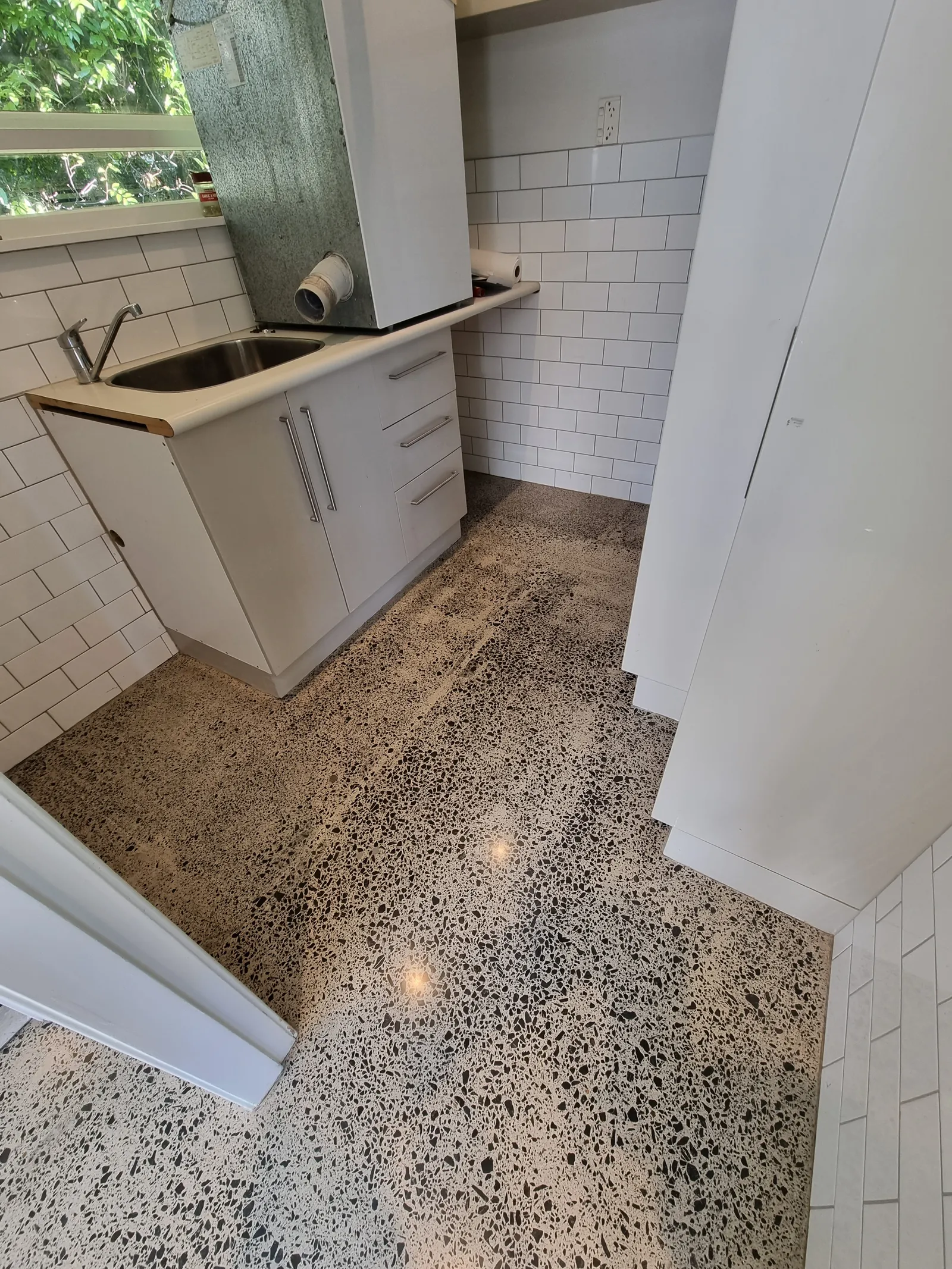
| Wet areas | `old-concrete-pre-1990--20220511-120216` | Laundry room with polished concrete. Direct match for the wet-area section. |
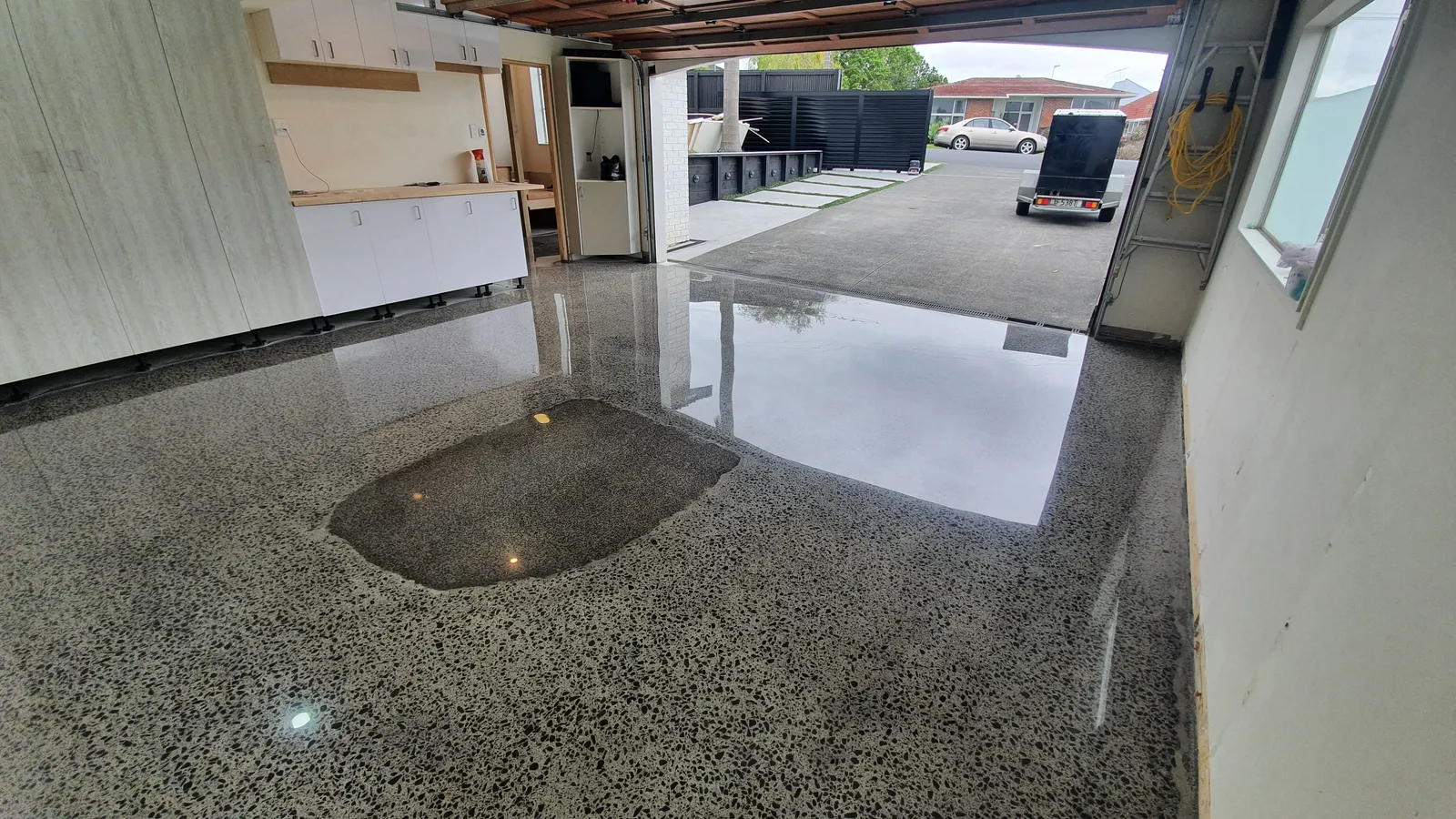
| Not-cleaning section | `problems-with-concrete--20211021-162046` | Visible discolouration patch. Shows the kind of mark cleaning will not fix. |
Review Notes
- Pricing: `$30-$50` (rebuff, every 3-5 years) and `$60-$100` (restoration regrind) both canonical from `pricing-reference.md`. No other figures used.
- Bowie rules applied: penetrating sealer not topical, stated explicitly twice; no topical coatings, waxes or polishes recommended; "20+ years with good maintenance" phrasing used, with dulling framed as normal; matte trade-off given both sides; satin to semi-gloss as the practical range; mixed finishes across rooms explicitly ruled out with the fourteen-year reference; no grind and seal; no epoxy.
- For Bowie: two claims need his confirmation, both flagged in the Bowie review file - the steam mop position, and whether he wants to name a specific pH-neutral product or keep it generic. The article currently stays generic on purpose.