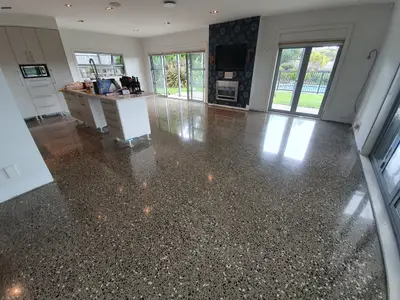
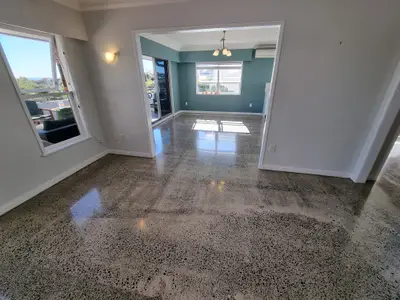
Polished concrete dulls over time. It's not a fault and it's not unique to your floor - every polished surface dulls eventually, just like timber loses its sheen and tiles need regrouting. The most common reasons are everyday foot traffic, dust acting as fine abrasive, the wrong cleaning products, and natural wear of the polish itself. The fix depends on how dull it's gone: a rebuff brings most floors back, a heavier restoration regrind handles the worse cases. Here's what's actually happening and what it costs to bring the shine back.
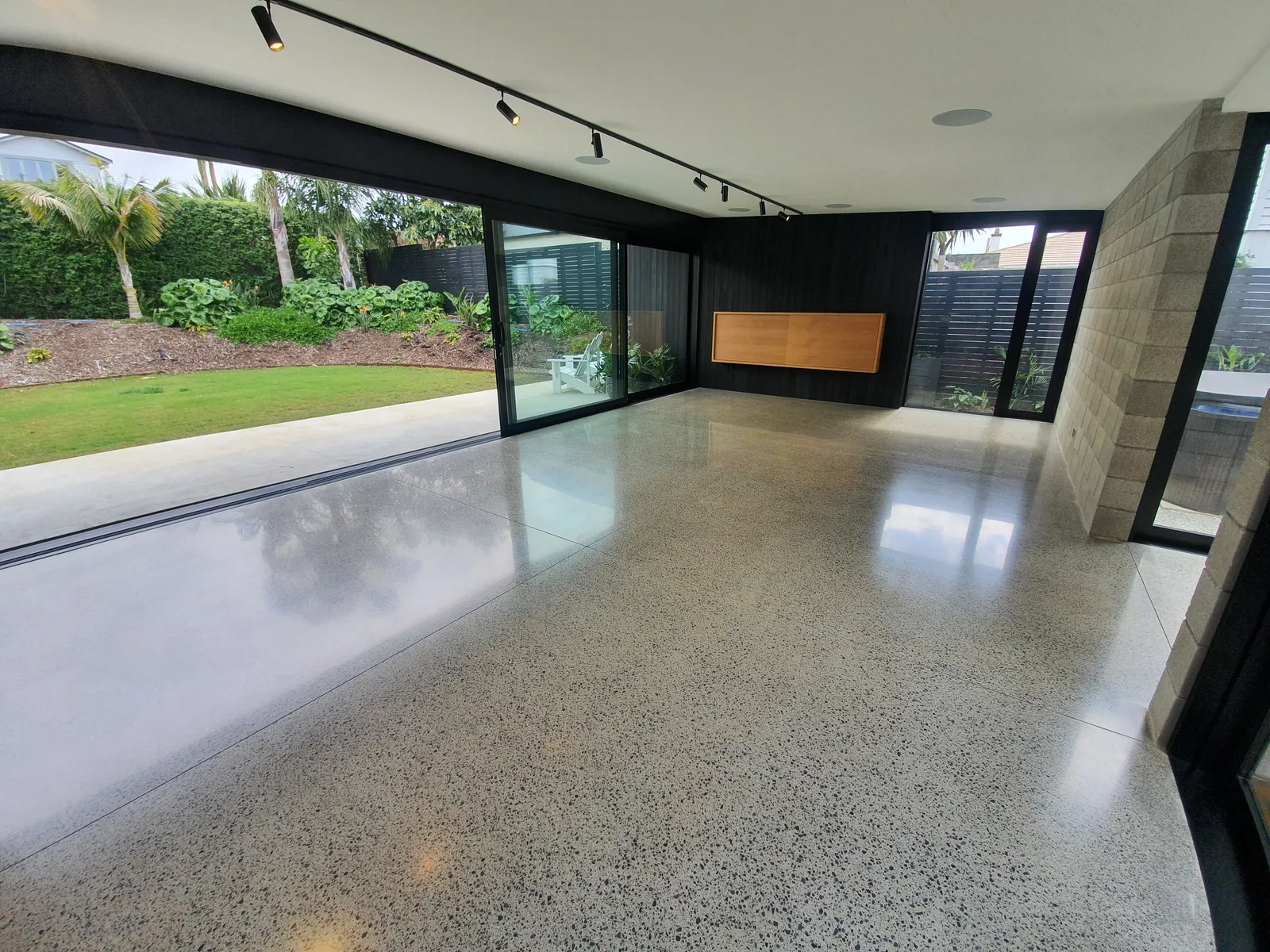
About this guide. We polish and restore floors across Auckland every week and the dull-floor call is one of the most common we get at the 5-7 year mark. The advice in this article comes from 14 years of hands-on polishing and rebuff work, written by Bowie Houston.
Last reviewed: May 2026 | Author: Bowie Houston, Director, Diamond Shine Concrete
We polish hundreds of floors across Auckland every year, and the dull-floor call is one of the most common reasons people contact us at the 5-7 year mark. The good news: in almost every case, the floor itself is fine. It's the polished surface that needs attention.
What "Dull" Actually Means
Polished concrete gets its shine from extremely fine grits used in the final polishing steps. The surface ends up smoother than glass at a microscopic level, which is why it reflects light. Over years of use, that ultra-fine surface gets micro-scratched and worn. Light no longer reflects cleanly, and the floor reads as cloudy, hazy, or "tired."
This is mechanical wear, not chemical damage. The concrete underneath is unchanged - it's only the top fraction of a millimetre that's lost its polish. That's why the fix is mechanical too: re-polish that top layer.
| What you see | What's actually happening |
|---|---|
| Cloudy or hazy patches in main walkways | Micro-scratching from foot traffic and grit |
| Loss of reflection across the whole floor | General wear on the final-grit polish |
| Localised dull patches near doors or kitchens | Concentrated wear from heavy footfall |
| White or chalky residue | Cleaning product build-up (often acidic cleaners) |
| Dark patches that won't clean off | Stains - separate problem, see below |
The Five Most Common Causes
1. Foot traffic in main walkways
Hallways, kitchens, and the path between the kitchen and back door wear faster than the rest of the floor. After 5-7 years you can often trace the family's daily path by the dullness pattern. This is normal wear and the most common reason for a rebuff call.
2. Grit acting as fine abrasive
Sand, dust, and grit tracked in from outside is harder than concrete. Every footstep grinds it into the surface. Without door mats, this is the single biggest accelerator of dulling. With good mats, dulling slows by years.
3. Wrong cleaning products
Acidic cleaners (anything with vinegar, citrus, lemon, or "natural acidic" claims) etch the polished surface. Strong alkaline cleaners (heavy degreasers) can also strip protection. Polished concrete needs pH-neutral floor cleaner only. We've seen floors that lost half their shine in 2 years because the cleaning product was wrong.
4. UV exposure and direct sun
Sun fading isn't a major issue for polished concrete itself, but it does dry out the floor and can lift sealers (on grind and seal floors). On mechanically polished floors, prolonged sun on warm afternoons accelerates micro-wear.
5. The polish itself ageing
Even with perfect care, the final polish wears over time. We see well-cared-for floors that are still beautiful at 10+ years - and floors that genuinely need a rebuff at the 5-year mark from heavy use. There's no precise rule. It depends on traffic, care, and how the floor was originally finished.

How to Tell If It's Dulling vs a Bigger Problem
Three quick checks before you call us:
Try a damp microfibre cloth on a small dull patch. If the surface looks brighter while wet but dulls again as it dries, you're dealing with normal wear. A rebuff will fix it.
Look at the dull pattern. If it follows footfall paths, it's traffic wear. If it's blotchy or random across the floor, it might be cleaning product residue or sealer failure (on grind and seal floors).
Check if you can scratch the surface with a coin edge. If it scratches easily, the polish has worn through and a rebuff is needed. If it doesn't scratch, the floor is fine and might just need a deeper clean.
If the floor has visible cracks, etching, deep stains, or patches where the aggregate looks different in colour, that's beyond a rebuff - we'd need to look at it on site.
The Two Restoration Options
There are two fixes depending on how worn the floor is:
Rebuff (light restoration)
A rebuff re-polishes the top layer with the final grits only. We don't grind the slab again - we just take the polished surface back to its original shine. It's a 1-2 day job for a typical floor.
- What it does: Restores shine and clarity, removes light micro-scratching, refreshes the final polish
- What it doesn't do: Won't fix deep scratches, stains, sealer failure, or surface damage that's gone past the polish layer
- Cost: Typically $30-50 per m2 + GST
- Frequency: Every 3-5 years for most floors, longer with good care
- Downtime: 1-2 days
Restoration regrind (heavy restoration)
If the floor has gone past dull - deep scratches, sealer failure, or significant damage - it needs a full regrind back to the polish. This is closer to the original polishing job: we grind through the worn layer and re-polish from there.
- What it does: Takes the floor back to like-new condition. Can also change finish level if you want a different sheen than the original.
- What it doesn't do: Can't fix structural problems with the slab itself (cracks, settling, ghosting from old tile or carpet glue)
- Cost: Typically $60-$100 per m2 + GST
- Frequency: Once every 10-15+ years if needed, or on resale
- Downtime: 3-5 days
For pricing detail and what affects each quote, see our polished concrete cost guide for Auckland.
How to Make the Polish Last Longer
The best maintenance plan is the boring one:
Use door mats at every entrance. This single thing extends the polish life by years. Outdoor and indoor mats together catch most of the grit before it hits the floor.
Sweep or vacuum regularly. Grit on the floor is the enemy. Soft bristle broom or a vacuum with a hard floor head, used 2-3 times a week.
Wet-mop with pH-neutral cleaner only. Standard polished concrete cleaner from a flooring supplier, or just warm water with a tiny amount of dish soap. Avoid vinegar, lemon, or any acidic "natural" cleaner.
Put felt pads on furniture. Chairs, tables, anything that gets dragged. Sliding furniture across polished concrete leaves visible scratches.
Address spills quickly. Most spills are fine if cleaned up within an hour. Wine, citrus juice, and acidic foods (tomato sauce) need to come up faster.
Plan for a rebuff at year 3-5. Most homes get one rebuff in years 3-5 and a second at 7-10. After that, traffic patterns and care decide the next interval.
For more on how long the floor itself lasts (separate from the polish), see our longevity guide for polished concrete.
Will the Restored Floor Look Identical to the Original?
In most cases, yes. The aggregate, base colour, and grind level are unchanged - we're only restoring the polish. There may be very minor variations in shine across the floor, especially in heavily worn areas vs less-walked areas. These usually settle within a few weeks of normal use.
If you're doing a heavier regrind rather than a rebuff, we can also use that opportunity to slightly change the finish. Going from gloss down to satin to semi-gloss is a common request - it's the sheen range we recommend for most homes anyway and it shows wear less obviously than full gloss. Our satin vs semi-gloss vs high-gloss guide covers the trade-offs in full.
We always do a sample on arrival so you can see how the floor responds before we commit.
Frequently Asked Questions
How much does it cost to restore a dull polished concrete floor in Auckland?
A standard rebuff is typically $30-$50 per m2 + GST and takes 1-2 days. A heavier restoration regrind is $60-$100 per m2 + GST and takes 3-5 days. The right option depends on how worn the floor is - we can usually tell from photos or a quick site visit. Our pricing guide has the full range.
How often does polished concrete need a rebuff?
Every 3-5 years for most homes. Light traffic and good care extend that to 7+ years. Heavy traffic, no door mats, or wrong cleaning products can shorten it to 2-3 years.
Why does my polished concrete look dull only in some spots?
Localised dullness usually means localised wear - high-traffic zones like the kitchen entry, hallway, or back door path. A rebuff fixes the whole floor at once and evens out the wear pattern. Don't bother with spot treatments - they leave visible patches.
Can I just buy a polish product from a hardware store?
The DIY polishes you can buy are surface coatings, not polish. They sit on top of the floor, don't last long, and can make a future professional rebuff harder by clogging the diamonds we use. Stick with proper cleaning and call us when it's time for a real rebuff.
What's the difference between a polished floor going dull and sealer failure?
Mechanically polished concrete doesn't have a topical sealer that fails - the polish IS the finish. Going dull is normal wear of the polish itself. Grind and seal floors (the matte/cheaper option) DO have a topical sealer that can fail - lifting, peeling, or going hazy. The fix is different (strip and reseal, around $50-$80 per m2 + GST). See our grind and seal vs mechanical polish guide for the difference.
Will the floor be slippery after a restoration?
A freshly restored polished floor has the same slip behaviour as a freshly polished new floor. Satin to semi-gloss is our recommended finish range and offers a good balance of slip resistance and wear visibility. Matte is technically less slippery but stains more easily - we cover the trade-offs in our slip resistance article.
How long does polished concrete actually last?
The slab itself lasts 20+ years with good maintenance, often longer. The polish on top wears in cycles and gets refreshed every few years through rebuffs. Think of it like timber: the wood lasts for decades, but the surface finish needs renewing periodically.
Talk to Diamond Shine Concrete
Got a polished concrete floor that needs a rebuff or restoration? We've polished hundreds of residential and commercial floors across Auckland, the North Shore, East Auckland, West Auckland, and South Auckland. Have a look at our grinding and polishing services for the full process and what's included, or get in touch for a free site visit and quote.