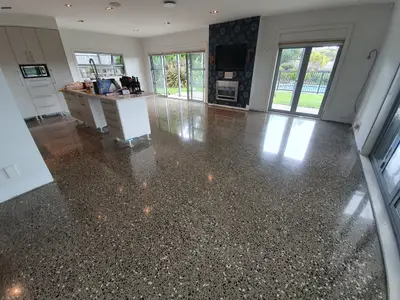
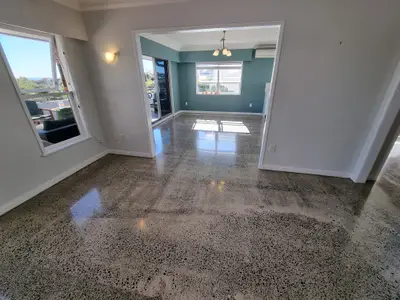
Polished concrete goes cloudy for a handful of known reasons: cleaning product residue, wrong cleaning chemicals, moisture and efflorescence pushing through the slab, or normal wear on the surface itself.
The grinding and polishing process creates a mechanically-hardened finish that lasts decades - so cloudiness is almost never a sign the floor is failing. The cause determines the fix, and a residue problem needs a different approach than a surface worn from foot traffic. This guide covers each cause, how we diagnose it on site, and what the fix looks like.
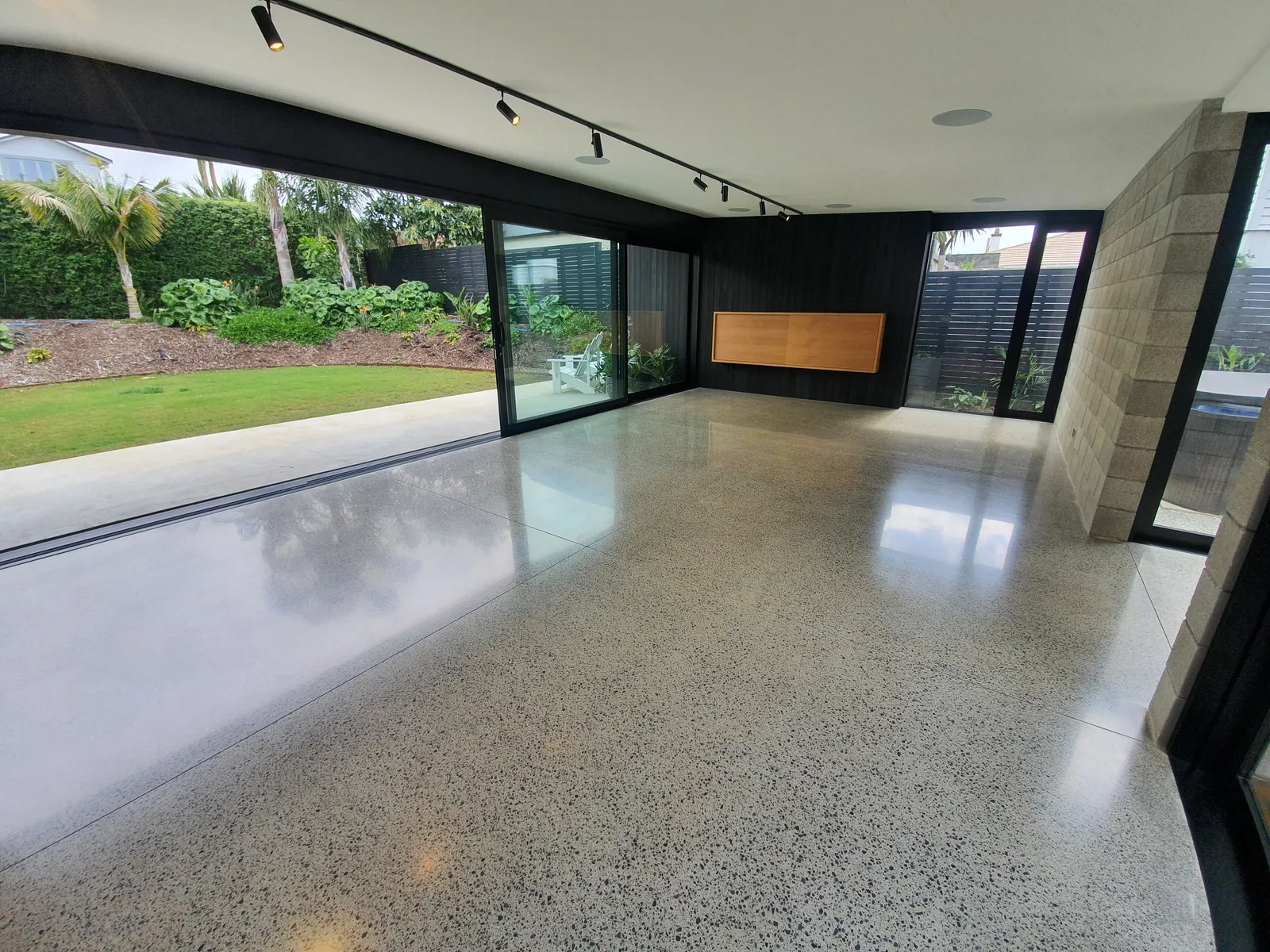
About this guide. Diamond Shine Concrete polishes and restores floors across Auckland every week. Cloudy or hazy floor calls are one of the more common service requests we receive, and almost always fixable. Written by Bowie Houston, Director, Diamond Shine Concrete.
Last reviewed: June 2026 | Author: Bowie Houston, Director, Diamond Shine Concrete
The Four Main Causes at a Glance
| Cause | What you see | Likely fix |
|---|---|---|
| Cleaning product residue (film) | Haze across large areas, worse after mopping | Deep clean with correct product, then rebuff if residue has etched |
| Wrong cleaning chemical (acid or strong alkaline) | Dull or etched patches that appear shortly after cleaning | Rebuff affected area, switch to pH-neutral cleaner |
| Efflorescence / moisture | White powdery patches or milky haze, often near joins or slabs edges | Identify moisture source; surface treatment after source is resolved |
| Worn polish (normal wear) | Gradual loss of clarity, follows foot traffic paths | Rebuff (light restoration) |
Diagnosis first. Applying the wrong fix wastes time and money. We always do a brief on-site assessment before recommending anything.
Cause 1: Cleaning Product Residue (The Most Common Culprit)
The single most common cause of cloudiness we find on residential floors is cleaning product build-up. Mop-and-bucket products - especially floor cleaners that say "leaves a shine" or "protective coating" on the label - deposit a thin film on the polished surface. Repeat over six months and that film thickens into a visible haze.
The confusion is understandable: the product says it is good for polished floors, and for the first few uses, results look fine. The film only becomes noticeable once layers accumulate.
How to check. Run a fingernail lightly across a cloudy area. If you can feel a slight build-up or waxy texture, residue is the likely cause. You can also try wiping with a damp microfibre cloth - a residue haze often lifts slightly with plain water, then returns as the floor dries.
The fix. A proper clean-down with a pH-neutral floor cleaner and a clean microfibre mop. In mild cases this removes the haze entirely. Where the film has been building for a year or more, a light mechanical rebuff is usually needed to clear the surface fully and bring the shine back.
After the clean or rebuff, the rule is simple: pH-neutral cleaner only, used sparingly, and a well-wrung mop. No "polishing" products. No all-purpose sprays. No vinegar.

Cause 2: Wrong Cleaning Chemicals
If cleaning product residue is a slow build, wrong chemicals are a faster problem. Acidic cleaners - anything with vinegar, citrus, "natural acid" claims, or toilet-bowl cleaner accidentally used on floors - etch the polished surface. Strong degreasers and alkaline strippers cause similar damage.
Etching from acid is a different problem to a film from build-up. Etching actually removes material from the surface. The result looks similar - cloudy, dull patches - but the surface feels slightly roughened under your fingernail instead of waxy.
How to check. If the cloudiness appeared suddenly after a clean rather than gradually over months, a cleaning chemical is the more likely cause. Note where the cloudy patches are - do they match where you applied a cleaning product heavily?
The fix. A rebuff restores the polished surface. The grinding and polishing process removes the etched top layer and re-polishes back to the original finish. We usually see this fix take one day for a typical residential floor.
The critical follow-up: remove every acidic or aggressive product from the house and replace with a pH-neutral floor cleaner. We specify which products to use, and which to bin, when we finish the work.
Cause 3: Efflorescence and Moisture
Efflorescence is the white, powdery or milky deposit that forms when moisture moves through concrete and deposits minerals on or near the surface. On polished concrete it shows up as a milky haze, white patches, or a slightly chalky look, often around slab joints, at the edges of rooms, or on ground-floor slabs.
This is a different problem to cleaning product issues, and it is important to distinguish them before doing any work on the surface. Rebuffing over an active efflorescence problem will not fix it - the moisture will push new deposits through within weeks.
How to check. White or milky patches that appear over time rather than after cleaning, concentrated near slab edges, joins, or areas that sit over soil, are more likely to be moisture-related. Running a damp cloth over the area - if the haze is white powder that wipes off in a dusty way rather than a film that smears, efflorescence is likely.
The fix. The moisture source has to be identified and addressed first - under-slab drainage, external waterproofing, or ventilation issues depending on the property. Once the moisture is managed, the surface deposits are treated and the floor can be rebuffed. Treating the surface without fixing the moisture source is a waste of time.
This is a case where an honest site visit matters. We will tell you if we think moisture is the issue and recommend getting the source addressed before we start any floor work.

Cause 4: Normal Wear on the Polished Surface
Mechanically polished concrete gets its shine from extremely fine polishing grits used in the final stages of the grinding and polishing process. Over years of foot traffic, that ultra-fine surface picks up micro-scratches. Light no longer reflects cleanly and the floor reads as cloudy or hazy, particularly in high-traffic zones like hallways, kitchen paths, and entry areas.
This is not a fault. It is the same process that happens to any polished surface - timber loses its sheen, tiles dull around the kitchen sink - and it is the most manageable cause of the four. It happens slowly, typically over 3-7 years depending on traffic and maintenance habits. Mechanically polished concrete lasts 20+ years with good maintenance, and periodic rebuffing is routine upkeep - not a sign anything has gone wrong.
How to check. If the cloudiness is concentrated in the paths people walk most often - the kitchen-to-back-door route, the hallway, the entry - it is almost certainly normal wear. A damp cloth will not lift the haze because there is no residue; the surface itself has micro-scratched.
The fix. A rebuff. We re-polish the surface with the final grits to restore the original clarity. It is a 1-2 day job for most residential floors and does not involve grinding the slab again - just re-polishing the concrete surface itself - no full regrind needed.
For more on how often this needs doing and the difference between a rebuff and a full restoration, see our guide to polished floors going dull after 5 years.
How We Diagnose It on Site
We carry out a brief assessment on arrival before any work starts. In practice, the diagnosis is usually clear within five minutes:
1. We ask when the cloudiness appeared - sudden or gradual? 2. We look at the distribution - does it follow foot traffic paths, or is it random? 3. We test a small area with a damp cloth and check the texture of the surface by hand. 4. We check the cleaning products currently being used.
If there is any doubt about whether moisture is involved, we will say so before starting and recommend appropriate investigation first.
We also do a sample grind on a small, less-visible area so you can see exactly how the floor responds before we commit to the full job. Most floors respond well - we can usually confirm the approach is right within the first 30 minutes on site.
What the Fix Costs
For most cloudiness problems, the fix is a rebuff or a combined clean and rebuff. The pricing depends on the state of the floor.
Rebuff (most cloudiness cases): Typically $30-$50 per m2 + GST. This covers re-polishing the surface back to its original finish. Takes 1-2 days for most residential floors.
Restoration regrind (more severe wear or etching): If the surface has been significantly etched by acid cleaners, or the wear has gone deeper than a standard rebuff can address, a full restoration regrind is $60-$100 per m2 + GST. This takes 3-5 days and takes the floor back closer to its original condition.
We can usually tell from photos whether a rebuff or a full restoration is likely, so send us a few shots before booking if you want a rough steer on cost. For the full pricing picture, our polished concrete cost guide for Auckland covers all job types.
How to Prevent Cloudiness
Most cloudiness comes back to cleaning choices. The prevention is straightforward.
Use pH-neutral cleaner only. This is the most important rule. Check the pH of any product before using it on polished concrete. Standard polished concrete cleaners from flooring suppliers are correct; general household floor cleaners often are not.
Use as little product as possible. Even the right cleaner can build up over time if used in large amounts with a soaking-wet mop. Dilute to the recommended rate, use a well-wrung mop, and rinse with plain water after.
Never use "polishing" or "protective" floor products. These deposit the film that causes build-up haze. The polish on a mechanically polished floor is in the concrete itself - it does not need a topical product on top.
Sweep or vacuum first. Dry grit and dust dragged across the floor with a wet mop creates fine scratches. Sweep or vacuum first, then mop.
Place mats at all entrances. Grit tracked in from outside is harder than concrete. Mats at outdoor entries and internal entries catch most of it before it reaches the floor.
For detailed maintenance advice that will extend the life of the polish, see our guide to how long polished concrete lasts.
Frequently Asked Questions
Why has my polished concrete floor gone hazy?
The most common cause is cleaning product build-up - specifically floor cleaners that deposit a film over time. Wrong cleaning chemicals (acidic or strongly alkaline) can also create a hazy or dull look by etching the surface. Less commonly, moisture pushing through the slab creates a milky haze. Normal wear from foot traffic causes a gradual, patchy cloudiness that follows the paths people walk most.
Can I fix cloudy polished concrete myself?
You can clear mild product build-up with a thorough clean using a pH-neutral cleaner and a clean microfibre mop. If the haze is from etching or worn polish, it needs a professional rebuff - a mechanical re-polishing of the surface. DIY polishing products from hardware stores sit on top of the floor, do not restore the actual polish, and can make a professional rebuff harder later.
How much does it cost to fix cloudy polished concrete in Auckland?
A rebuff - the fix for most cloudiness cases - is typically $30-$50 per m2 + GST and takes 1-2 days. A heavier restoration regrind for more severe damage is $60-$100 per m2 + GST and takes 3-5 days. We can usually give a rough steer on which option applies based on photos before you book a site visit.
How do I know if it's cleaning product residue or something else?
Run your fingernail lightly across a cloudy area. A residue haze feels slightly waxy or filmy. Etching from wrong chemicals feels slightly roughened. Moisture-related haze (efflorescence) is a white powdery deposit that wipes off dustily with a dry cloth. Normal wear feels the same as the rest of the floor but looks dull under raking light. These checks are not 100% definitive but they usually point in the right direction.
My floor went cloudy quickly after using a cleaning spray - what happened?
Almost certainly an acidic or strongly alkaline cleaner. Products with vinegar, citrus, "natural acid" ingredients, or heavy degreasers can etch the polished surface after a single use. The affected area needs a rebuff to restore the finish. Switch to a pH-neutral floor cleaner and check the label of everything you use on the floor going forward.
Is efflorescence dangerous to the floor?
Efflorescence itself is not structural damage - it is mineral deposits from moisture movement, not a sign the slab is failing. But it does indicate moisture is moving through the concrete, and if that is not addressed the deposits will return after any surface treatment. We recommend identifying and resolving the moisture source before treating the floor.
Can polished concrete go cloudy from condensation or humidity?
In most cases, no - well-polished and properly maintained concrete is not significantly affected by normal indoor humidity. Very high humidity combined with temperature swings can in rare cases create a temporary haze on a highly polished surface, similar to fogging on glass, but this is usually temporary and clears. Persistent moisture-related haze is more likely to be efflorescence from under the slab than surface condensation.
Talk to Diamond Shine Concrete
Got a cloudy or hazy polished concrete floor? We diagnose and restore floors across Auckland, the North Shore, East Auckland, West Auckland, and South Auckland. A brief site visit is usually all it takes to confirm the cause and propose the right fix. Visit our concrete polishing and grinding service to see the full restoration process, or get in touch for a free site visit and quote.