Overview
What is concrete grinding?
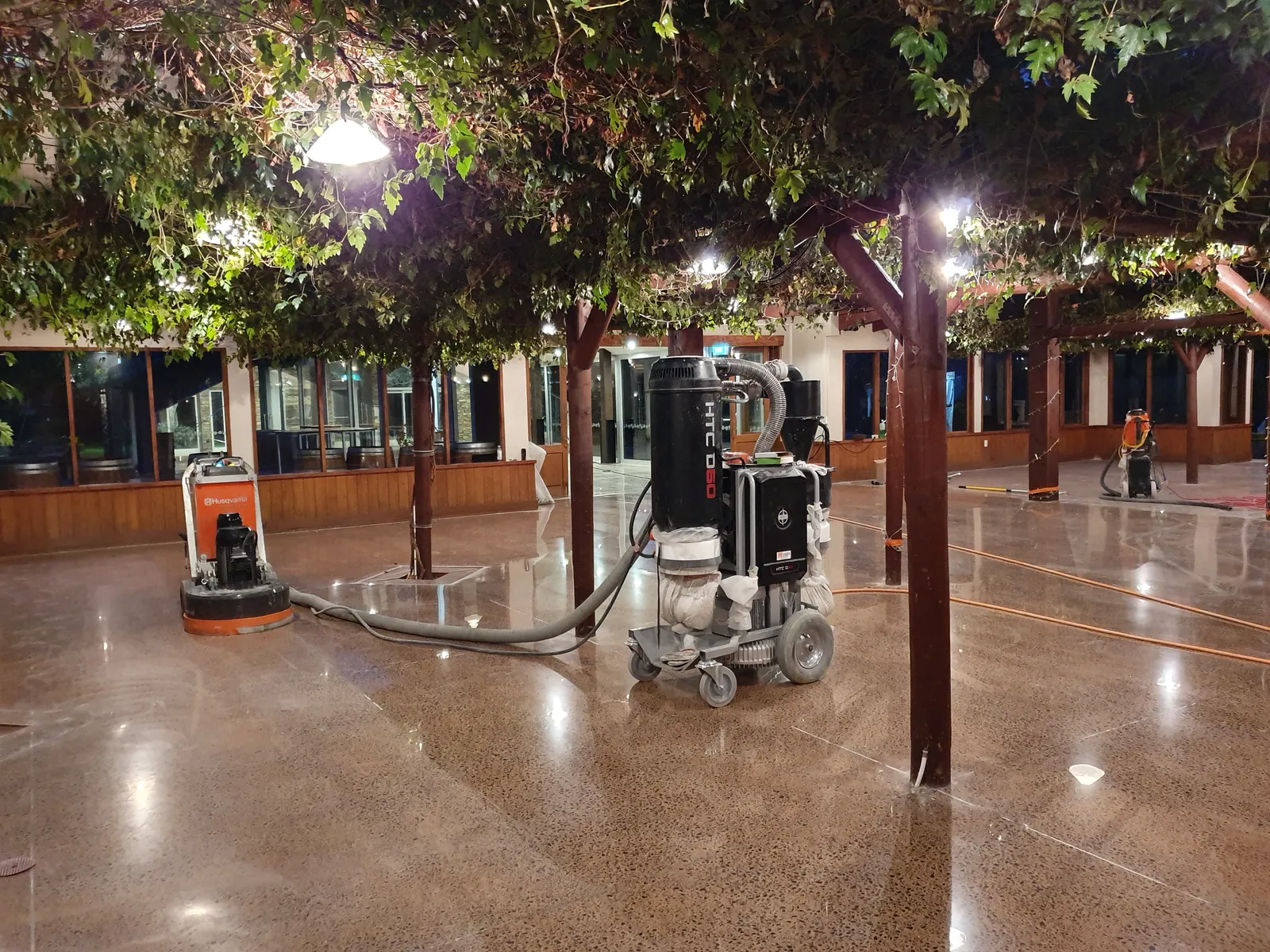
Concrete grinding uses heavy machines fitted with diamond tooling to cut into the top of your slab. It takes off whatever is stuck to it, such as old sealers, paint, coatings and glue, and flattens the high spots, leaving clean, sound concrete. We grind floors in homes and businesses across Auckland, to prepare them for a new floor or as the first half of polishing.
At a glance
- What we take off
- Sealers, paint, coatings, carpet glue, cork and tile adhesive
- Levelling
- 3-5 mm off high spots, up to about 8 mm
- Dust
- Most of it captured by industrial vacuums as we grind
- What can go down next
- Tiles, timber, vinyl, carpet, or a polished finish
Grinding or polishing?
Concrete grinding on its own, or the first half of polishing
Grinding is the coarse work: diamond tooling cuts into the slab to flatten it and take off what is on it. On its own, it leaves a clean, flat slab ready for tiles, timber, vinyl or carpet. Followed by polishing, it is where the look of the floor is decided, from no stone showing to full exposure.
If you are comparing quotes, ask what grind depth is included and whether the floor is being prepared or taken through to a polish. See our concrete polishing page for the full job.
What it costs
How concrete grinding is priced
Quoted per job
Free quotesusually from photos and the floor size
Every floor is different: what is on it, how many layers and how flat it needs to be. Send us the size and a few clear photos and we can usually quote without a site visit.
Polishing as well? Our guide to concrete grinding cost and polishing prices breaks it down by floor size.
What moves the price
- The size of the floor
- What is coming off: sealer, paint, coating or glue
- How many layers are on it
- Carpet glue, which needs a heavier cut
- High spots and lips to flatten
- Access, tight rooms and stairs
- Whether the floor goes on to be polished
What we take off
What we grind off concrete floors
Sealers and old coatings
Worn or failed finishes ground back to bare concrete.
Paint
Painted slabs taken back to clean concrete.
Carpet glue
Needs a heavier cut, which we allow for.
Cork and tile adhesive
The adhesive left behind once the floor covering is up.
High spots and lips
Taken down 3-5 mm, and up to about 8 mm.
Surface damage
Rain-damaged and rough patches ground back.
Signs it's time
Does your floor need grinding?
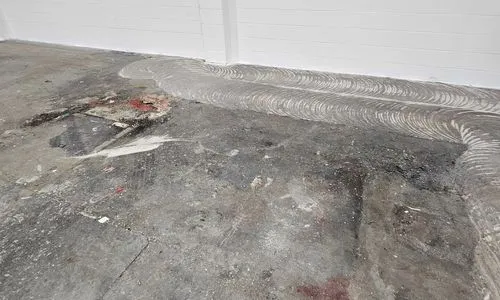
- A new floor is going down over old glue or a coating.
- A sealer or coating is peeling or flaking. When a concrete floor sealer fails
- There are humps, lips or trip hazards. Uneven concrete slabs and grinding
- Tiles have come up and left adhesive behind. Tile ghosting explained
- You want an old slab polished. Concrete polishing
- Self-levelling compound: we don't polish over it, because even our lightest grinder is around 500 kg. For severe unevenness, a structural topping (25-50 mm) can be ground and polished once cured.
Recent work
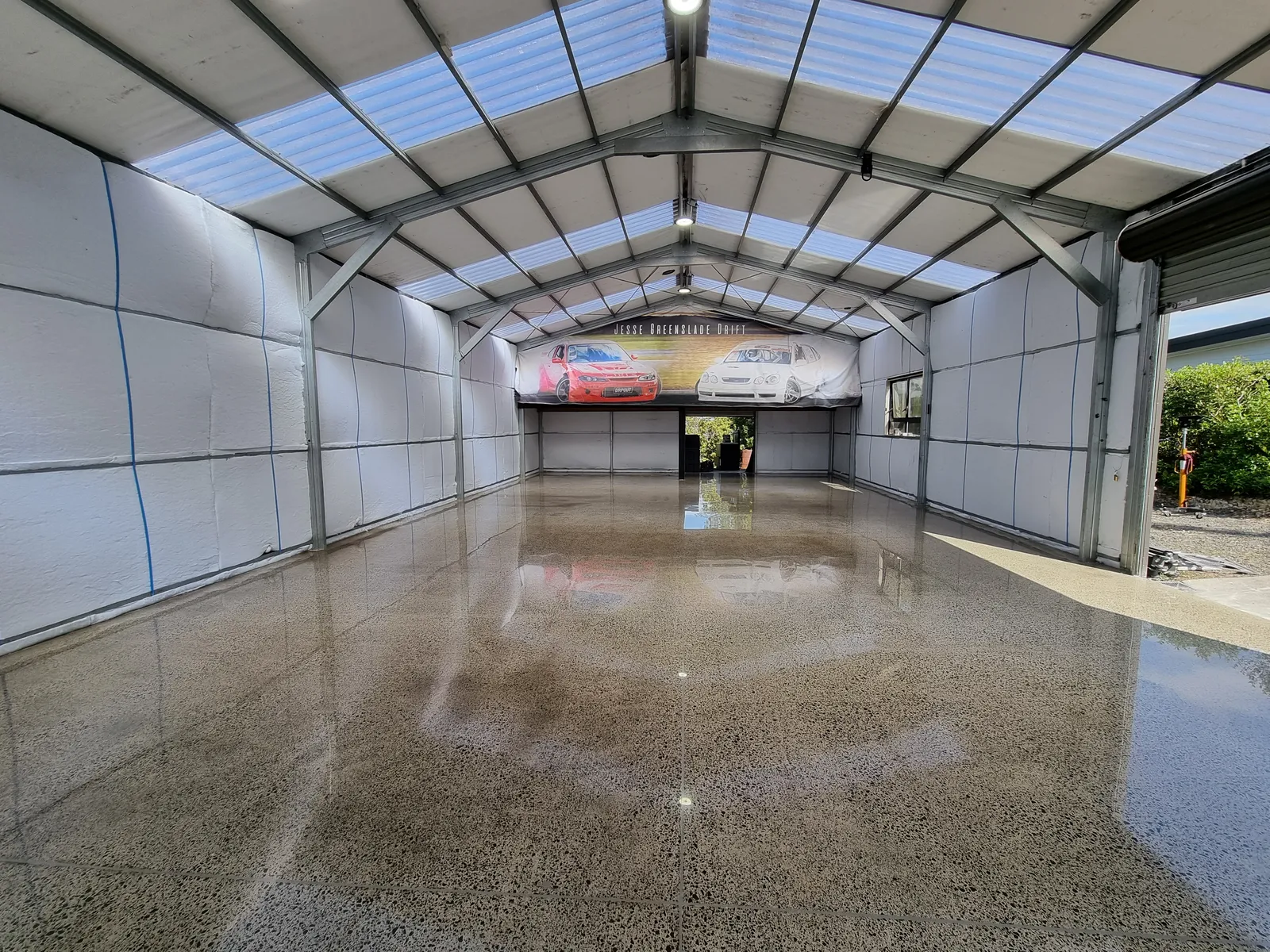
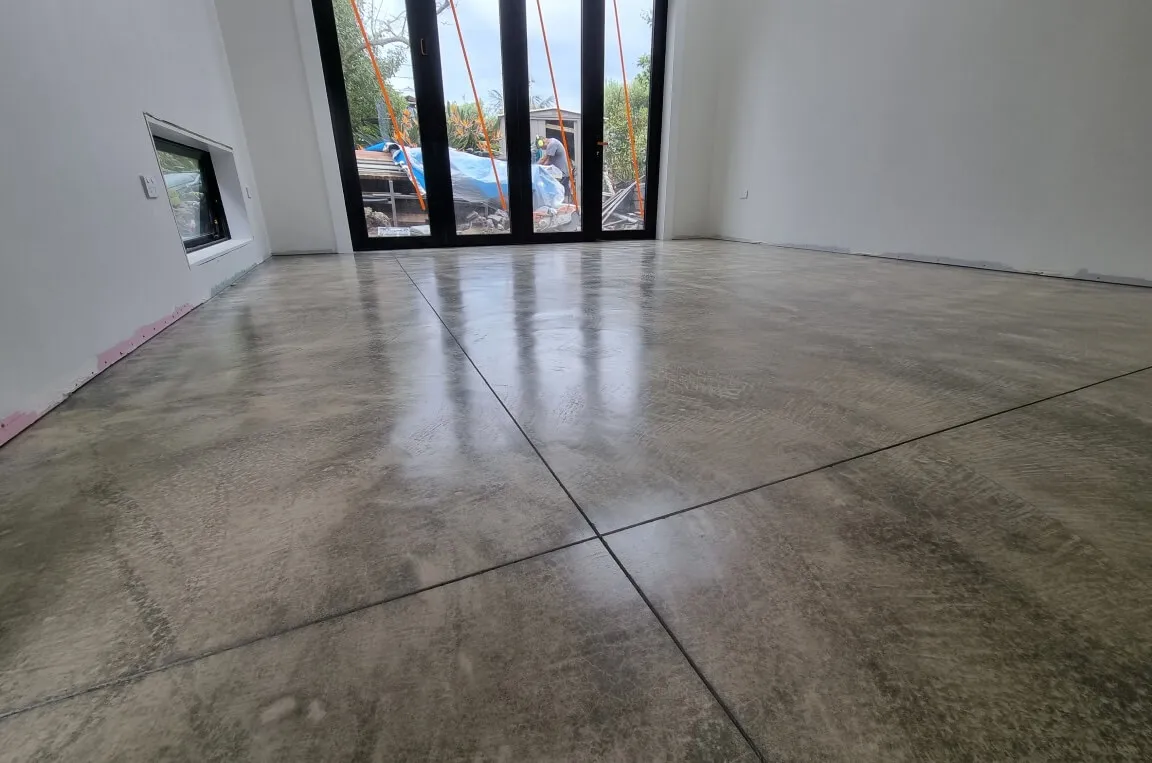
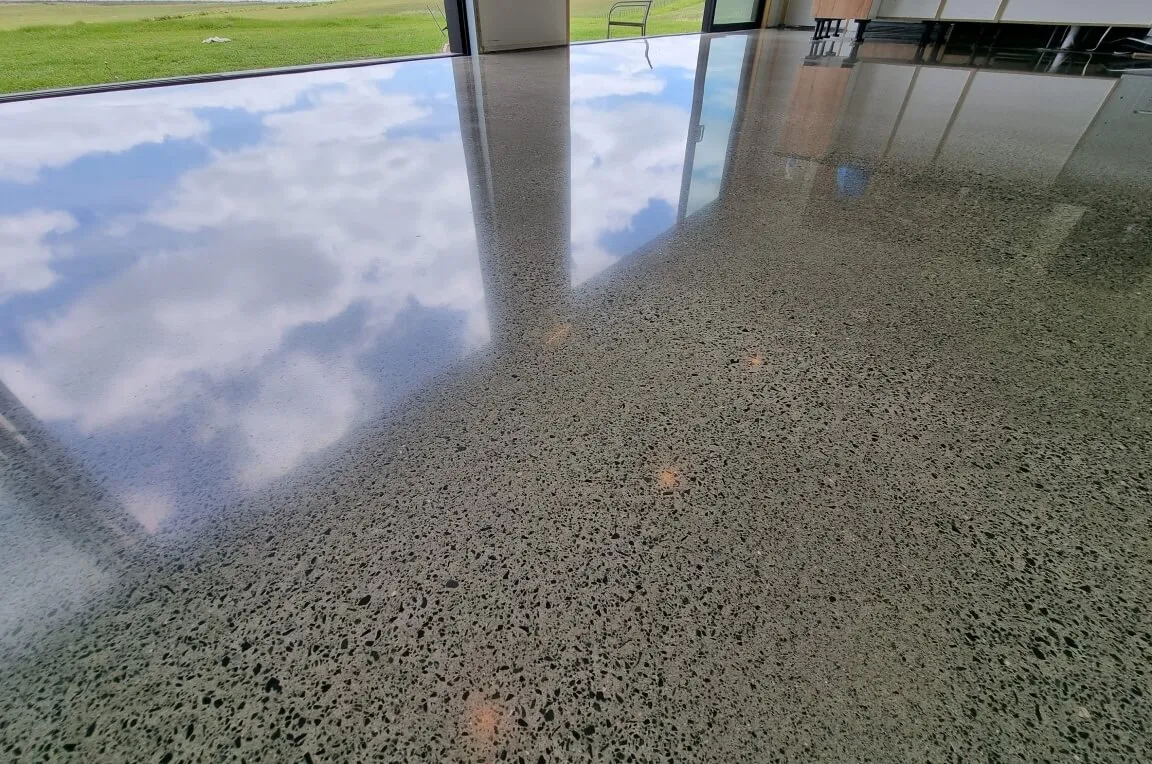
A coated shed floor in Greenhithe, before and after
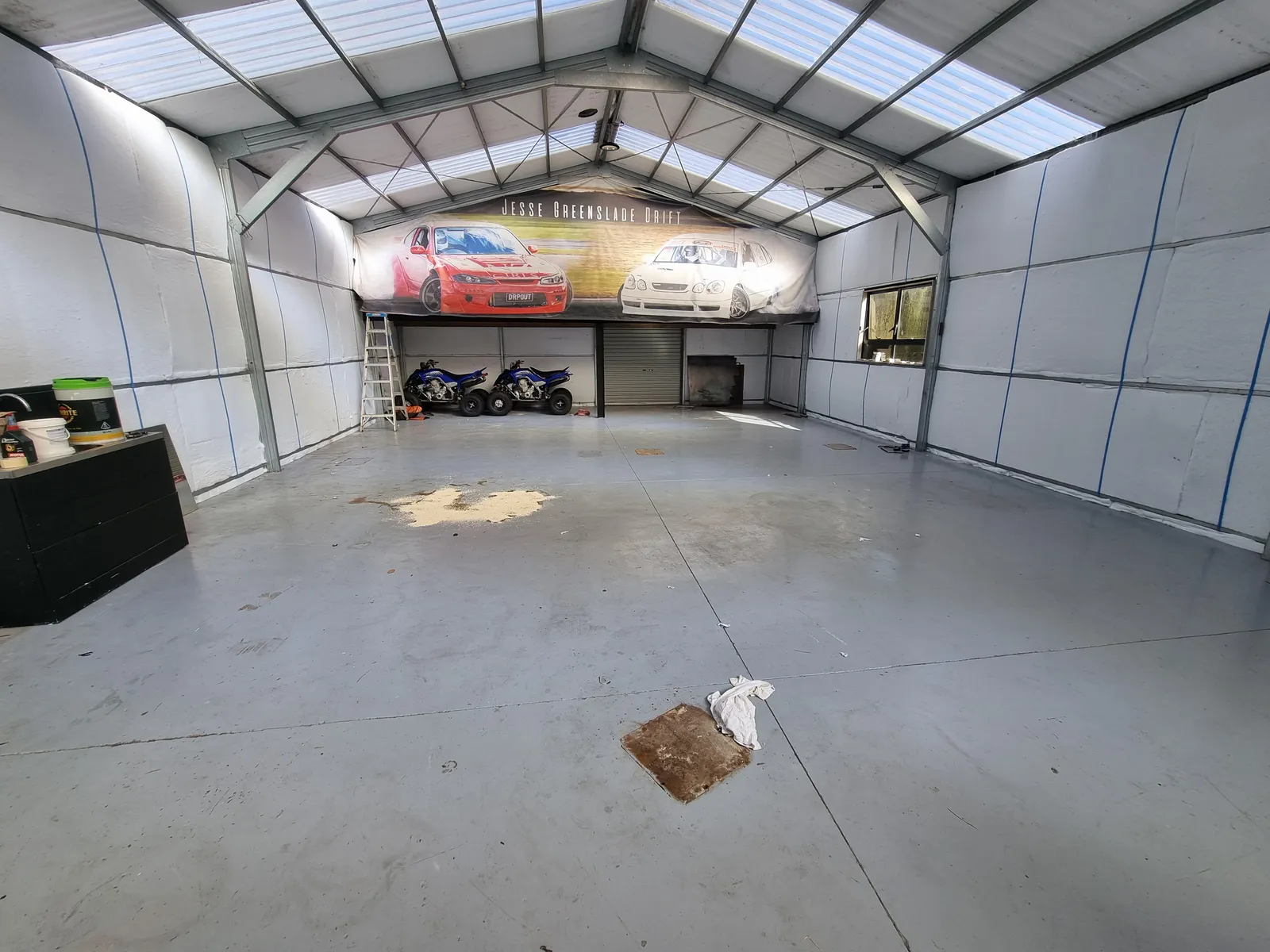
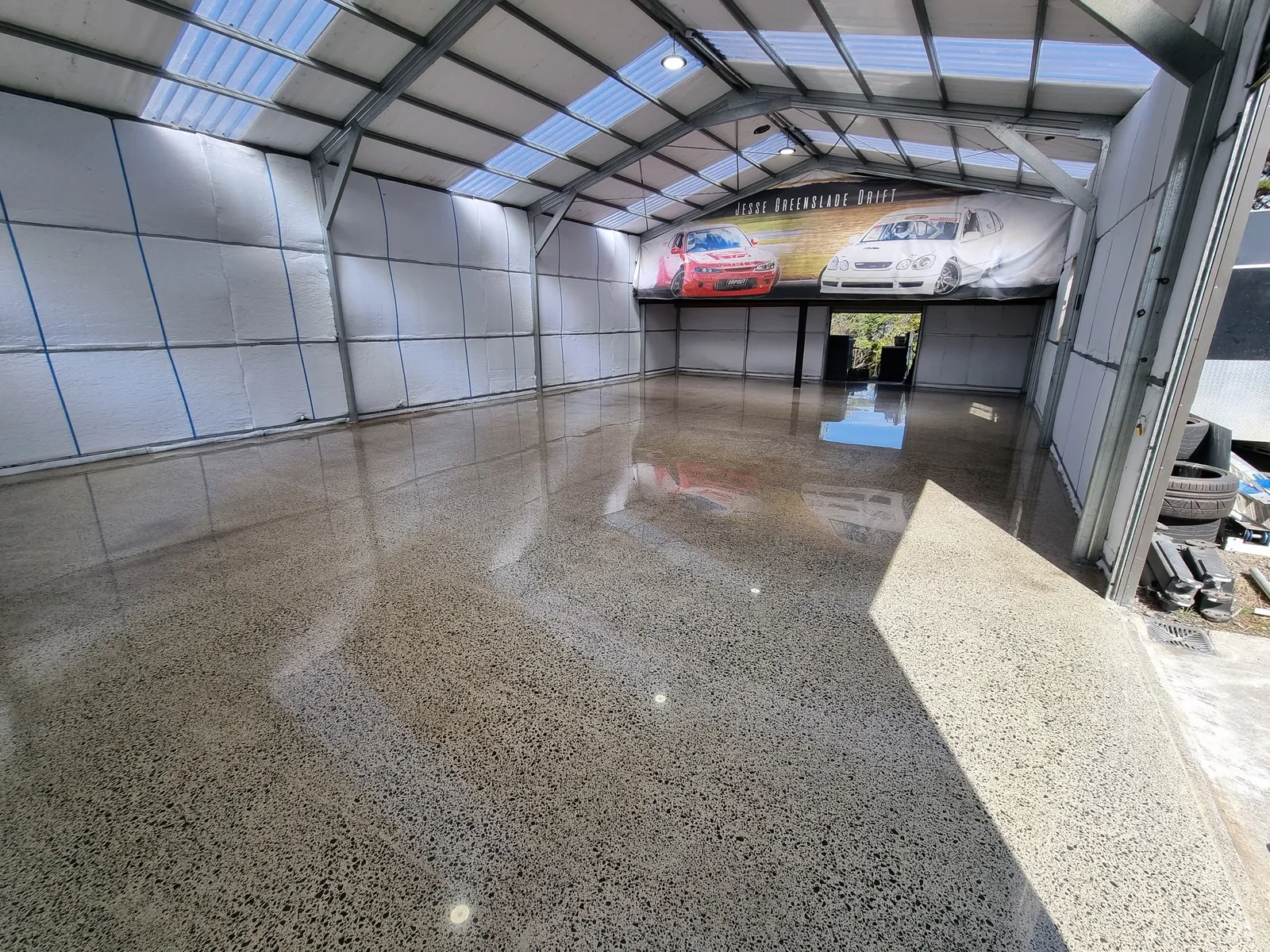 BeforeAfter
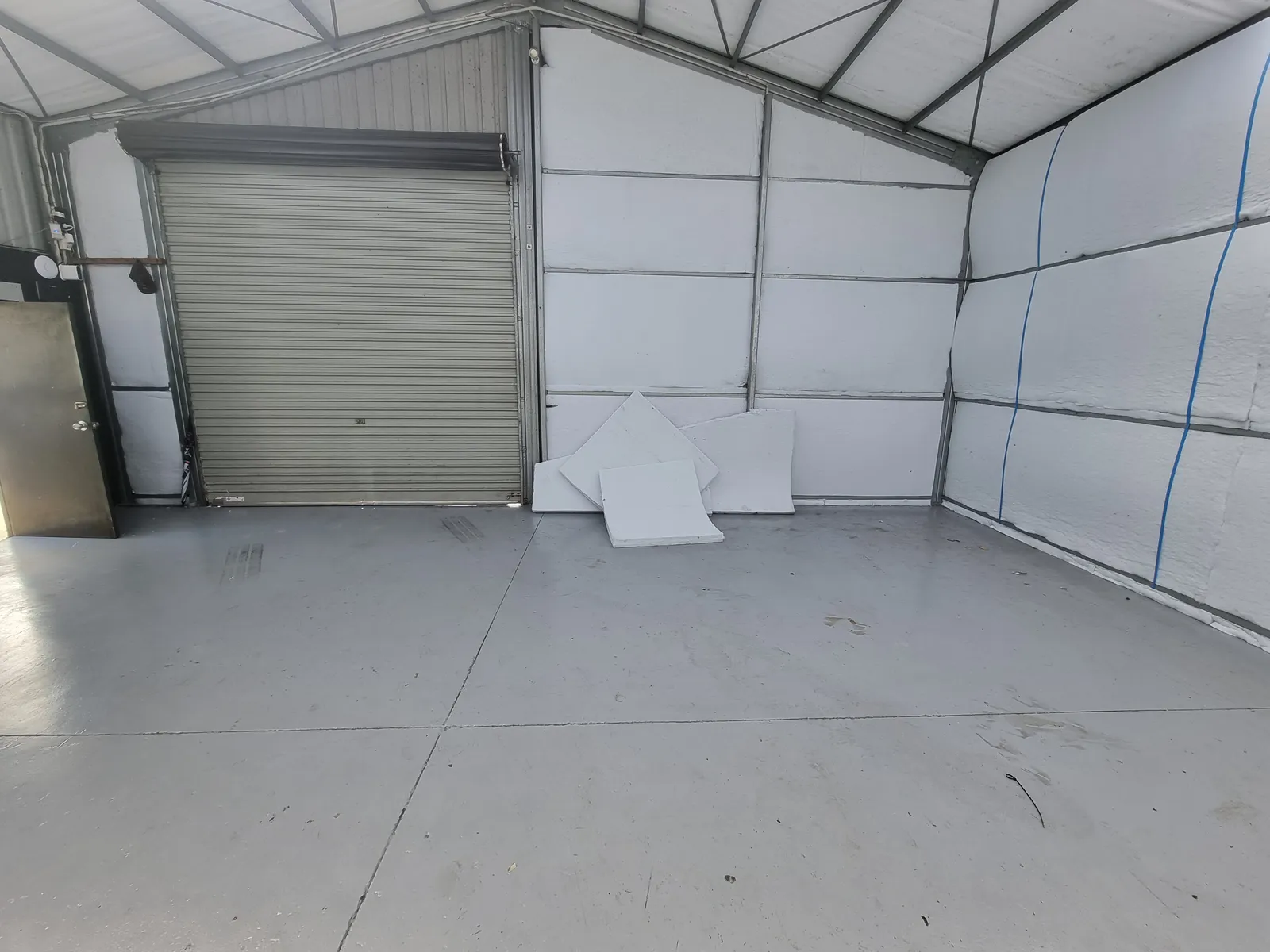 Before
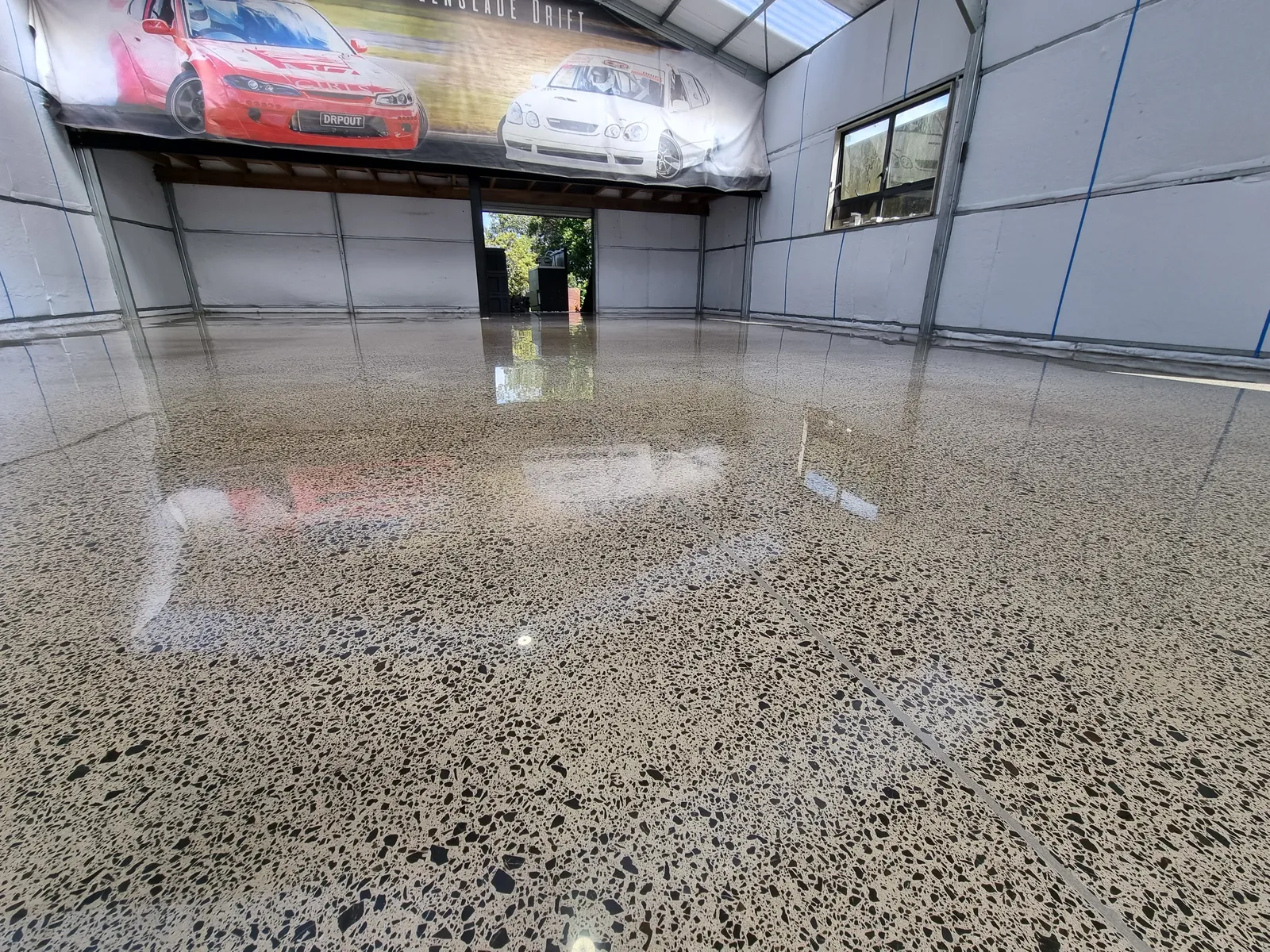 After
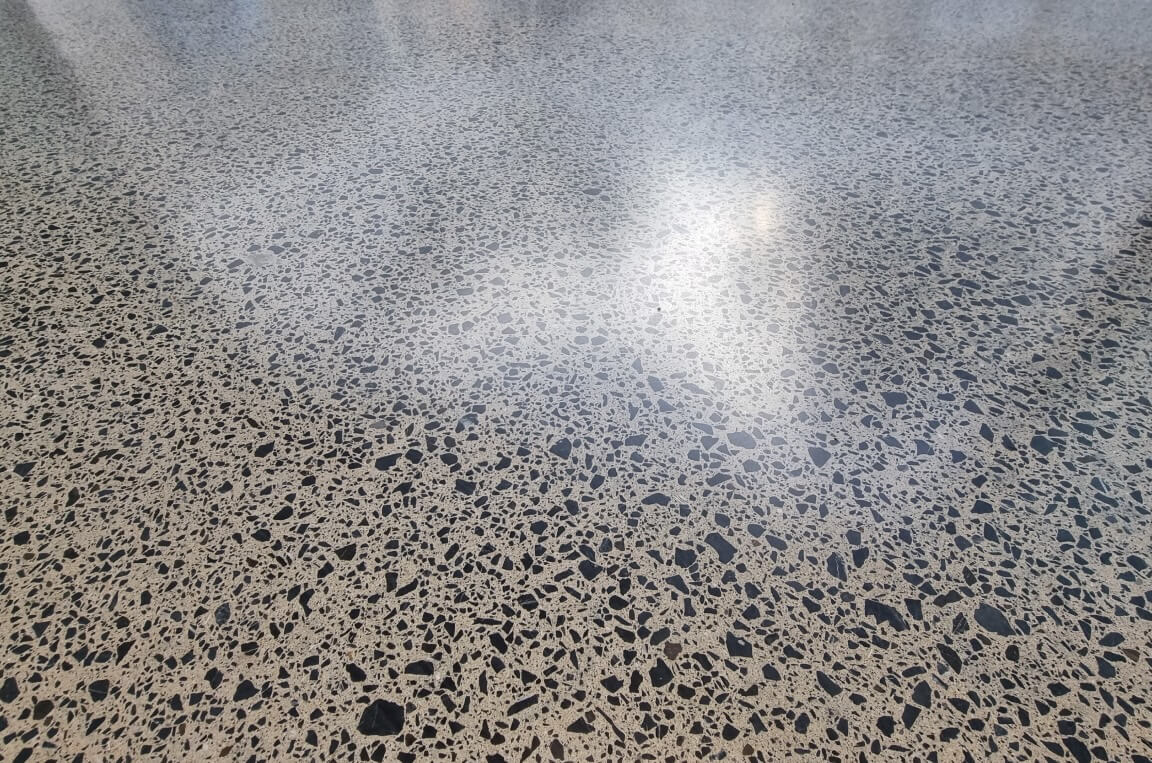
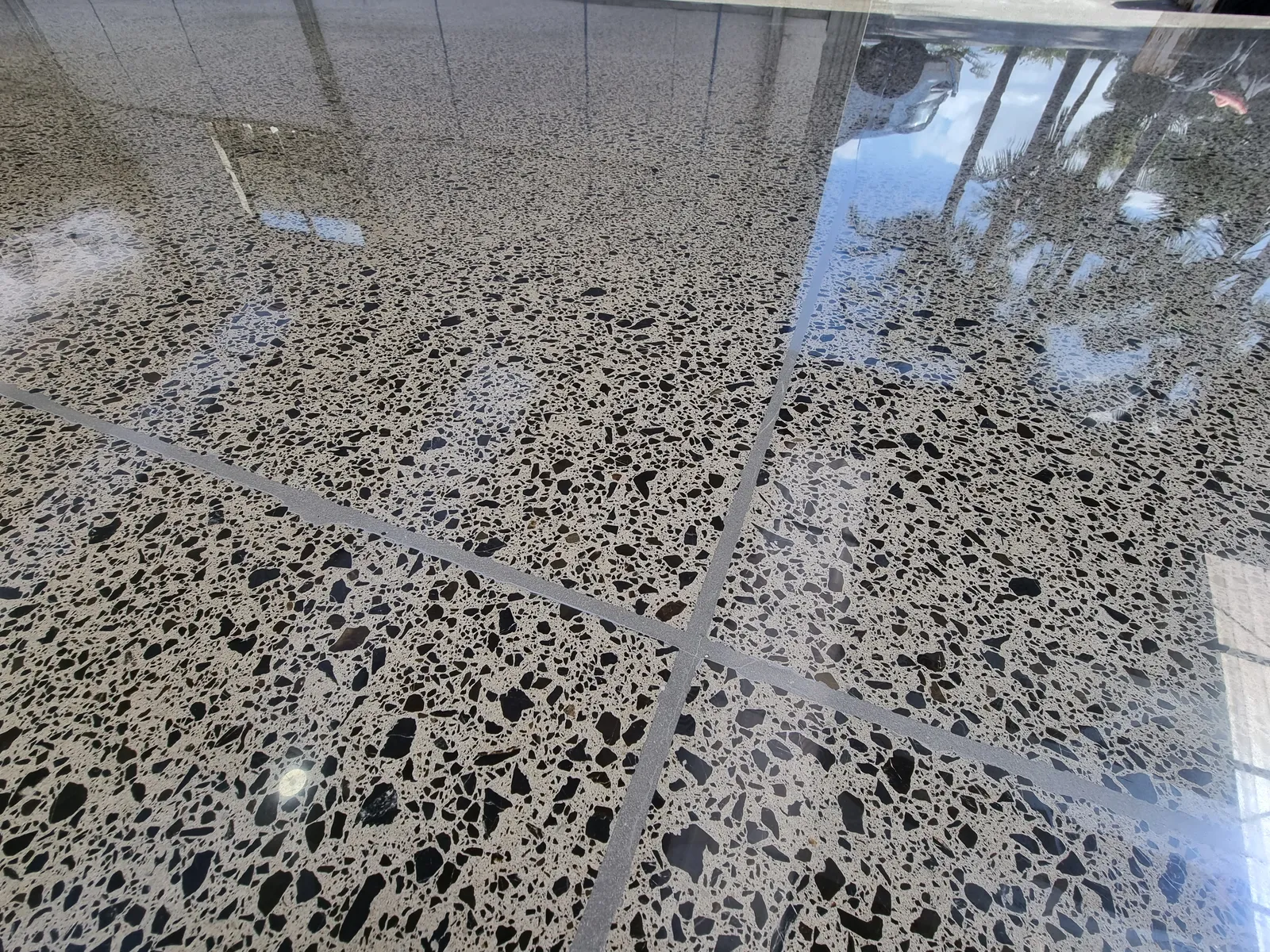 Close-up
More grinding jobs
 Concrete Grinding
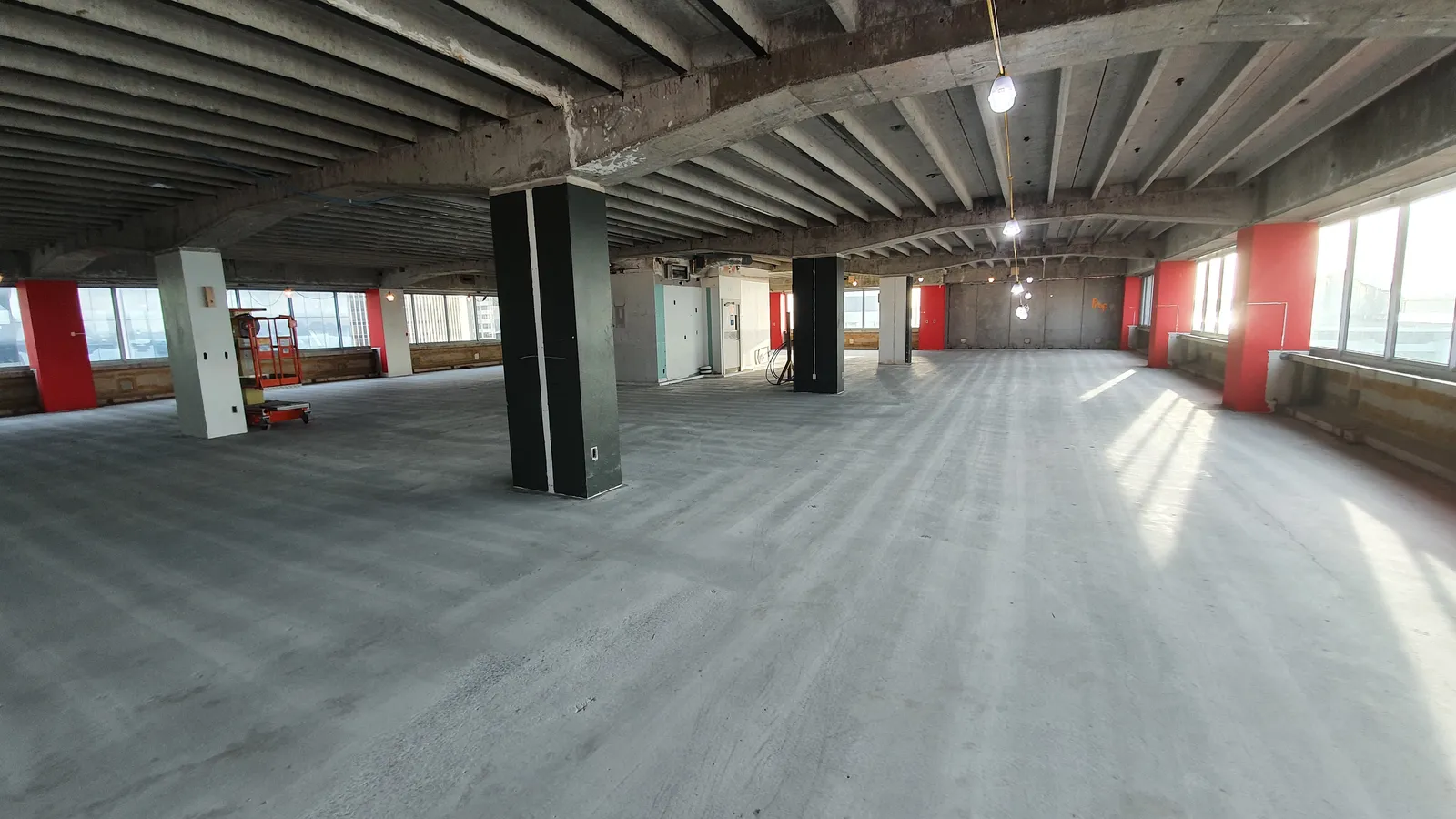
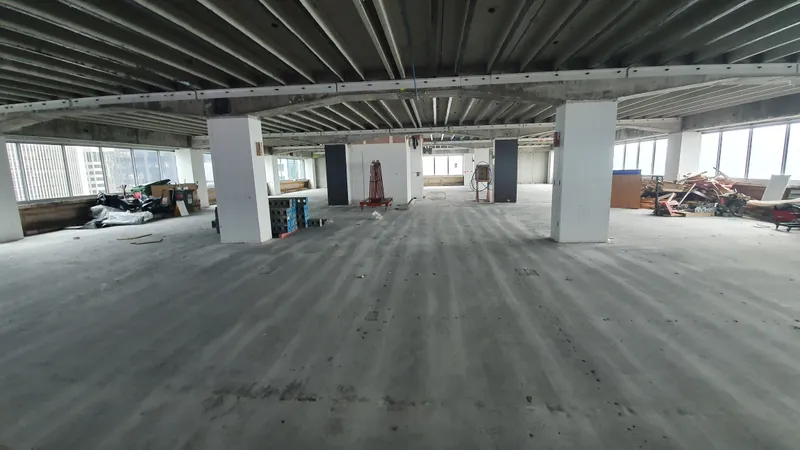
One Queen Street Strip Out
CBD, Central Auckland
As part of a major renovation at One Queen Street in Auckland CBD, large areas of concrete required coating and adhesive removal. The floor was prepared through concrete grinding for future redevelopment.
View project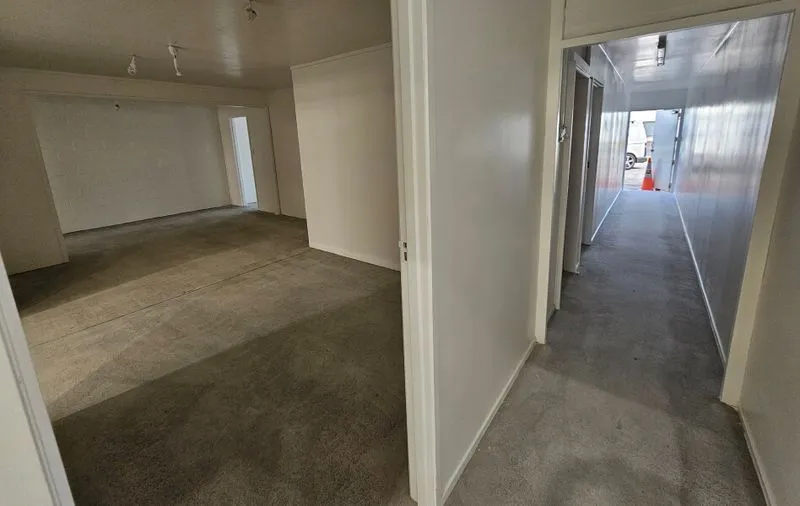 Concrete Grinding
McLeod Road, Te Atatu South
West Auckland
An old, abused floor that needed stripping back to a clean canvas ready for a new tenant.
View project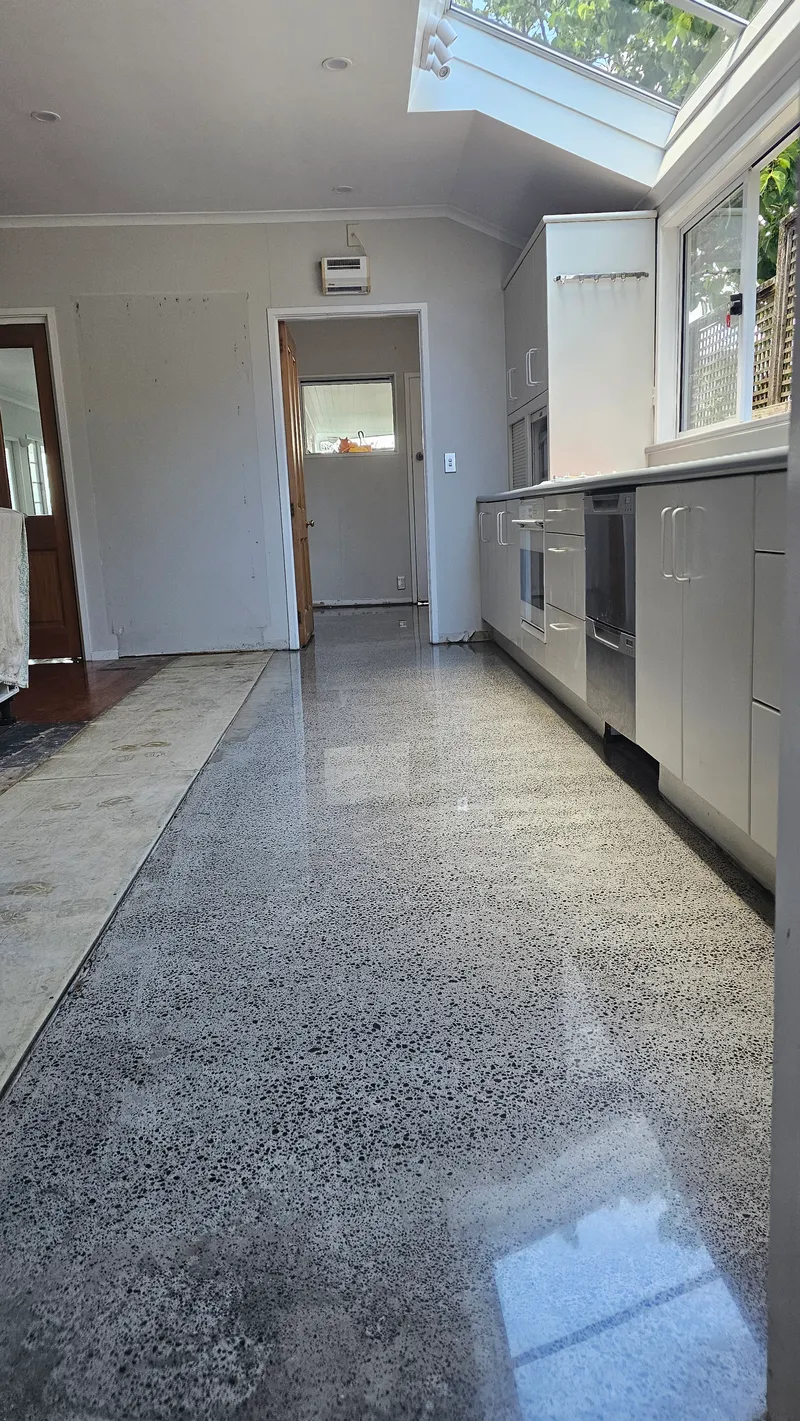 Concrete Polishing
St Heliers Cork Floor Removal
St Heliers, Central Auckland
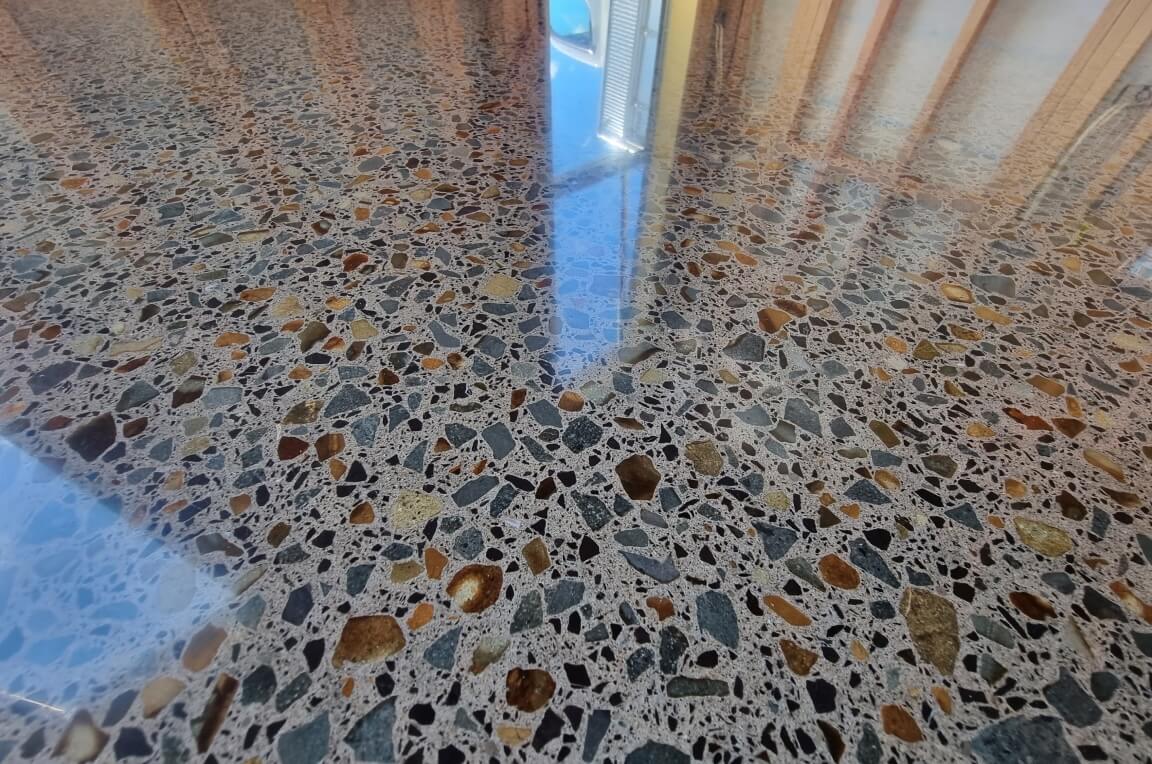
Old cork tiles were removed to reveal the concrete beneath in this Central Auckland home. The slab was then ground and polished to expose the natural aggregate in a beautiful polished concrete floor.
View projectThe process
How a concrete grinding job runs
- 01
Send us photos
Send the floor size and photos of what is on the floor. We can usually quote without a site visit, at no charge.
- 02
Grind it off
We grind off the coating, paint or glue, with industrial vacuums capturing most of the dust as we go.
- 03
Flatten high spots
High spots and lips come down: 3-5 mm, and up to about 8 mm where needed.
- 04
Hand over, or polish
You get a clean, flat slab ready for the next trade, or we carry straight on to polishing.
Common questions
Concrete grinding questions
Still unsure? Send us a photo of your floor and we'll tell you what to expect.
Can you grind off old paint and coatings?
Yes. We regularly grind off existing sealers, paints and coatings, either to prepare the slab for another floor or to polish it.
Can you grind off tile adhesive?
Yes. Once the tiles are up, we grind off the adhesive left on the slab. If you plan to polish, marks left by old tiles can be reduced but not always removed, so we do a sample grind first.
How flat can you get the slab?
Grinding takes 3-5 mm off high spots, up to about 8 mm. Beyond that, a structural concrete topping (25-50 mm) is the fix, and it can be ground and polished once cured.
Is concrete grinding dusty?
Grinding can't be completely dust-free, but our dust extraction runs through large industrial vacuums that capture most of the dust and bag it as we go.
Can you prepare a slab for tiles, vinyl or carpet?
Yes. Grinding off old coatings, glue and high spots gives the next trade a clean, flat slab. If the slab needs self-levelling compound, it goes down after our grinding, under tiles, timber, vinyl or carpet, not under a polished floor.
What does concrete grinding cost?
It depends on the area, what is coming off and how flat the slab needs to be. Send us the floor size and a few photos for a free quote. If you want the floor polished as well, our polished concrete cost guide breaks the prices down.
Where we work
Where we grind concrete
We grind floors right across Auckland.
Not on the list? Give us a call.
Related services
Other things we do