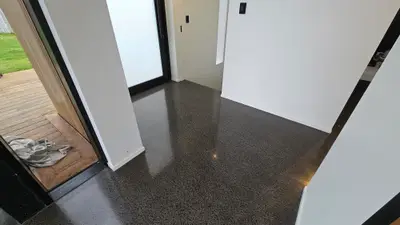
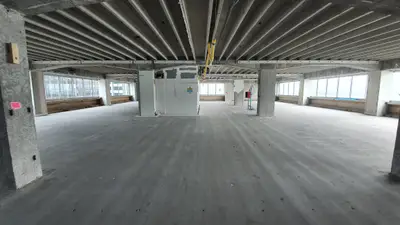
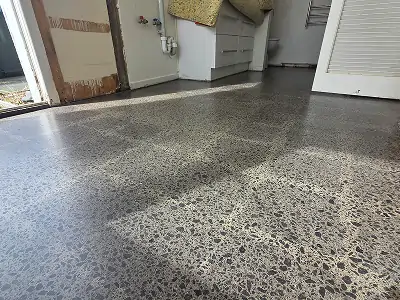
Yes. In most cases an old, stained or tired concrete slab can be transformed into a polished floor by mechanically grinding and polishing it. Grinding cuts back the worn surface, exposes fresh stone underneath and blends years of wear into a consistent finish. For severely uneven or badly damaged slabs, a concrete topping is laid first, then ground and polished once cured.

We have polished hundreds of floors across Auckland, and a good share of them started life as ugly slabs. Garage floors, warehouse floors, the grey slab hiding under decades-old carpet, tired 1980s home floors covered in glue and tack strip. This guide explains what "resurfacing" actually means when the goal is a polished floor, what grinding can and cannot fix, and what it costs.
What "Resurfacing" Really Means for a Polished Floor
People search for concrete resurfacing when they want an old floor to look new again. It is worth being clear up front, because "resurfacing" covers a few different things and only some of them lead to a genuinely polished floor.
For DSC, transforming an old slab into a polished floor comes down to two honest paths.
Grinding and polishing. This is the core service and the answer for most floors. Heavy diamond grinding machines cut back the worn top layer, expose fresh concrete and stone, then progressively finer grits polish the surface up to your chosen sheen. Nothing is added on top of the slab - the beauty comes out of the concrete you already own.
A concrete topping or overlay, then grinding and polishing. When a slab is too uneven or too damaged to grind flat, we lay a structural concrete topping (usually 25-50mm), let it cure, then grind and polish that new surface exactly like a fresh slab. This is the path for the worst-condition floors.
One thing we never do is polish over self-levelling compound. Even our lightest grinder weighs around 500kg, and running that weight over a thin, weaker layer of self-leveller leads to cracking and delamination over time. If a floor genuinely needs self-leveller to be flat, the realistic finish is tile, timber or vinyl, not polish.
What Grinding Can and Cannot Fix
Grinding is powerful, but it is not magic. Setting honest expectations is the most important part of any old-floor job.
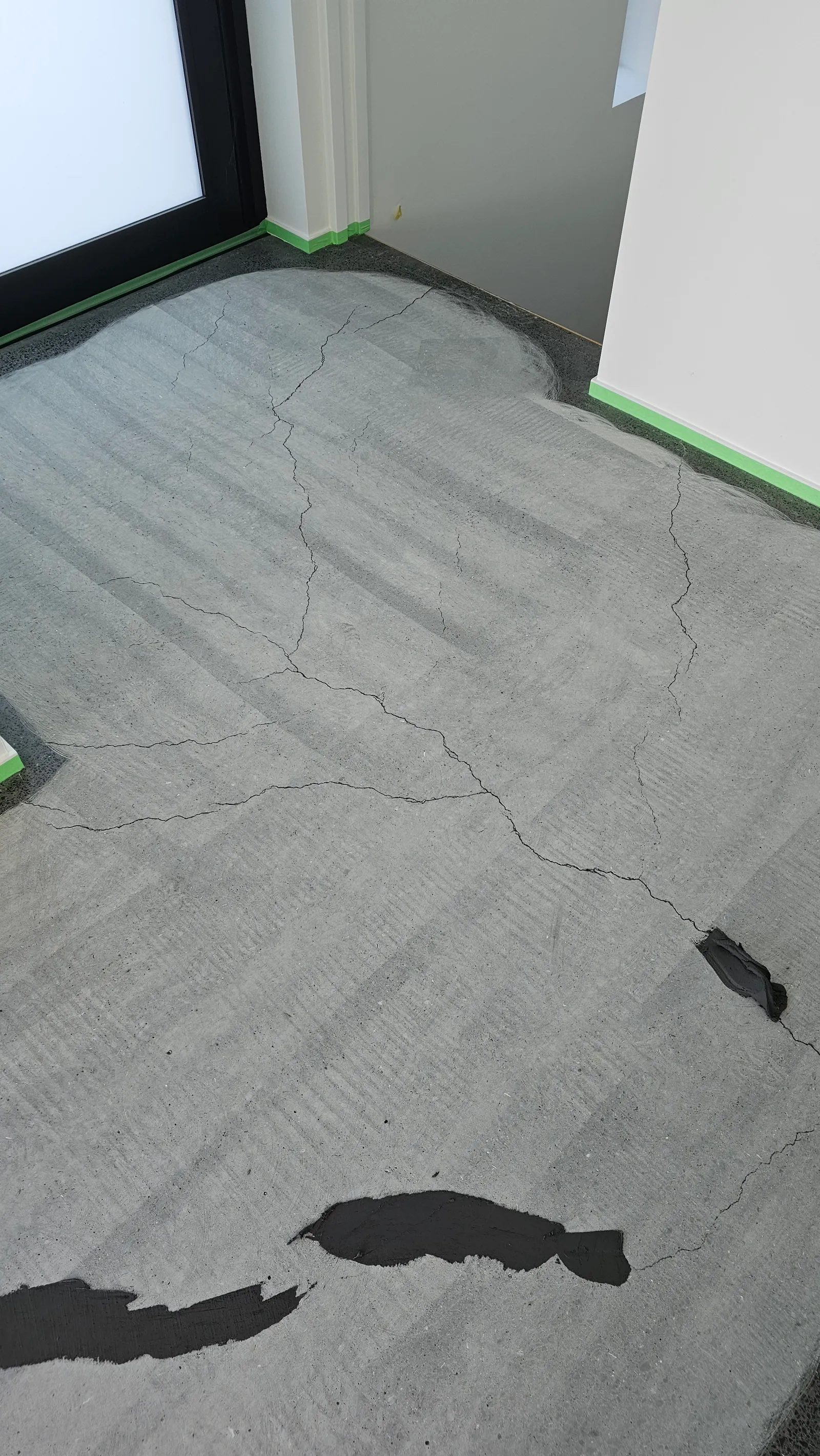
What grinding handles well. We routinely grind 3-5mm off the high points, and up to around 8mm comfortably, which levels mild-to-moderate unevenness. Grinding removes surface staining, old paint and light coatings, and it blends cracks, patches and years of wear into the natural stone exposure. Carpet tack strip damage runs 3-4mm deep, and a heavier grind makes it far less visible by blending it into the aggregate.
What grinding reduces but does not eliminate. Tile ghosting is the classic example. The shadow left where old tiles and adhesive sat is a characteristic of the slab itself, not just the surface. A deeper cut exposes more stone and blends the variation, but the underlying differences in the concrete remain to some degree. Deep cracks and heavy staining get managed and minimised, not erased. If you want a perfectly uniform, zero-variation floor, an old slab may not be the right base, and we will tell you that straight.
Why older slabs usually need a heavier grind. Old concrete is often not perfectly flat, and glue or adhesive smears and burns under light grinding. A medium to heavy grind is the honest default for renovation and old-slab work, because it levels the floor, blends imperfections and removes contaminants properly. True salt and pepper (the lightest grind) is rarely achievable on an older or previously-covered slab. For more on what happens once carpet comes up, see our guide on polishing concrete after carpet removal.
The Transformation Process, Step by Step
Every old-slab job follows the same consistent process across the whole floor. We do not treat edges, transitions or entrances differently.
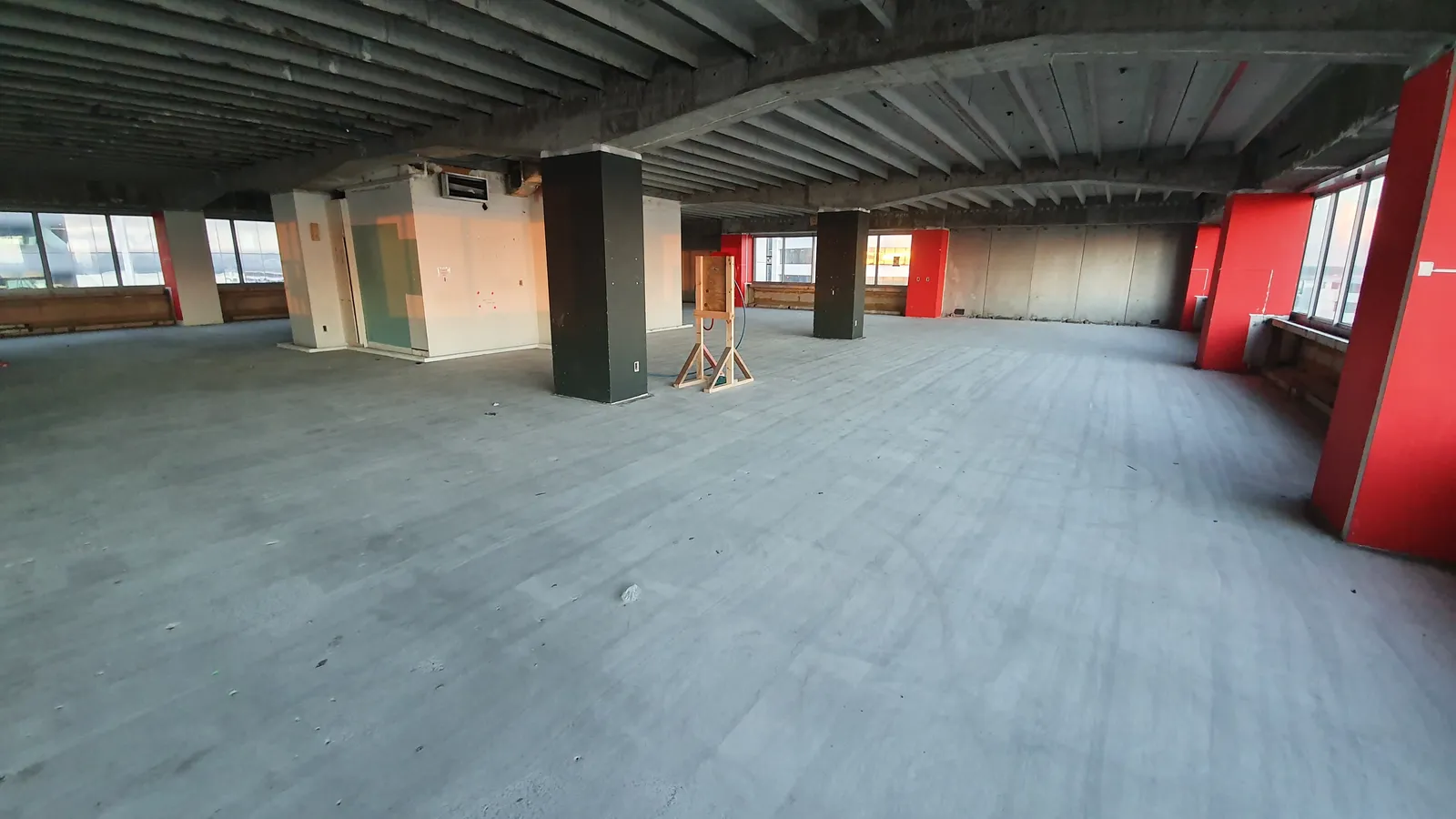
Sample grind on arrival. Before committing to a finish, we grind a test patch so you can see exactly how your slab responds. Old floors are unpredictable, and this removes the guesswork on aggregate exposure and colour.
Repair and prep. Cracks, tack strip holes and joints are filled and prepped. On a slab too uneven to grind flat, this is the stage where a concrete topping goes down instead.
Grinding. Heavy diamond grinding cuts the surface back, levels the high points and exposes fresh stone. Depth of cut depends on what the slab needs and the look you want.
Polishing. Progressively finer diamond grits refine the surface up to your chosen sheen, from matte through to high gloss.
Densifying and sealing. A densifier hardens the concrete, and a penetrating sealer soaks into the slab to protect it. We use penetrating sealers, not topical coatings, so there is nothing on top to peel or flake.
For most homes we recommend a satin to semi-gloss finish (roughly 200 to 400 grit). Satin and semi-gloss are distinct, adjacent levels, and sheen is subjective, so the on-site sample grind is the reliable way to confirm the look. Matte is less slippery but shows staining and wear more readily, which is worth weighing up.
What Does It Cost to Transform an Old Concrete Floor?
Pricing depends on the slab's starting condition, the size of the floor and how much grinding is needed. All prices below are + GST. If your slab needs repair work before it can be polished, our what concrete floor repair costs in Auckland guide covers those costs separately.
| Starting condition | DSC approach | Indicative price (+ GST) |
|---|---|---|
| Plain slab exposed after carpet or tile removal | Medium to heavy grind, then polish | $90-$120 per m2 |
| Old but structurally sound slab (garage, older home) | Grind and polish | ~$100 per m2 |
| Existing polished floor gone dull or worn | Regrind and repolish (restoration) | $60-$100 per m2 |
| Severely uneven or damaged slab | Concrete topping, then grind and polish | Priced per job - get a quote |
| Small floor under 20m2 | Minimum charge applies | $2,250 flat |
Old-slab and renovation work sits at the higher end because these floors need more grinding to level and blend. A crisp, honest quote comes after we have seen the slab. For a full breakdown of what drives the price, read our polished concrete cost guide for Auckland, or head straight to our concrete grinding and polishing service page.

Is Your Old Slab a Good Candidate?
The best way to know is a site visit and a sample grind, but a few things point in the right direction. A structurally sound slab with no major heave or movement is ideal. Surface stains, old paint, tack strip holes and minor cracks are all normal and fixable. Slabs that are badly broken up, actively moving or wildly out of level are the ones that usually need a topping first.
Polished concrete done well lasts 20+ years with good maintenance, dulling gently over time like timber or tiles and refreshed with a periodic rebuff. Transforming the slab you already have is often better value than tearing it out and starting again.

Get a free quote and we will assess your slab honestly, including whether polishing is the right call for your floor.
Frequently Asked Questions
How much does it cost to resurface or transform an old concrete floor in Auckland?
For a plain slab exposed after carpet or tile removal, expect around $90-$120 per m2 + GST because older slabs need a heavier grind. An old but sound slab like a garage or 1980s home floor is closer to ~$100 per m2 + GST. Regrinding an existing polished floor that has gone dull runs $60-$100 per m2 + GST. Floors under 20m2 attract a $2,250 + GST minimum charge. A topping-and-polish job on a severely damaged slab is priced per job.
Can grinding remove stains, paint and old glue?
Yes. A heavy grind cuts through surface staining, old paint and carpet adhesive by removing the top layer of concrete. Light grinding smears and burns glue, which is why old floors need a heavier cut to clean up properly.
Will my old floor look perfect and uniform after polishing?
Not perfectly uniform. Grinding blends and minimises cracks, patches and tile ghosting, but the underlying character of an old slab remains to some degree. That variation is part of the appeal for most people. If you want zero variation, an old slab may not be the right base, and we will be upfront about that.
What if my slab is too uneven to grind flat?
For severe unevenness we lay a structural concrete topping (typically 25-50mm), let it cure, then grind and polish it like a fresh slab. We do not polish over self-levelling compound, because our machines are too heavy for that thin layer and it fails over time.
How long does the transformation take?
Most residential floors take a few days on site depending on size, the depth of grind required and any repair or topping work. We give you a clear timeline with your quote after seeing the slab.
Is a polished old slab durable enough for a garage or workshop?
Yes. Mechanically polished concrete is extremely hard-wearing and copes well with vehicles, foot traffic and equipment. With good maintenance it lasts 20+ years, refreshed with a periodic rebuff rather than a full redo.