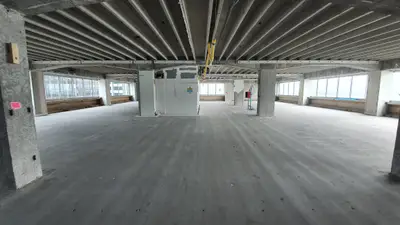
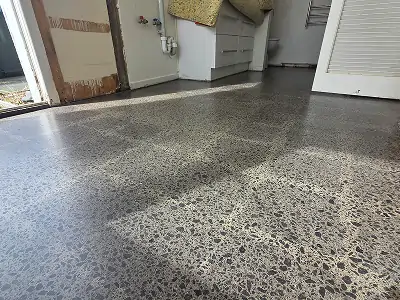
Cracks in a slab destined for a polished concrete floor are filled and blended as part of standard floor prep, before any polishing begins. We assess the slab, clean out every crack and control joint, fill them with a hard-setting repair resin, then grind. Grinding blends the filled cracks into the surrounding aggregate, though faint lines can remain. That is a slab characteristic, not a fault in the finish.

If you are looking at a cracked slab and wondering whether it can still be polished, the short answer is almost always yes. Cracks are normal in concrete. Nearly every floor we grind and polish across Auckland has some cracking, and dealing with them is a routine step, not a dealbreaker. This guide walks through how crack repair fits into the grinding and polishing process, what we can and cannot make disappear, and how to set honest expectations before the machines arrive.
Cracks Are Normal in Concrete
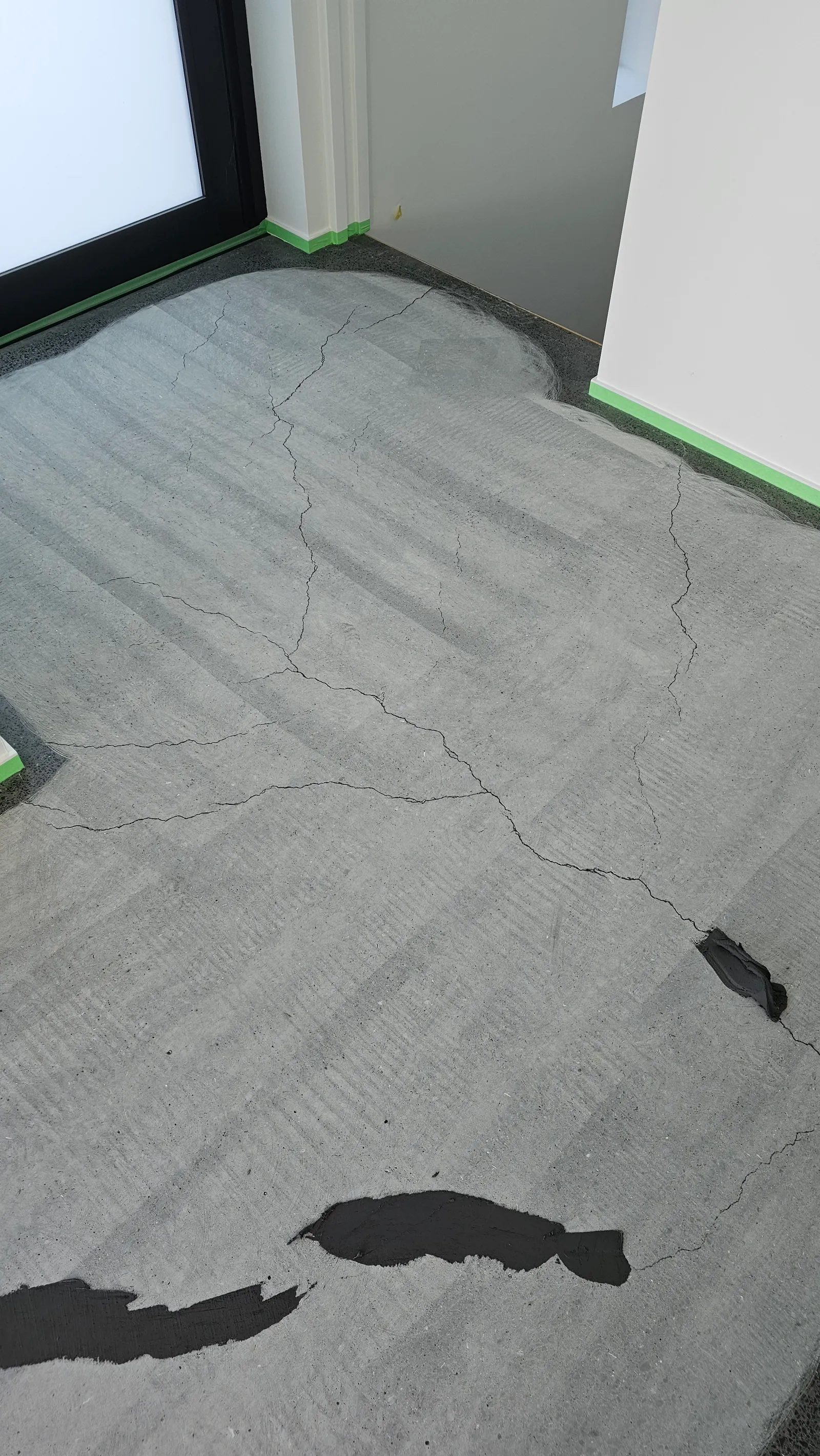
Concrete shrinks as it cures and moves with temperature and load over its life. That movement produces cracks. It is one of the most predictable characteristics of a concrete slab, and it does not mean the floor is failing or unsuitable for polishing.
The important thing is knowing which type of crack you are looking at, because that decides how we handle it during prep. Here is the quick reference we work from on site.
| Crack type | What it looks like | How it is handled before polishing |
|---|---|---|
| Shrinkage / hairline | Fine random lines, often across the surface | Cleaned out and filled with repair resin, then ground and blended |
| Crazing (map cracking) | Web of shallow polygon cracks over an area | Filled where visible, largely closed up by grinding the surface |
| Control / expansion joints | Straight sawn or formed lines at set spacing | Filled with a flexible or hard joint filler; usually kept as a visible line |
| Structural / active cracks | Wider cracks, sometimes with height difference | Assessed first - filled and blended, but movement may reopen them over time |
Most residential floors are a mix of the first two types, which fill and blend well. Structural cracks are less common and get an honest conversation before we start.
What This Page Is Not About
Worth being clear, because "concrete crack repair" covers two completely different trades and people land here looking for the other one.
This article is about cracks in a slab you want turned into a polished concrete floor. The repair happens as part of grinding and polishing, and the finished result is a polished floor.
We are not structural concrete repair specialists. If you are dealing with foundation cracks, a slab that is lifting or dropping, water coming through, cracks in a wall or a retaining structure, or you have been told you need crack injection or underpinning, that is a different trade and you want a structural engineer or a specialist concrete repair contractor. We would rather point you in the right direction than take a look and waste your time.
If your slab is cracked and you want to know whether it can still become a good-looking floor, you are in the right place. If you want to know what that costs across the range of damage we see, our concrete floor repair cost guide for Auckland has the numbers.
How We Repair Cracks During Floor Prep
Crack repair is not a separate job you book on its own. It is built into the floor prep stage that comes before grinding and polishing. On a typical Auckland floor the sequence looks like this.
Assessment and sample grind. When we arrive we look at the whole slab, map out the cracks and joints, and often do a small sample grind. This shows how the concrete responds and lets you see the finish before committing. It is also when we flag any structural cracks that need managing rather than simply filling.
Cleaning out the cracks. Each crack is opened up and cleaned so the filler bonds to solid concrete rather than dust and debris. Skipping this is why cheap patch jobs fail. A clean crack takes the repair material properly.
Filling. We fill the cracks with a hard-setting repair resin, and joints with the appropriate filler. The material sits slightly proud so it can be ground back flush. On floors where aggregate is exposed, the fill is chosen to sit in sympathy with the surrounding stone.
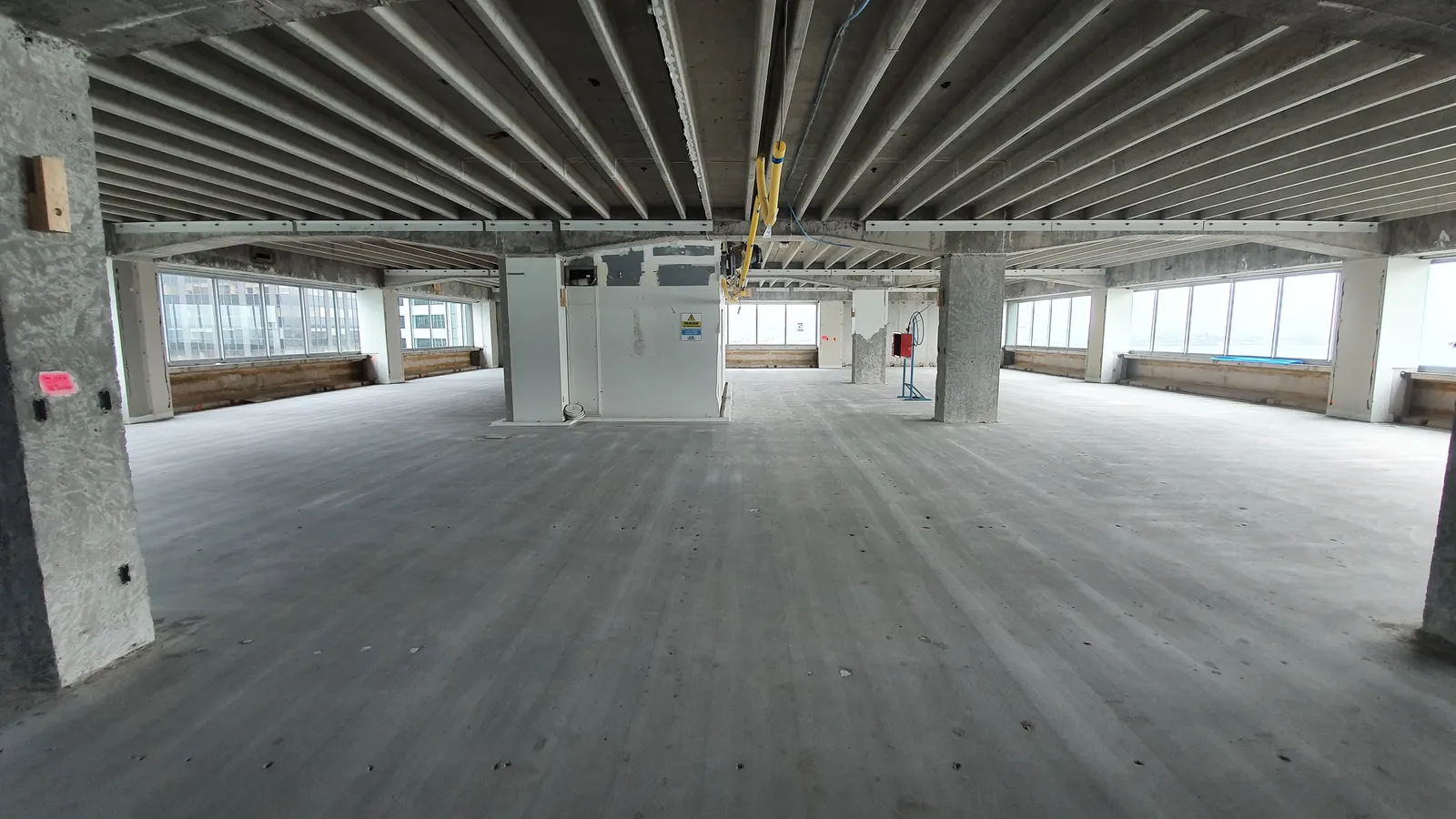
Grinding and polishing. Once the fills have cured we grind. Grinding does two jobs at once - it flattens the repairs level with the floor, and it exposes the aggregate that visually breaks up and disguises the old crack line. The heavier the grind, the more the surrounding stone competes for the eye and the less a filled crack stands out.
This is the same reason renovation and carpet removal jobs usually call for a medium to heavy grind rather than the lightest salt and pepper cut. A heavier grind levels an older slab, blends imperfections, and helps filled cracks settle into the overall stone exposure. If you have just pulled up carpet, our guide on polishing concrete after carpet removal covers how tack strip holes and adhesive are dealt with in the same prep stage.
Control Joints Are Different From Cracks
Control joints (also called expansion joints) are the straight lines cut or formed into a slab on purpose. They are engineered to let the concrete move and crack in a controlled place rather than randomly. We do not grind these away, because they are doing a structural job.
Instead we clean and fill them with the right joint filler and keep them as a deliberate, tidy line in the finished floor. On many floors the filled joint becomes a design feature rather than a flaw. Trying to hide a working joint by grinding it flat invites the slab to crack somewhere else, so we leave it to do its job.

Honest Expectations: Blended, Not Erased
This is the part worth being straight about. Grinding and polishing blends and minimises cracks. It does not erase them.
A filled crack can still be faintly visible in the finished floor, especially under raking light or in a high-gloss finish that reflects everything. The fill is a different material to the surrounding concrete, so it can read slightly differently in colour or texture. On a busy salt and pepper or heavier aggregate finish, filled cracks disappear into the stone for most people. On a plainer, low-aggregate floor they can be easier to pick.
None of this is a defect. It is the honest reality of working with an existing slab, and it is exactly why we do a sample grind first. If you want a floor with zero variation and no trace of its history, an existing cracked slab may not be the right base, and we will tell you that up front rather than overpromise. For most homeowners, a blended, characterful floor with faint lines here and there is part of the appeal of polished concrete over a printed, uniform product.
If a slab is so damaged or uneven that filling and grinding will not give a sound result, the path is a concrete topping or overlay that we grind and polish once cured, rather than trying to polish a failing surface. That is a different conversation, and one we are happy to have honestly.
What You Can Do Before We Arrive
There is a little prep that saves time on the day. If you are removing carpet yourself, you can also pull up the tack strips around the edges. The nail holes get filled during the polishing process either way, so there is no downside to removing them, and it saves us doing it on site.
Beyond that, clearing the room and lifting any fixed items off the floor is the main help. Everything to do with the cracks - cleaning, filling, grinding, blending - is our job and part of the standard prep. We have polished hundreds of floors across Auckland, and crack repair is simply one of the routine steps that happens before the shine goes on. See our full concrete grinding and polishing service for how the rest of the process fits together, or get a free quote for your specific floor.
Frequently Asked Questions
How much does it cost to repair cracks before polishing?
Crack filling and joint repair are part of standard floor prep, not a separately priced job. They are included in the per m2 grinding and polishing price. For a renovation floor where carpet or tiles have been removed and cracks need dealing with, expect roughly $90-$120 per m2 + GST, with a minimum charge of $2,250 + GST on very small areas. Every slab is different, so the reliable figure is a quote after we see it. Our polished concrete cost guide breaks down the full pricing. If the damage goes beyond cracks, our concrete floor repair cost guide covers what wider repairs cost in Auckland.
Can badly cracked concrete still be polished?
In most cases, yes. Shrinkage, hairline, and crazing cracks fill and blend well, and a medium to heavy grind disguises them into the aggregate. Structural or actively moving cracks need an honest assessment first. Where a slab is beyond repair, a concrete topping or overlay is the route to a polished finish rather than polishing the failing surface.
Will the cracks completely disappear after polishing?
No, and any polisher who promises that is overselling it. Grinding and polishing blends and minimises filled cracks, so they fade into the stone and are unnoticeable to most people. Faint lines can remain, particularly on plainer finishes or under strong light. It is a slab characteristic, not a fault.
Do control joints get ground away?
No. Control and expansion joints are engineered to let the slab move, so we clean and fill them and keep them as a tidy line rather than grinding them flat. Removing a working joint just makes the concrete crack somewhere else.
Should I fill the cracks myself before you come?
There is no need. DIY crack filler is usually the wrong material and sits differently to our repair resin once ground. Leave the cracks to us. The one job that does help is pulling up carpet and tack strips if you are removing carpet, since the holes get filled during prep anyway.
How long does a repaired and polished floor last?
A mechanically polished floor lasts 20+ years with good maintenance, with a rebuff every few years to keep the sheen up. Filled cracks stay put as part of that. Active structural movement can reopen a crack over time, which is why we assess those honestly before starting. More on longevity in our guide to how long polished concrete lasts.
Internal Links Used
1. `/resources/polish-concrete-after-carpet-removal` (carpet removal prep - tack strips and adhesive) 2. `/resources/polished-concrete-cost-auckland` (pricing guide - linked from cost FAQ) 3. `/resources/how-long-does-polished-concrete-last` (longevity - linked from lifespan FAQ) 4. `/services/grinding-polishing` (main service page - grinding and polishing process)Images Used
| Position | Catalog ID | Why selected |
|---|---|---|
| Hero | `cracks-and-joint-repairs--20240910-155044` | After shot of a residential floor flawless after crack repair - literally the article subject (crack-repaired then polished) |
| Cracks Are Normal | `cracks-and-joint-repairs--20240909-085652` | Before close-up of a badly cracked slab with masking tape, ready for prep - shows the starting condition |
| How We Repair | `cracks-and-joint-repairs--20240819-105353` | During shot of crack and joint repair with filler material - shows the filling step in progress |
| Control Joints | `cracks-and-joint-repairs--20221027-155034` | Close-up of sealed expansion joints kept as tidy lines - supports the control-joint section |
| Honest Expectations | `prep-grinding--20210813-125607` | Prep grinding stage, raw ground floor ready for polishing - supports the blending/grinding explanation |