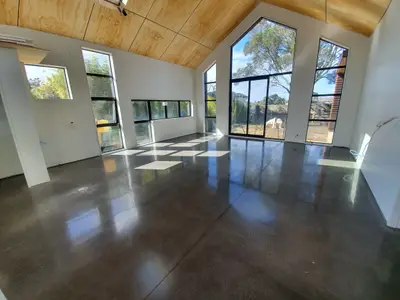
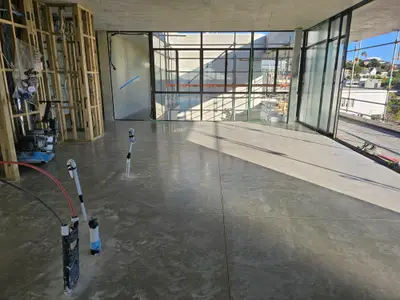
The short answer: grind and polish the floor after the house is weathertight and gib lined, but before paint. Polished concrete is a grinding and polishing process, not just a final buff, so it kicks up dust and needs room to work. Getting in before gib stopping is even better when your build sequence allows it, because there's no risk of grinding dust or splash-back hitting fresh plaster. Either way, the grind and polish must happen before skirtings, paint, and cabinetry. Get this sequence wrong and you'll either redo work or end up with skirtings that look like they're floating above the floor.
About this guide. We polish hundreds of new build floors across Auckland every year and the build-timing question is the most common one we get from builders and homeowners. The recommendations here come from 14 years of hands-on work and Bowie Houston's experience with the full build sequence.
Last reviewed: May 2026 | Author: Bowie Houston, Director, Diamond Shine Concrete
This article is for new build owners and builders working out where polishing fits in the construction sequence. We polish hundreds of new build floors across Auckland every year and the timing question is the most common one we get from builders and homeowners.
The Standard Build Sequence for Polished Concrete
Here's the sequence that works on the vast majority of Auckland new builds. Each step has a reason:
| Step | Stage | Notes |
|---|---|---|
| 1 | Slab poured and cured | Allow 28+ days curing before grinding |
| 2 | Frame and roof on | Floor protected from weather |
| 3 | Wrap and weathertight | No more rain landing on the slab |
| 4 | Gib lined (gib up but not stopped) | Walls lined, joints not yet plastered |
| 5 | Grind and polish - ideal window | Before plaster; no risk of dust damaging fresh stopping |
| 6 | Gib stopping and plastering | Walls finished |
| 7 | Grind and polish - acceptable window | Last chance before paint goes on |
| 8 | Paint | Walls done |
| 9 | Skirtings, doors, cabinetry | Installed AFTER polish, never before |
The key rule: polishing must happen before paint, and ideally before plaster. After paint, you're protecting freshly painted walls from grinding dust, which is risky and slows everything down. Before paint and before plaster, the building is rough enough that grinding is straightforward.
Why Polishing Before Gib Stopping Is Better
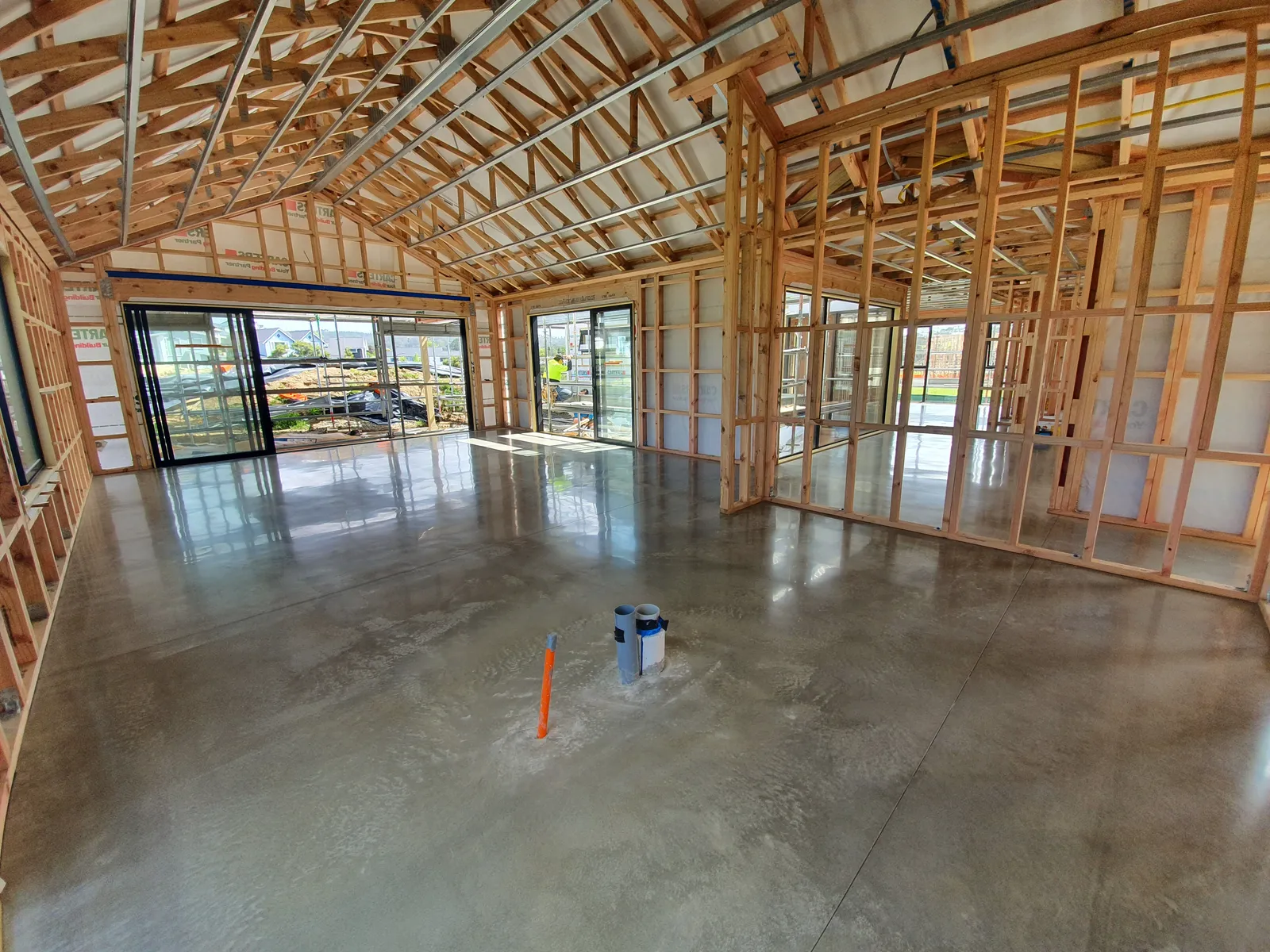
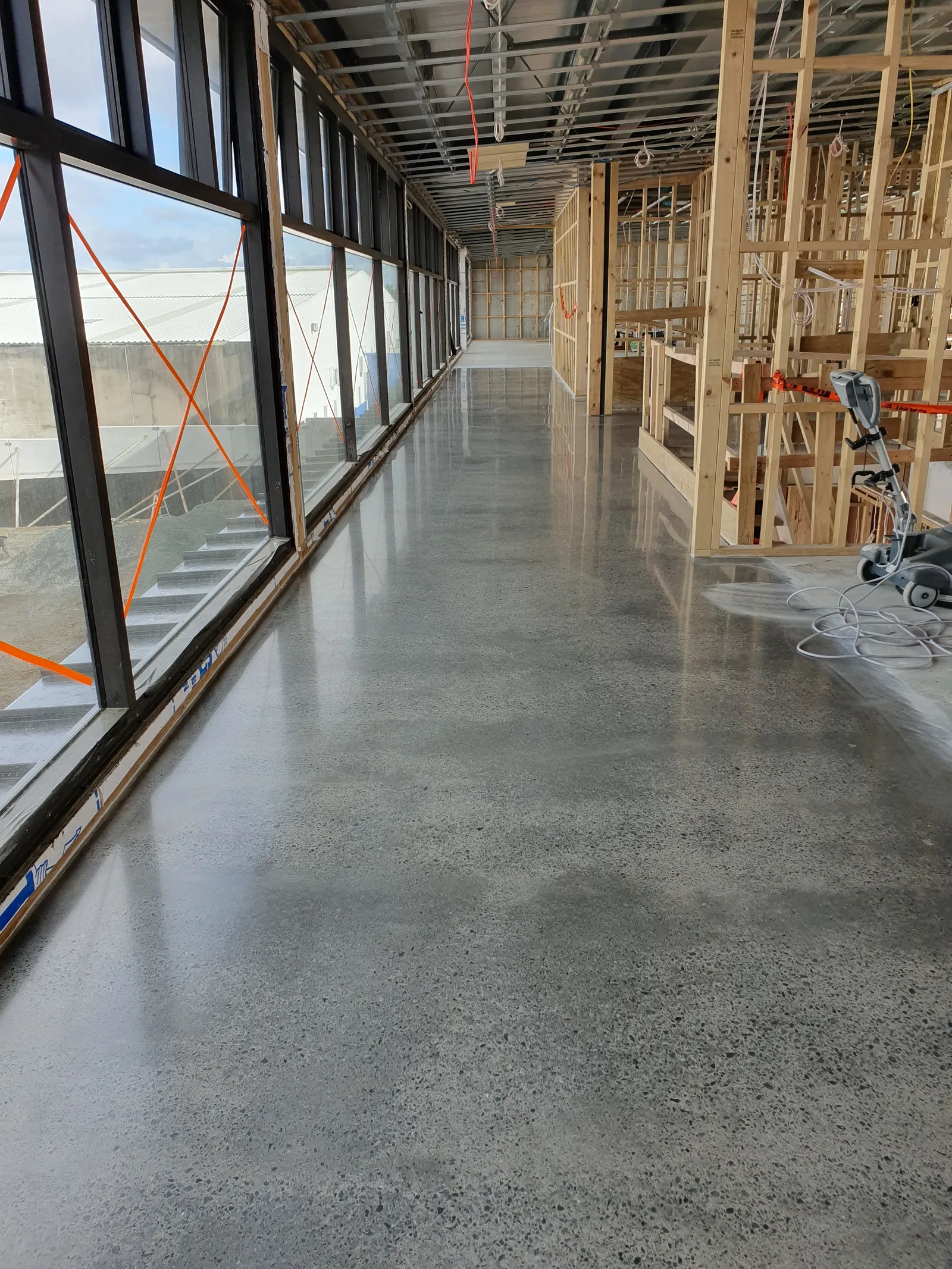
When the gib is up but not yet stopped, you can polish without worrying about damaging finished walls. There's no fresh plaster to splash, no paint to scratch, no expensive cabinetry to mask off. We can move freely with our grinders, get clean cuts, and leave site without anyone holding their breath.
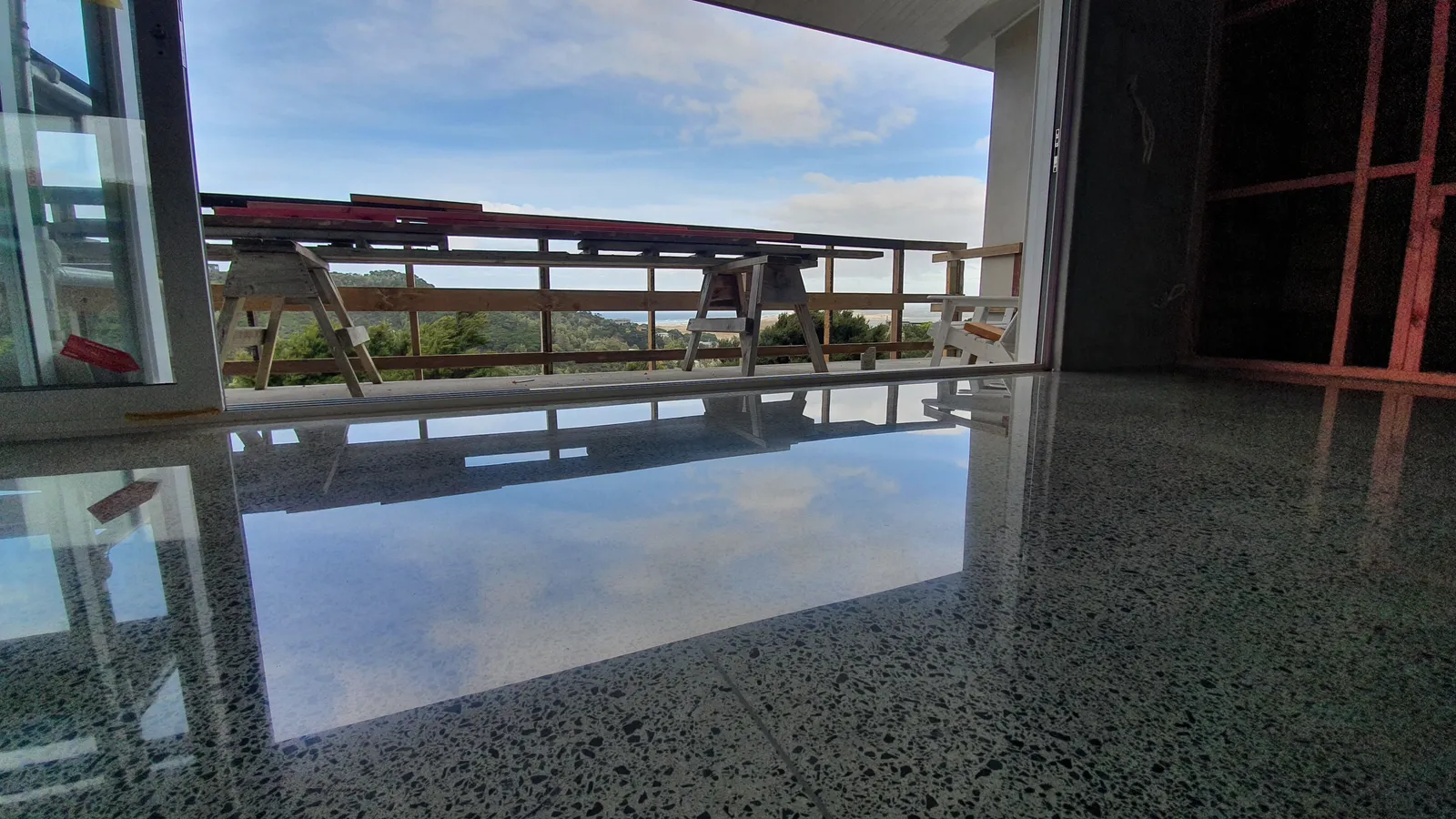
Polishing before plaster also means the gib stopper comes in after us. They can mask their joints knowing the floor is finished, and their plaster dust falls onto a covered, protected floor rather than onto wet polish. In practice, this sequence runs faster and cleaner on both sides.
The catch: not every build programme allows it. If your builder needs the plasterer in before us for scheduling reasons, polishing after gib stopping still works fine. The line that cannot move is before paint.
Why Polishing After Paint Is a Problem
Once the walls are painted, you're dealing with a finished interior surface that grinding dust and water spray can damage. We can protect walls with masking and sheeting, but it slows the job, costs more in setup time, and adds risk. If a piece of grit kicks up and chips a painted wall, that's a repaint.
The bigger problem: skirtings. If skirtings are installed before we polish, a heavier grind (which can take 3-5mm off the surface) leaves them looking like they're floating above the floor, with a visible gap between the skirting bottom and the polished surface. We've seen builds where this had to be redone, with skirtings ripped off and replaced after polishing.
The rule is simple: skirtings, cabinetry, and doors all go in AFTER polishing. Never before.
Layout Complexity Changes the Risk
Timing also depends on how complex your home is. Simple open-plan layouts are straightforward at any stage of the build, because there's space to work and few surfaces to protect.
Complex layouts with lots of rooms, tight hallways, and multiple doorways are tougher once paint is on the walls. All the risk of damage falls on us, and the protection setup gets expensive. For these homes, the before plaster window is much more important. Talking to your builder early about the polishing slot in their programme can save real money on protection costs.
What Happens If Polishing Slips Late in the Build
We've been called in to polish floors after paint, after skirtings, and once even after kitchen cabinetry was already installed. None of these are good for the homeowner. Here's what each costs you:
After paint, before skirtings. Adds protection costs (masking, sheeting), slows the job by a day or two, and there's a small but real risk of damaging finished walls. Manageable but more expensive.
After skirtings. Either we polish around them and accept a visible line where the polish stops, or skirtings come off and go back on after polishing. The latter is cleaner but adds carpentry costs and another paint touch-up.
After cabinetry. Now we're polishing in pieces, around fixed objects, which never looks as good as a single continuous polish across the whole floor. Avoid at all costs.
The cleanest sequence is always: weathertight → gib lined → polish → plaster → paint → skirtings and cabinetry. Stick to this and your floor finishes ahead of the trades that follow.
What This Means for Your Build Programme
If you're speccing a polished concrete floor, talk to your builder before the slab is even poured. The polishing slot needs to be booked into the programme. Most builders haven't done many polished concrete builds, so they may default to scheduling polishing after paint, which is the wrong slot.
A good rule for the conversation:
"We're polishing the slab. It needs to happen after the house is weathertight and gib is lined, ideally before stopping, and definitely before paint. Skirtings, doors, and cabinetry go in after polishing."
That single sentence saves builders, plasterers, painters, and cabinetmakers from the mess that comes from a misordered programme.
How Long Does Polishing Take in a New Build?
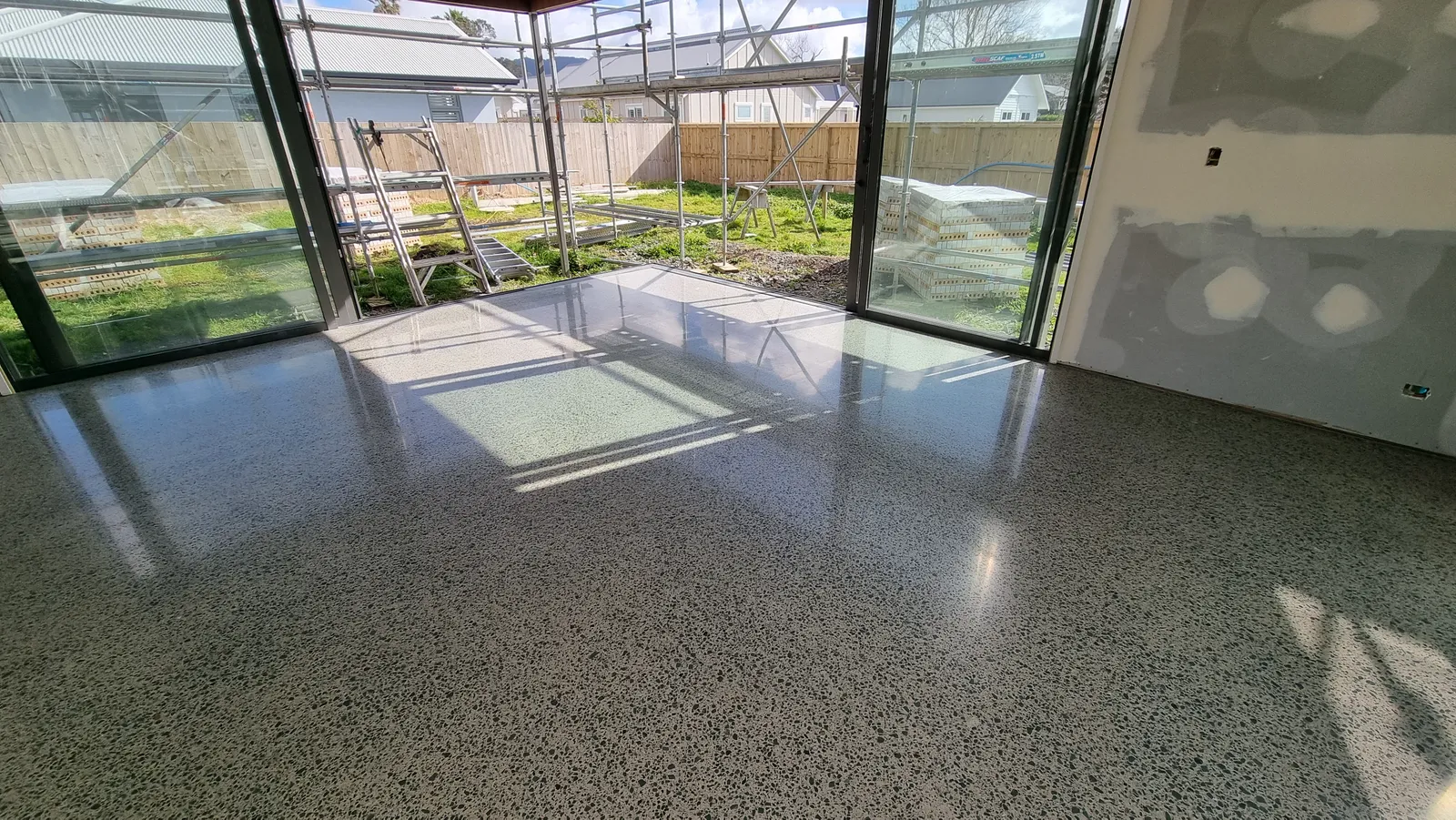
For a typical residential floor (50-70m2), we're on site 2-3 days. Larger or more detailed jobs take 3-5 days. The build programme needs to allow for this slot with the gib lined, paint not started, and the rest of the trades held off.
We always do a sample grind on day one so the homeowner can see how the floor responds before we commit to the final cut. This is especially important on slabs where the aggregate, colour, or surface condition isn't fully known. The sample is part of the standard process and built into the timeline.
For pricing detail by job size and finish type, our polished concrete cost guide for Auckland covers the full range with what's included. If your build includes underfloor heating, see our concrete with underfloor heating guide for the build-coordination steps to factor in.
Common Questions From Builders
Can polishing be done after paint if we run out of programme?
Yes, but with extra protection setup and more risk. The job takes longer, costs more, and there's a small chance of paint damage. Avoid this slot unless there's no other option. Talk to your builder early to lock in the proper slot.
Does polishing damage the gib if we polish before stopping?
No. The grinding dust is contained close to the floor and falls onto plastic sheeting, not onto unfinished gib. We seal off the working area with plastic, so adjacent rooms stay clean. The gib lining itself is not affected.
What if our slab isn't polish-quality?
Most slabs are polishable. Older slabs and ones poured without polishing in mind may need a heavier grind to level imperfections, blend cracks, and remove surface contamination. We cover the diagnostic process in our uneven concrete slabs guide. We do a sample grind on arrival so you can see exactly what the final finish will look like before committing.
Can the slab be polished if it's already painted with builder's mix or sealer?
Sealers and painted-on coatings need to be ground off before polishing. This adds a step and often pushes the recommendation toward a heavier grind. The slab will still polish well underneath - it just needs more cut.
How much does polishing a new build floor cost?
For a typical 50-70m2 new build floor, expect around $100 per m2 + GST. Larger open spans (200m2+) come down to around $60 per m2. Smaller sections and detailed work sit at the higher end ($120-$130 for finished homes). Our pricing guide breaks down what affects each quote.
What finish should we choose for a new build?
We recommend a satin to semi-gloss finish as the default for almost every job. It's the sweet spot for daily wear, slip resistance, and how the light reads in NZ homes. High-gloss looks dramatic in some homes but shows scratches faster. Matte is less slippery but more prone to staining and wear. For more on this, see our salt and pepper finish guide.
Will the floor look the same as the showroom samples?
Within a normal range, yes. The exact look depends on your slab's aggregate mix, colour, and condition. Our sample grind on day one is the most reliable preview. Showroom samples and reference photos help with general direction, but the slab itself drives the final look.
Talk to Diamond Shine Concrete
Planning a new build with polished concrete? We've polished hundreds of residential and commercial floors across Auckland, the North Shore, East Auckland, West Auckland, and South Auckland. Have a look at our grinding and polishing services for the full process and what's included, or get in touch for a free site visit and quote.